




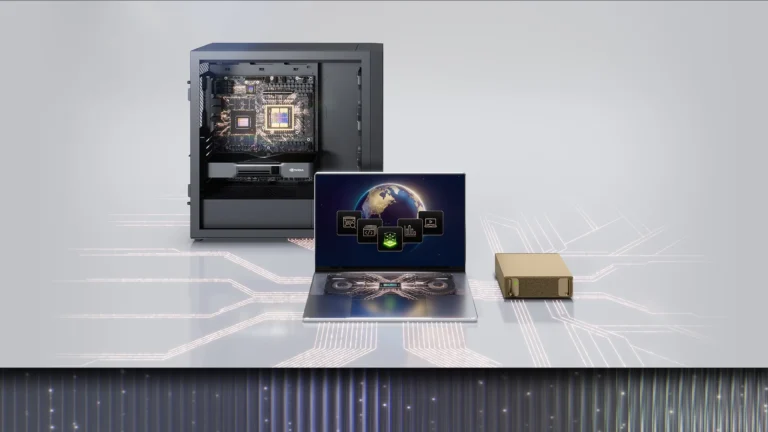
NVIDIA local AI hardware now stretches from a Windows laptop to an enterprise deskside system, and the company used GTC Berlin to fill in the gaps between them.
The updates cover a new desktop agent for RTX Spark, larger DGX Spark clusters, seven management integrations for DGX Station, a local coding model from Recursive Superintelligence and day-zero support for a batch of open models.
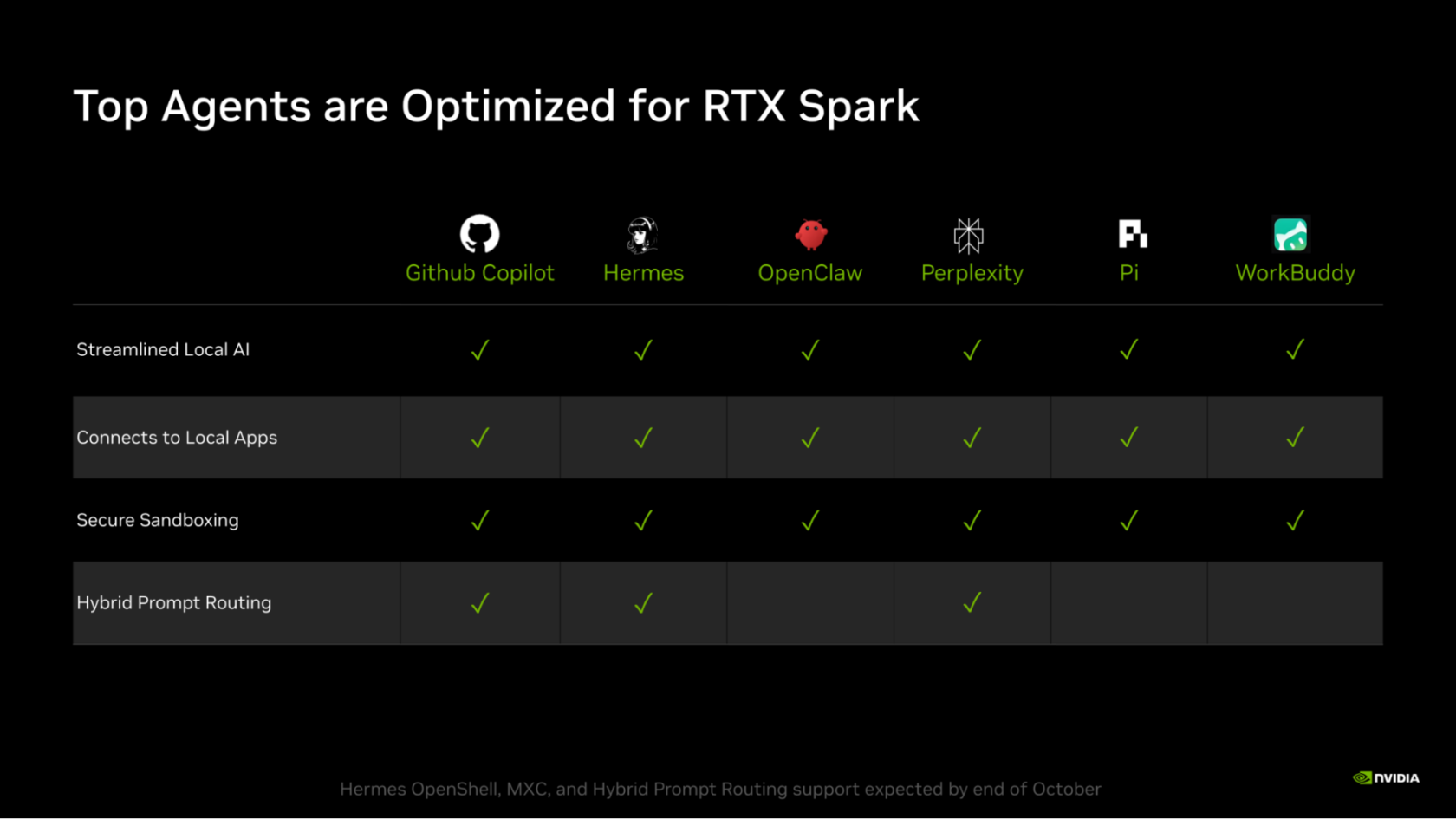
Underdog brings a private agent to RTX Spark
Underdog Desktop Agent is now available for RTX Spark, and the app runs AI models entirely on device, so a personal agent can work through tasks without user data leaving the PC, and Underdog is available now for download.
RTX Spark itself pairs a Grace CPU with a Blackwell RTX GPU across up to 128GB of unified memory and one petaflop of AI compute. NVIDIA positions the platform for personal agents, content creation and 1440p gaming at 100 frames per second, and laptops from ASUS, Dell Technologies, HP, Lenovo, Microsoft and MSI are available today, with Acer coming soon.
DGX Spark clusters scale to eight systems
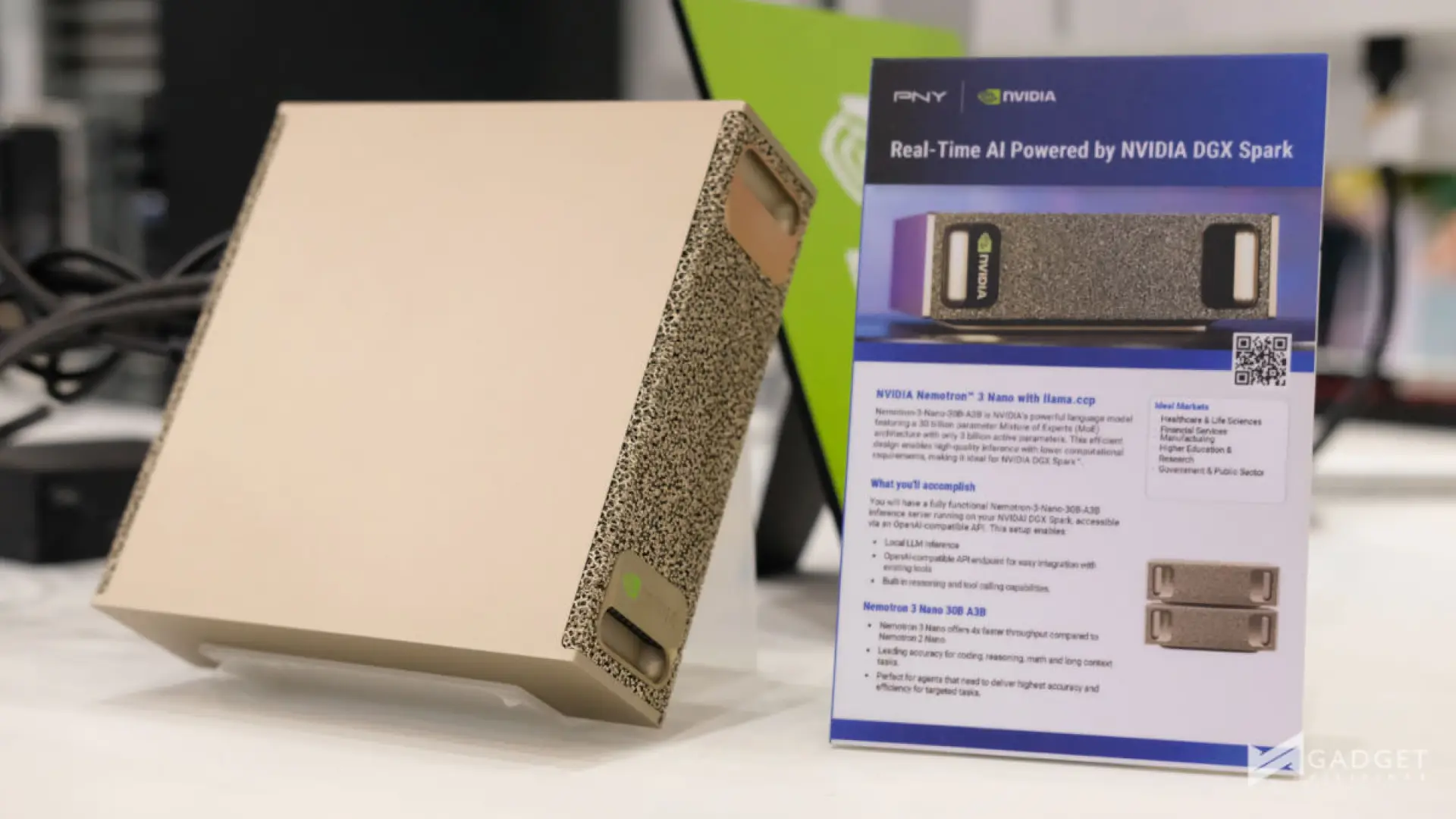
The DGX Spark 64GB arrives on Friday, October 23, giving developers another entry point into local AI. GP covered that configuration when NVIDIA opened pre-orders for the 64GB DGX Spark earlier this month.
From there, developers can connect multiple DGX Spark systems through the built-in ConnectX-7 networking and NVIDIA Sync Cluster Assistant. Manual configuration now supports clusters of up to eight units, which delivers 1TB of unified memory and enough capacity for frontier-class models such as GLM 5.3.
An NVIDIA Sync update due this month adds eight-system support and a Model Launcher, which downloads a model and container suited to the machine and connects the model to OpenCode.
October also brings a DGX Spark software update, where a new Wi-Fi Assistant makes switching networks easier when the system runs in appliance mode, and refreshed DGX Spark Skills feed troubleshooting, maintenance and workflow guidance into NVIDIA Sync.
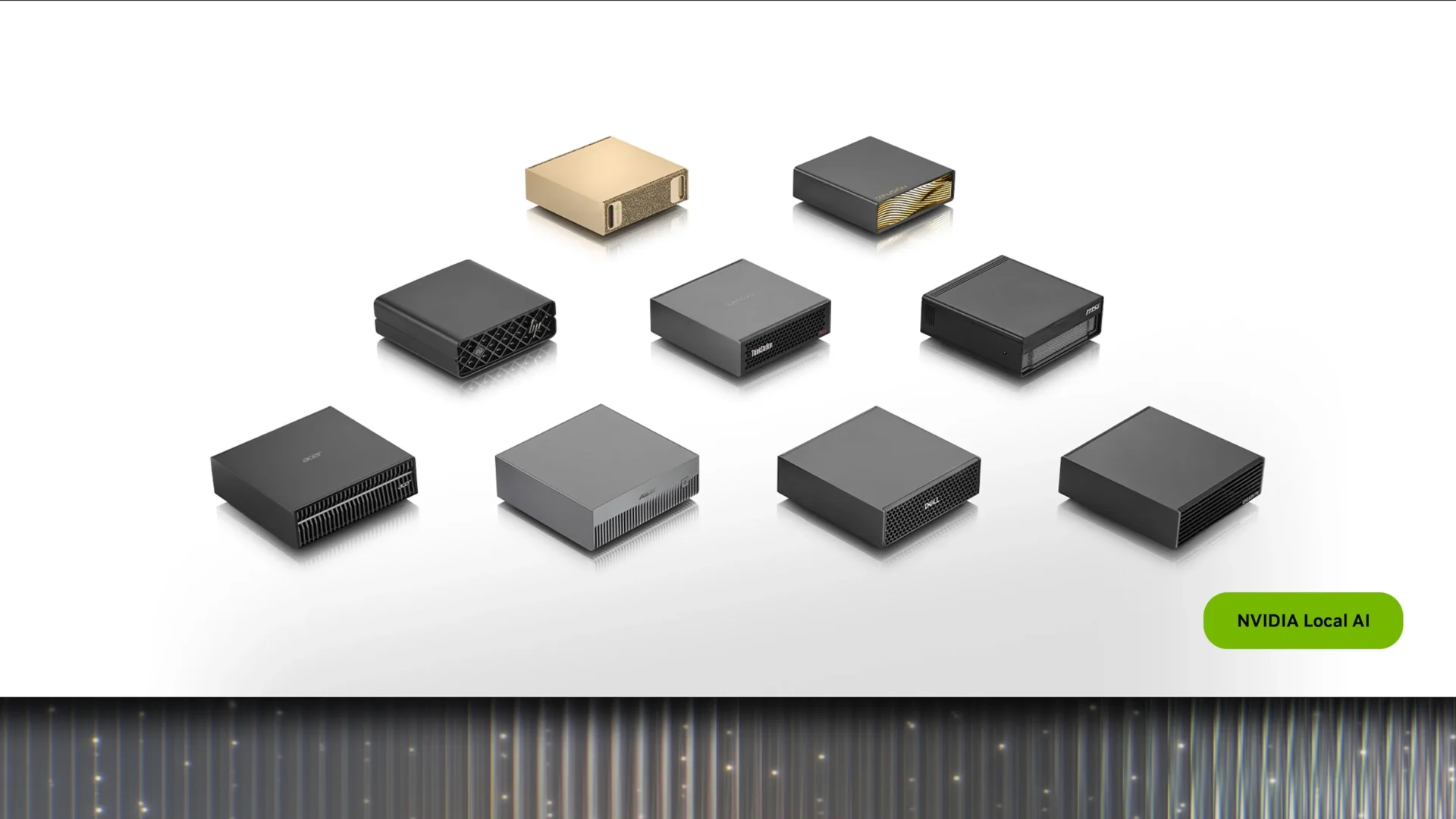
DGX Spark systems ship from Acer, ASUS, Dell Technologies, GIGABYTE, HP, Lenovo, MSI and NVIDIA, while DGX Station systems ship from ASUS, Dell Technologies, GIGABYTE, HP, MSI, Supermicro and Exxact.
DGX Station moves into IT management
For larger teams, DGX Station carries 748GB of coherent memory and up to 20 petaflops of AI performance, which puts the NVIDIA local AI workload at the desk instead of in a data center.
Seven new integrations extend that reach into enterprise IT: Absolute Security, Splunk by Cisco, Fleet Device Management, Microsoft Intune, Perforce Puppet, Progress Software Chef and Tanium. The goal is to move DGX Station through the setup, management and conformity processes that enterprises already run.
DGX Station for Windows follows in December. The Windows version supports manufacturing applications from nTop, Dassault Systemes, Keysight Technologies, MathWorks, Rockwell Automation, Siemens, Synopsys, Unity and Altera, alongside agent harnesses for on-premises agentic work.
NVIDIA Cloud Functions arrives in early access on Linux-based DGX Station, where teams can register local model endpoints in a shared catalog and reach them through one OpenAI-compatible entry point, then swap the model behind an endpoint without touching application code.
On the show floor, NVIDIA is previewing DSX OS on DGX Station to simulate AI factory operations before full infrastructure is available, and another demonstration shows DGX Station systems powering a local token factory for more than 30 software developers.
Recursive Flint and new model support
Recursive Superintelligence released Recursive Flint, a 40-billion-parameter mixture-of-experts coding model with 2.5 billion active parameters. The open weights are available under the Apache 2.0 license, and the model runs on RTX Spark, DGX Spark, GeForce RTX and RTX PRO GPUs.
NVIDIA says Recursive built the model with the Eureka Machine, an automated research system that produced specialized kernels and lifted generation speed on RTX Spark by 55 percent without changing the model weights.
Day-zero support also covers NVIDIA Nemotron Bolt E4B, GLM, DeepSeek, Qwen, MiniMax, Liquid AI LFM2.5-24B-A2B and the FLUX.3 Klein diffusion model. NVIDIA added a collection of checkpoints tuned for RAM efficiency, starting with Qwen3.8-Flash-Next-FP4-Local on a single DGX Spark 128GB and GLM-5.3-Flash-FP4-Local across two systems.
Faster inference and robotics workflows
Work with the llama.cpp and vLLM communities produced measurable gains, and in llama.cpp speculative decoding with MTP for Qwen 3.8 Flash Next makes end-to-end agentic tasks up to 1.4x faster on an RTX PRO 6000 Blackwell.
In vLLM, faster speculative decoding and new FlashInfer prefill kernels push agentic tasks with Qwen3.8 27B up to 1.3x faster on DGX Spark, while GLM 5.3 Flash reaches up to 1.2x higher throughput on DGX Station.
NVIDIA also published three open source robotics reference workflows for DGX Station. They bring Isaac Lab, Isaac Lab-Arena and Cosmos to the platform, so teams can refine GR00T 1.7 models with reinforcement learning, train dexterous manipulation skills and post-train world models for synthetic data.
During the GTC keynote, NVIDIA showed agents running on RTX Spark training the Microduck robot from Hugging Face with Isaac Lab and Nemotron 3.5 Bolt 74B.
Taken together, the updates move NVIDIA local AI past the single-user assistant and into shared development infrastructure. The full list of GTC Berlin announcements sits on the NVIDIA blog, and the RTX Spark laptop line remains the Windows entry point.

Giancarlo Viterbo
Giancarlo Viterbo is a Filipino Technology Journalist, blogger and Editor of gadgetpilipinas.net, He is also a Geek, Dad and a Husband. He knows a lot about washing the dishes, doing some errands and following instructions from his boss on his day job. Follow him on twitter: @gianviterbo and @gadgetpilipinas.
View all articles →Related News

 HONOR Play 10 Arrives in PH, Priced at PHP 6,999
 What 12 Reviewers Agree On About the iPhone Duo
 OPPO Find X10 Series Arrives in PH, Pre-Order Begins