




The question everyone asks
People keep asking me what an agentic AI like Hermes, built by Nous Research, really does for a working business. The easy answer is writing. The honest answer is that writing is the least interesting part.
I run a technology news publication with a small team. We are exactly the kind of organization that generative AI promises to help and usually disappoints: a lean media business where the editor, the sales lead, and the operations person are often the same human. What I found is that the highest-value work an agentic AI does is not producing content. It is the pipeline around the content: catching the news, routing it, assigning it, keeping the website fast and findable, and producing the reports that tell us whether any of it worked.
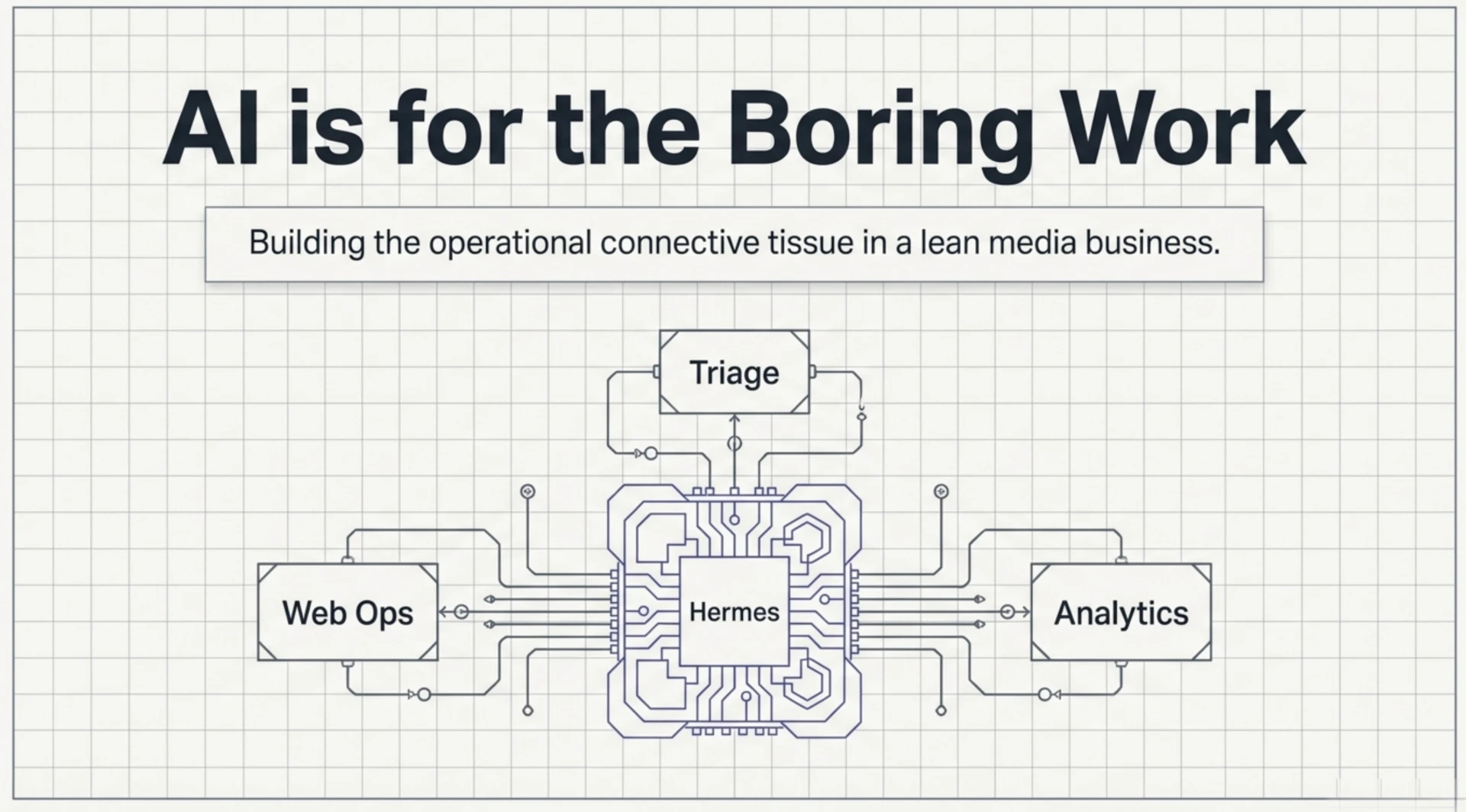
This is the story of how we built that, and what it looks like when an agentic AI earns its keep in a small and medium business.
The inbox problem
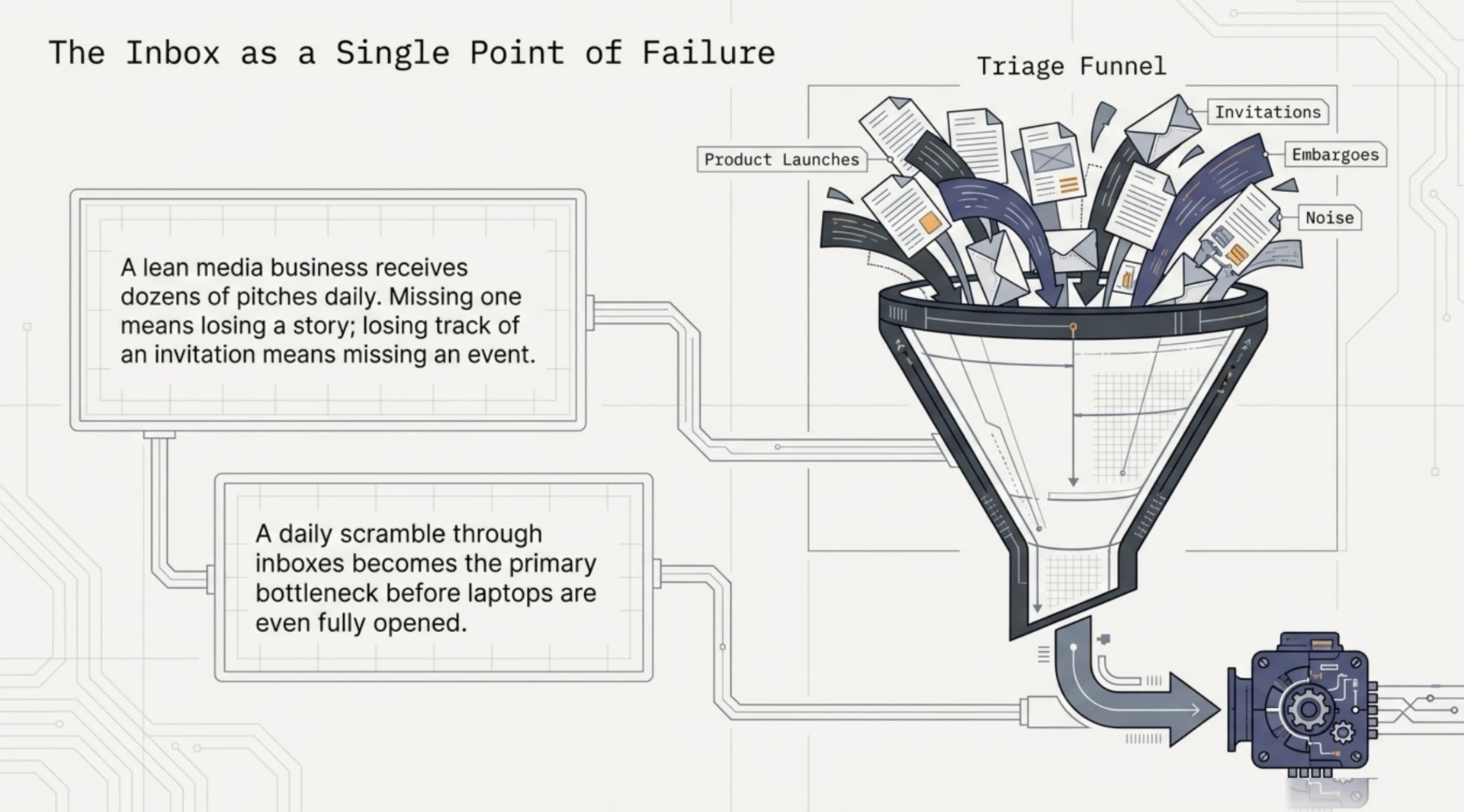
The first pain point was the press release flood. A tech newsroom receives dozens of pitches a day across multiple mailboxes: product launches, invitations, embargoes, and noise. Missing one means losing a story; losing track of a launch invitation means missing an event. With a small team, the inbox was a single point of failure.
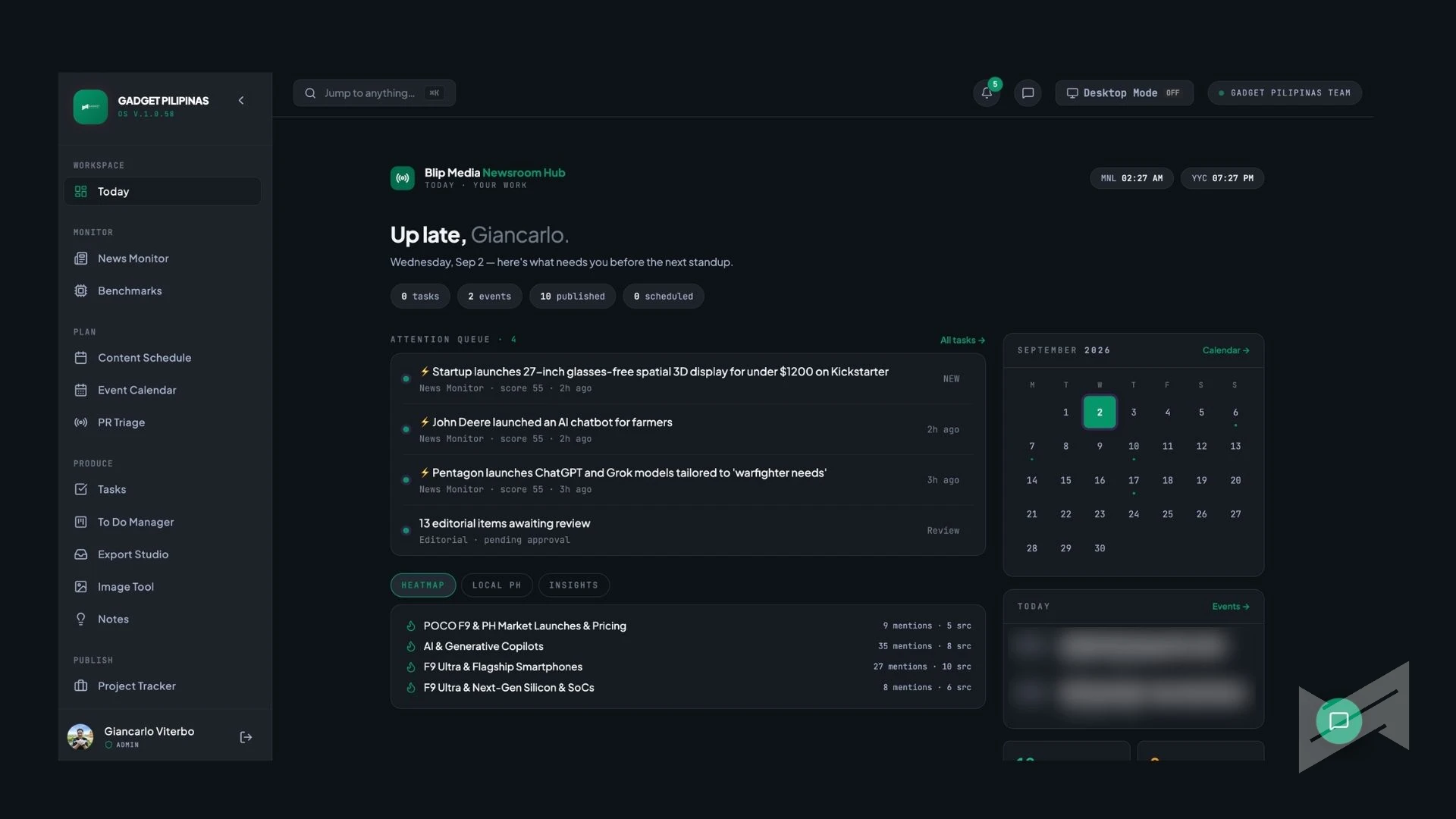
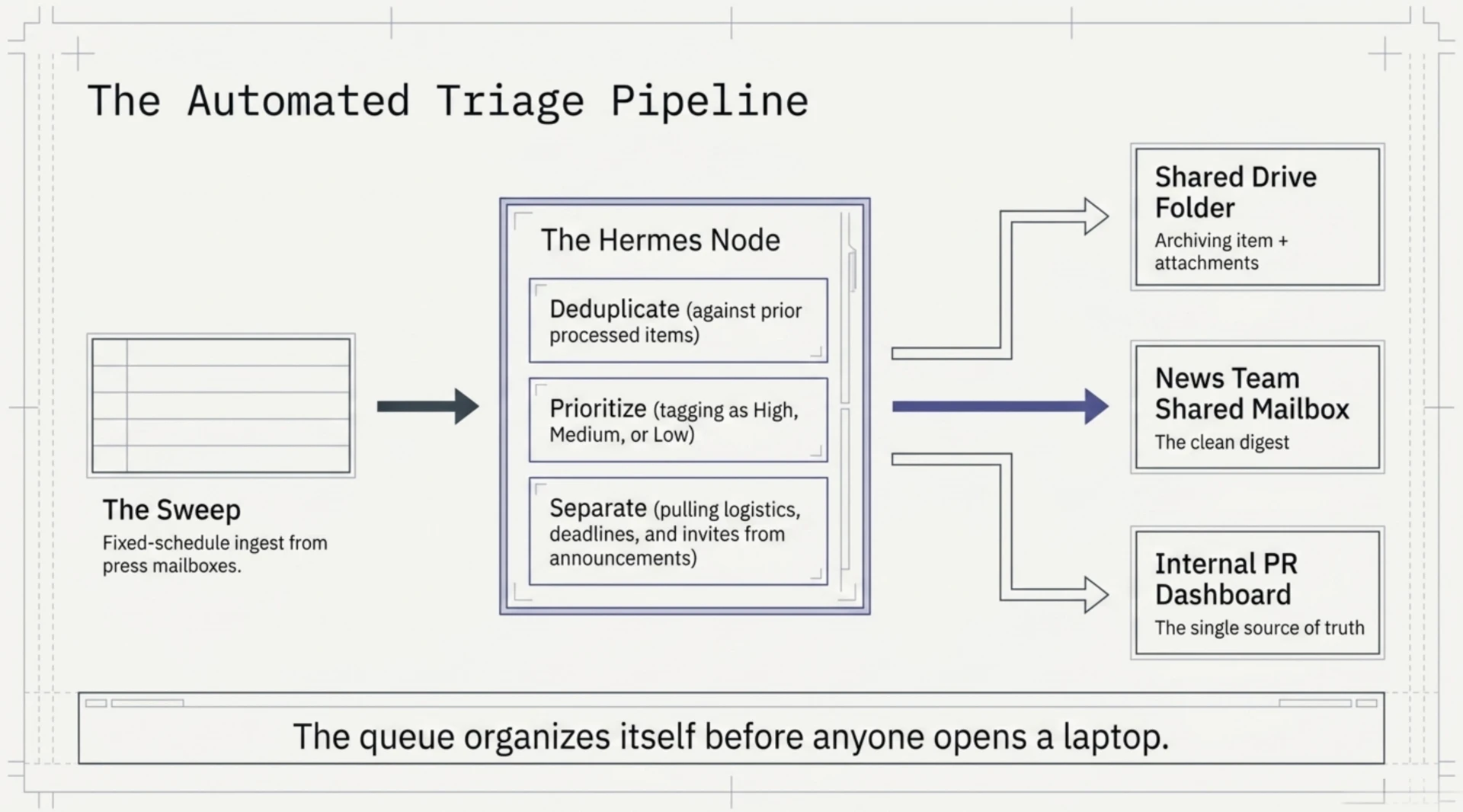
We fixed it by building a daily triage pipeline. On every working day, Hermes sweeps our press mailboxes on a fixed schedule, deduplicates against what was already processed, prioritizes each item as high, medium, or low, and compiles a digest that lands directly in the news team’s shared mailbox, copied to me. Invitations, deadlines, and media logistics are separated from plain announcements so nothing gets buried. Every item is archived into a shared drive folder with its attachments, and the same data flows into an internal PR dashboard that I use as the single source of truth for what the team should be working on.
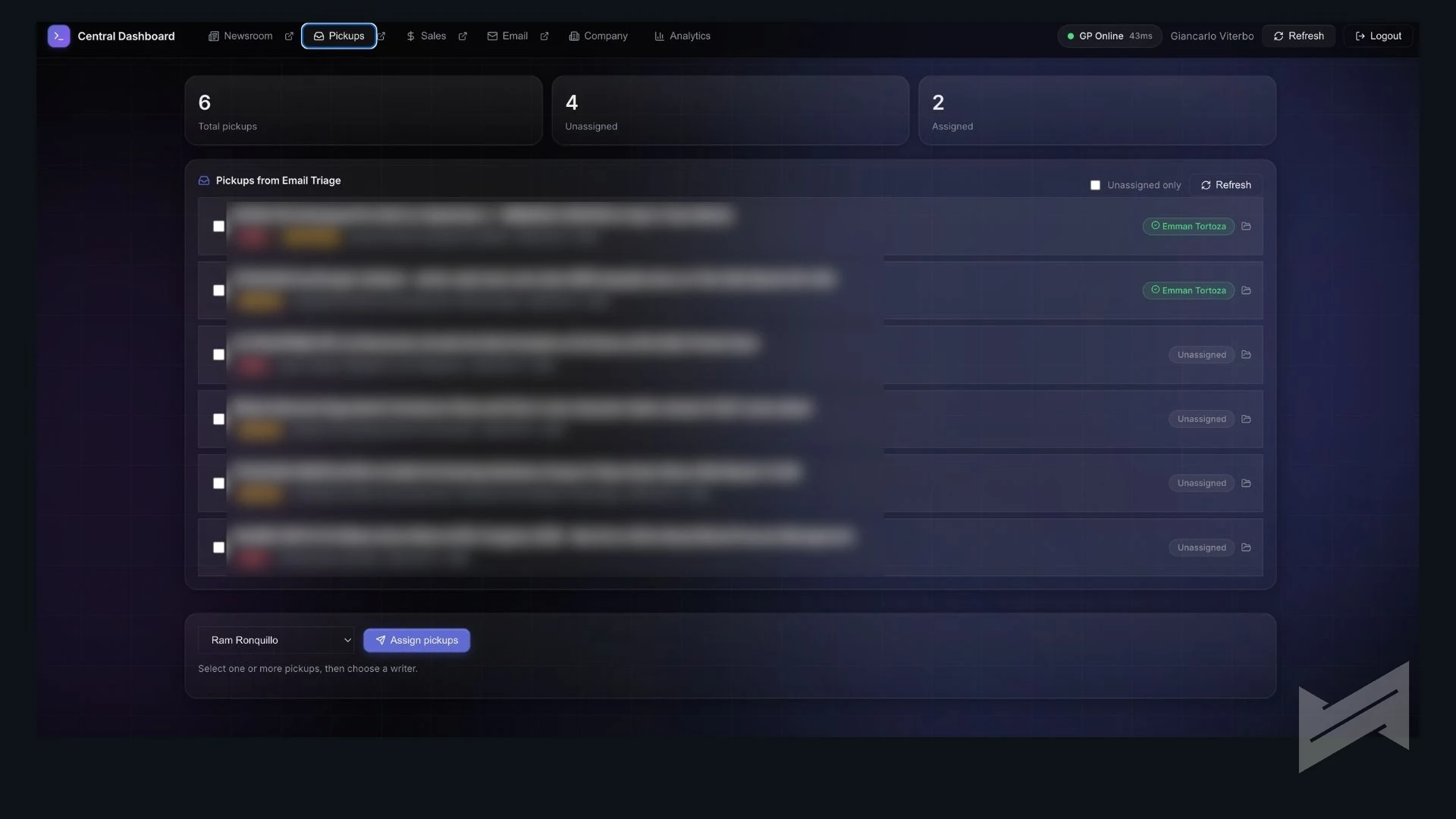
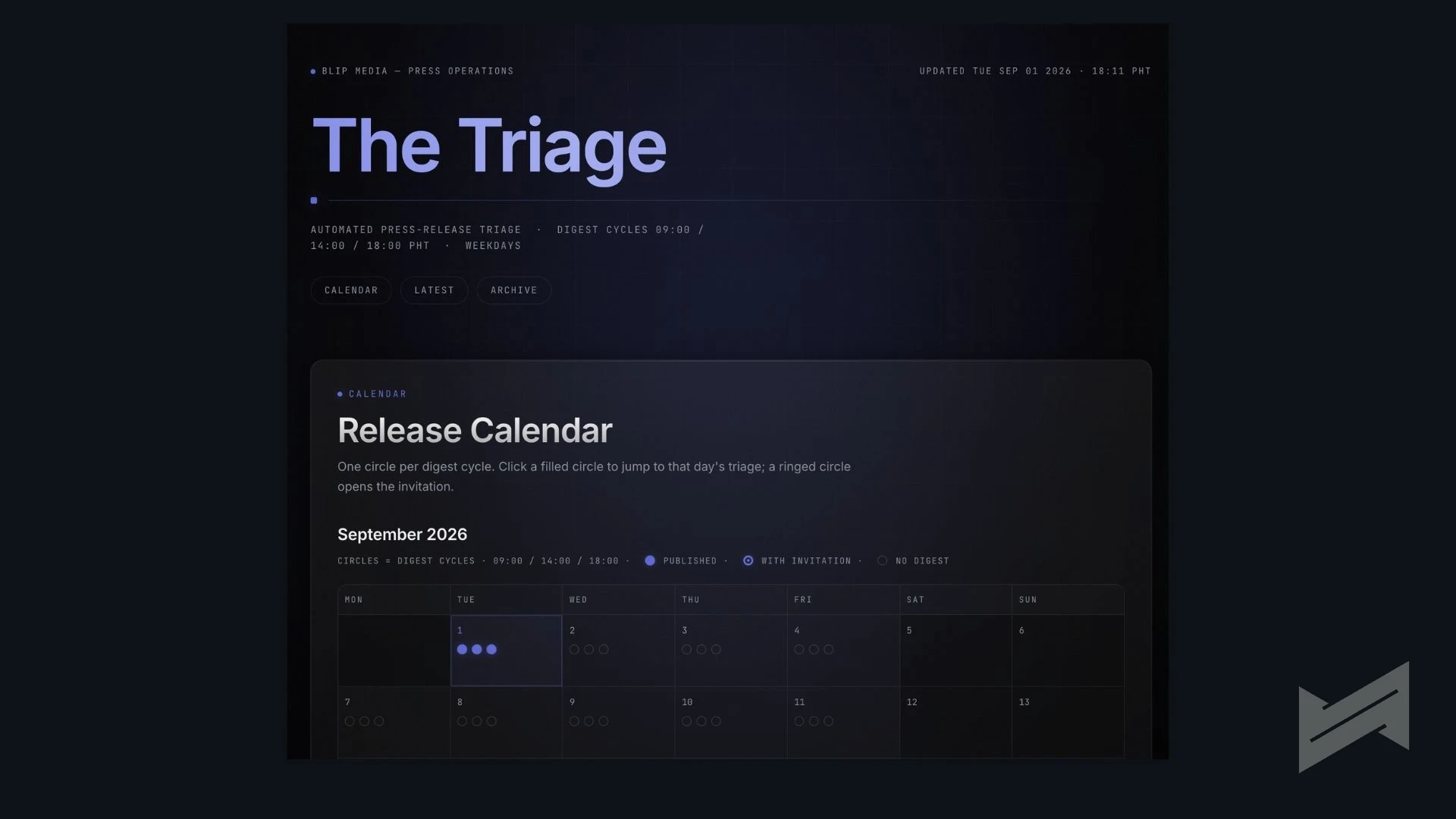
That dashboard became the center of task assignment. From one screen I can see what arrived, what is urgent, what needs coverage, and what has a deadline attached, and the team picks assignments from it. What used to be a scramble through inboxes every morning is now a queue that organizes itself before anyone opens a laptop.
The applications we built around it
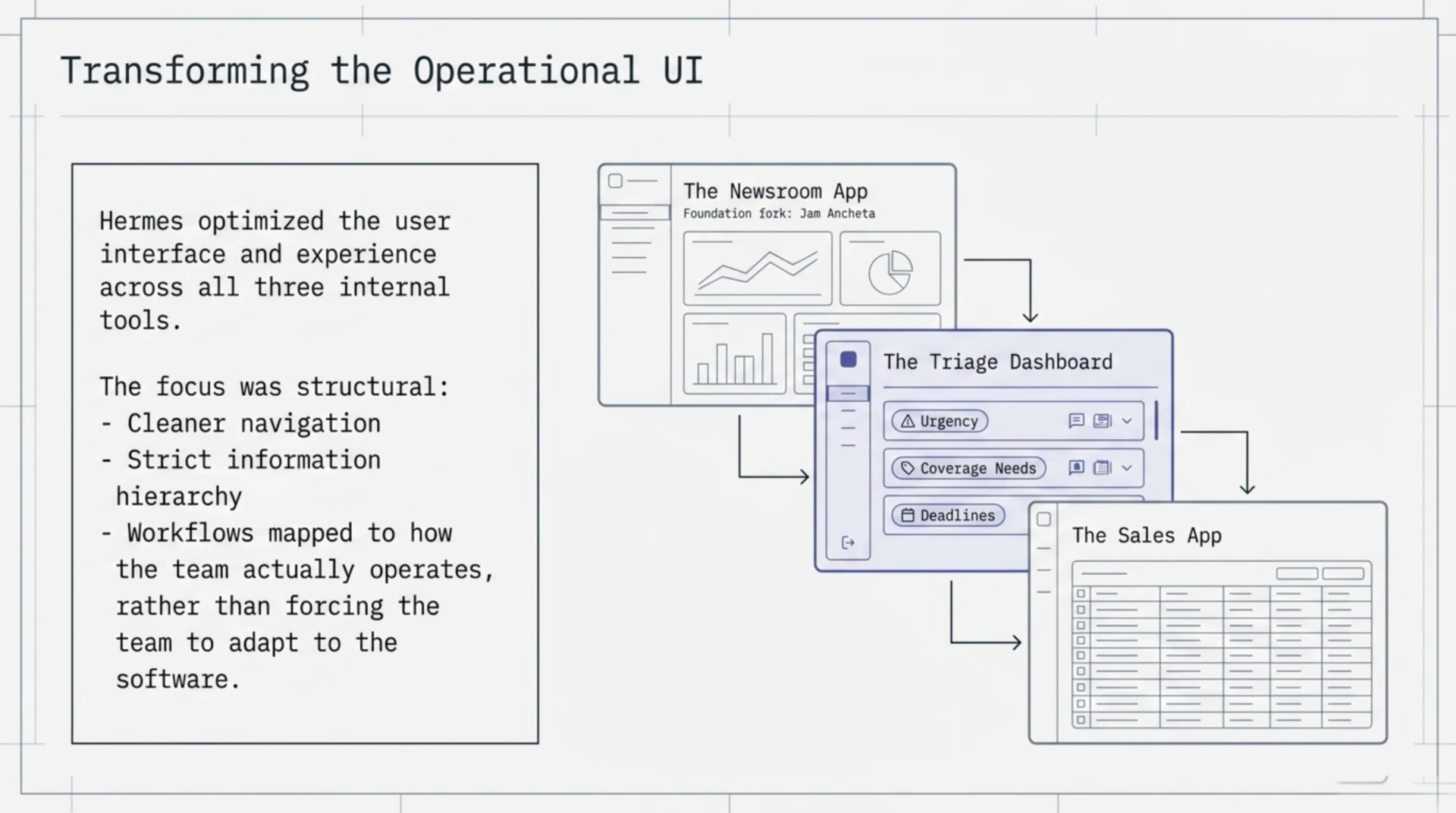
The dashboard is one of three in-house web applications that run our operations: the newsroom app, the triage dashboard, and the sales app. All three were built in-house, and our newsroom app is a fork of the work of Jam Ancheta, who deserves the credit for its foundation. Hermes helped us improve the user interface and user experience of all three: cleaner navigation, better information hierarchy, and workflows that match how the team actually works rather than how the first version of the app forced them to work.
The website: a new theme, better performance, better SEO
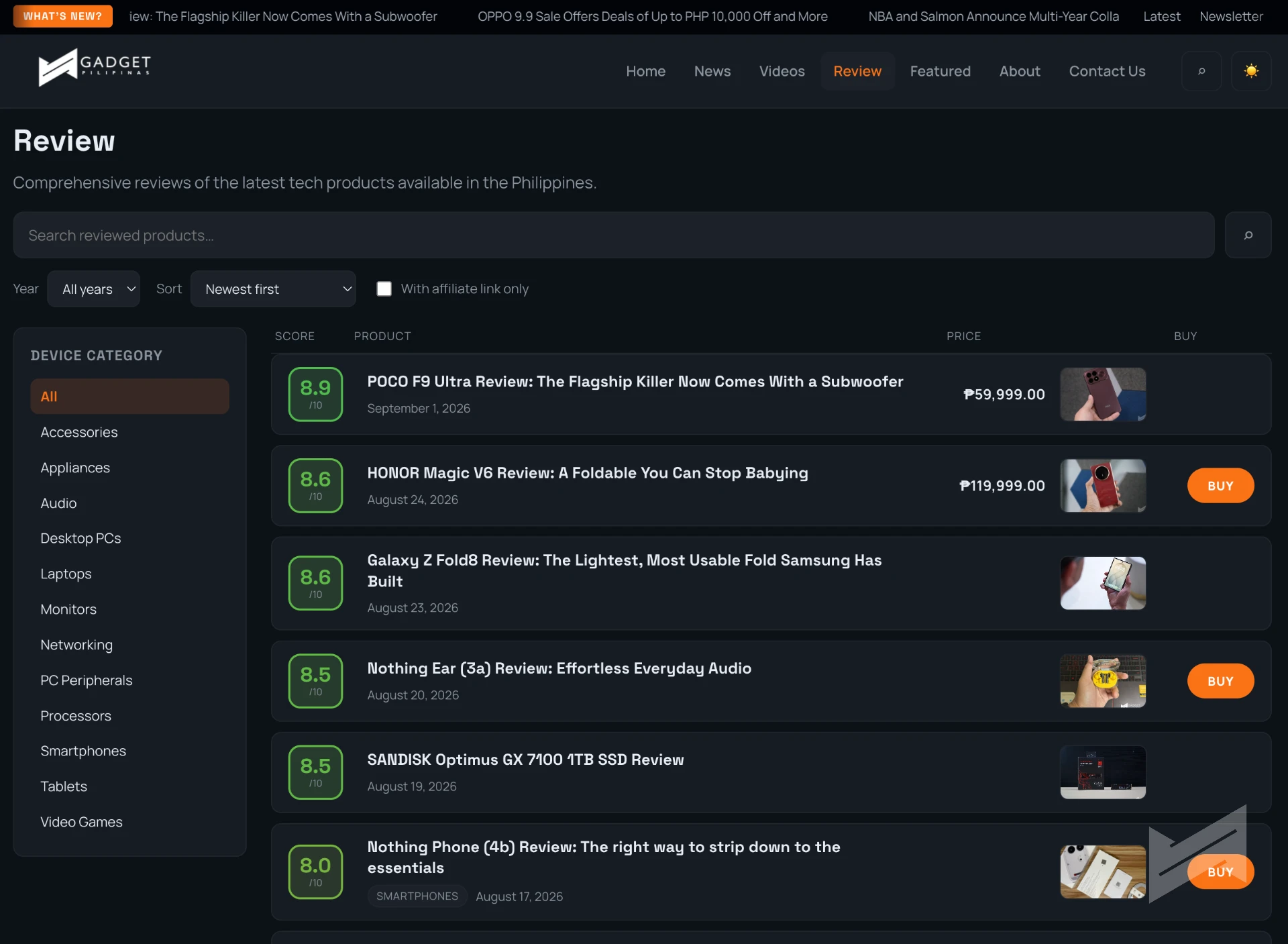
Alongside the operations work, we invested heavily in the website itself. We developed a new custom WordPress theme from scratch, replacing a commercial theme we had outgrown. The new theme is built around a proper design system: consistent typography, color, spacing, and components. It shipped with features that matter to a publication, including a review directory with score summaries, structured review boxes, reader rating widgets, and editor-friendly tools for managing review posts.
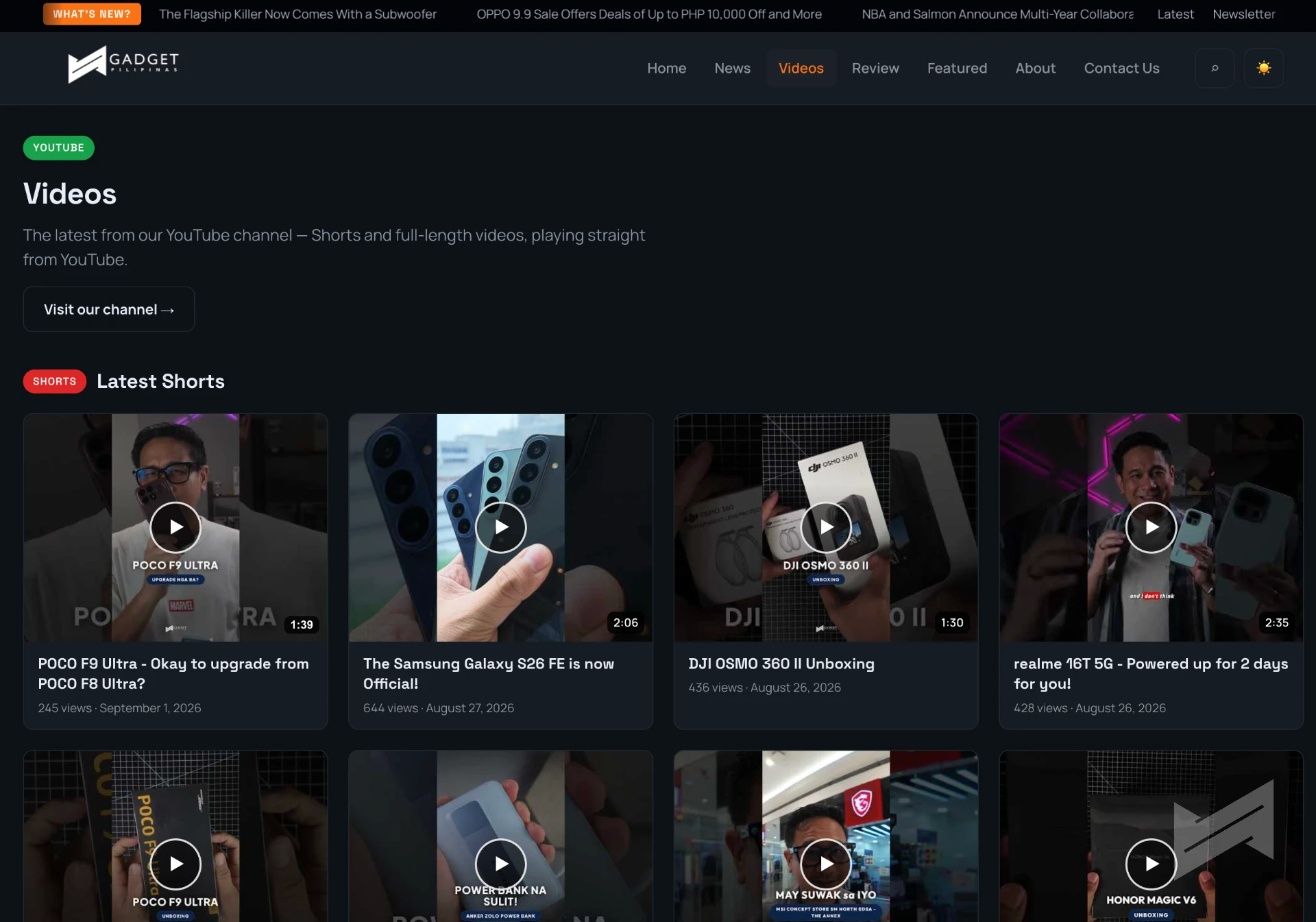
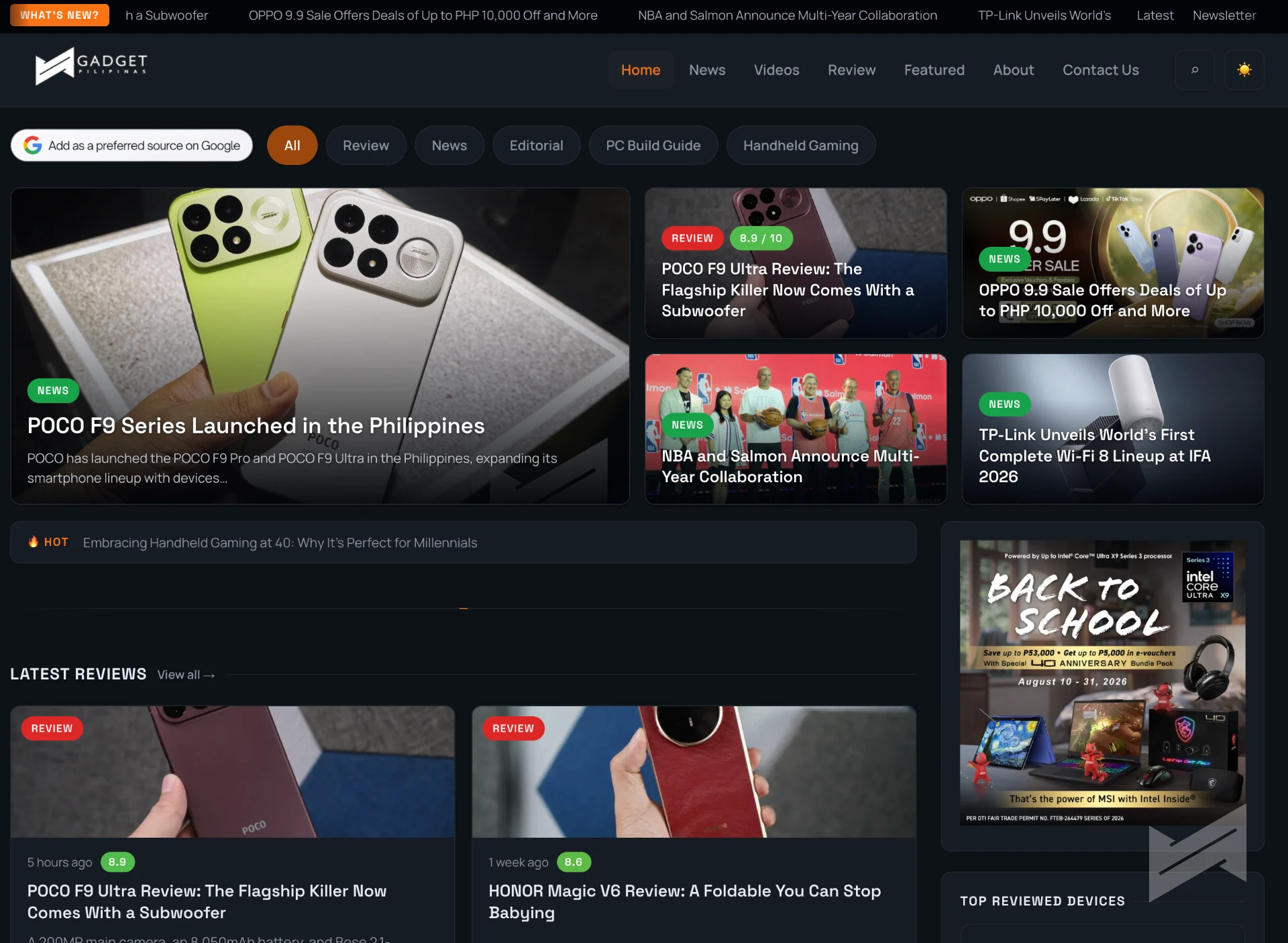
Performance was a separate campaign. We moved the site behind a content delivery network and learned how to manage its cache properly, including purging after every deployment. We repaired years of accumulated media damage: restoring thousands of missing featured images and fixing tens of thousands of attachment records so galleries and image crops render correctly again. The difference in page weight, image delivery, and overall speed was dramatic.
Search visibility got the same treatment. We set up and maintained structured data for articles, reviews, videos, and ratings, audited the site’s SEO health, triaged search console coverage issues, and tuned the site for AI search engines that increasingly send readers to publishers. We also ran regular security and performance audits, checking certificates, headers, and exposure.
Reports that write themselves
Running a media business means answering the same question over and over: is any of this working? We connected our analytics: web analytics, search console, YouTube channel data, and social page insights. Hermes now produces a scheduled cross-platform report covering all of those sources, so the numbers arrive in a single document without anyone exporting anything by hand.
The automation backbone
None of this would matter if it only worked when I asked for it. The real unlock was scheduled autonomy. Recurring jobs run on fixed schedules: the triage sweeps, the analytics reports, the daily recap of what was accomplished, the disk and resource hygiene checks, and the watchdog patterns that tell us when something silently stops working. When a scheduled job fails, we know about it and fix it, because the system is designed to surface its own failures.
Skills as institutional memory
The part I underrated at the start is the skill library. Hermes carries over a hundred skills, each one a documented procedure we built together: how to publish to our WordPress, how to repair media, how to run an SEO audit, how to pull social analytics, how to monitor competitor news, how to triage email. These are not vague prompts. They are precise, tested workflows with the pitfalls already written down. That means our operational knowledge no longer lives only in my head. It lives in a system that any session can load and execute consistently.
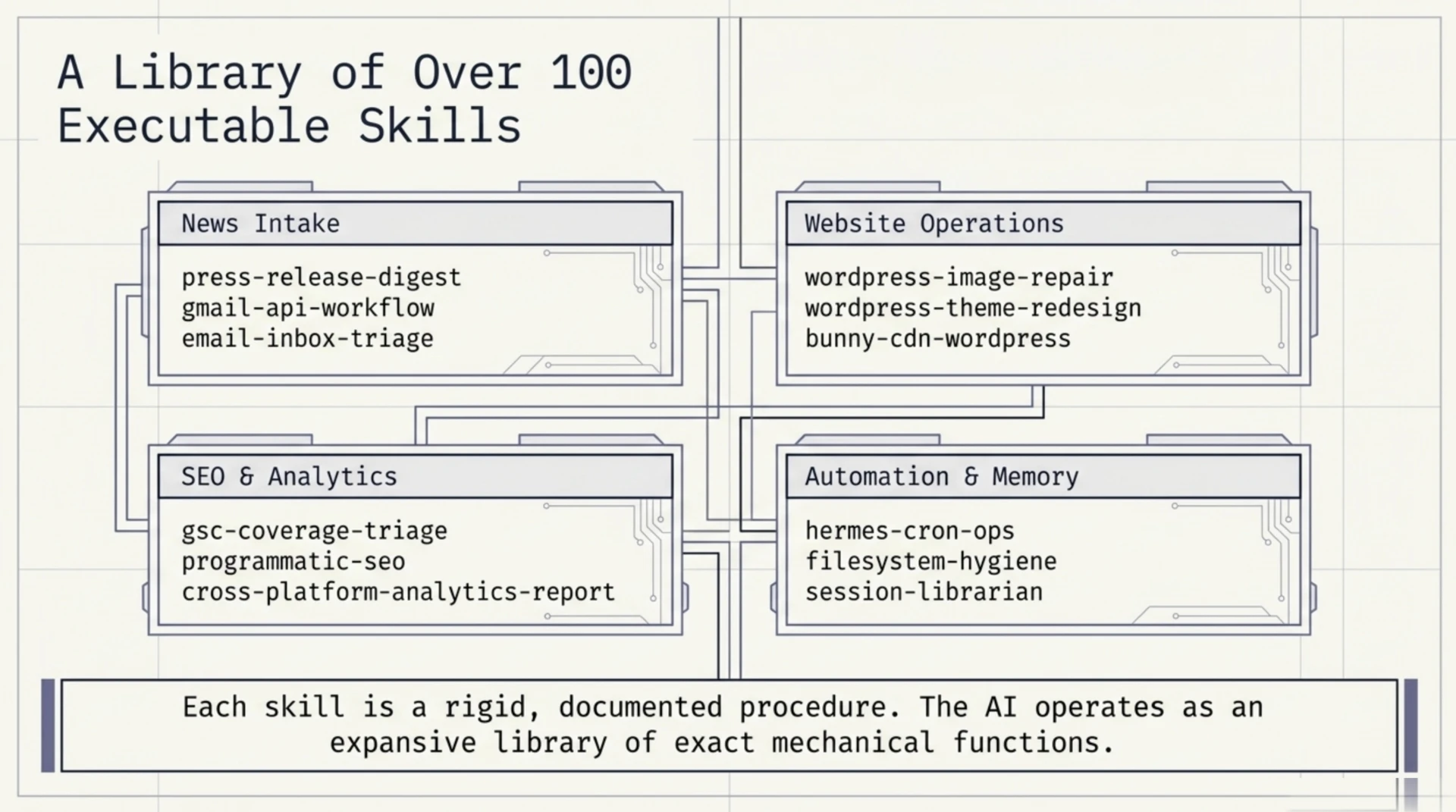
The skills that power this work include:
- News intake and triage: press-release-digest, gmail-api-workflow, gmail-search, email-inbox-triage
- WordPress and the website: wordpress-theme-development, wordpress-theme-redesign, wordpress-media-repair, wordpress-image-repair, wordpress-publishing, wordpress-draft-article, website-audit, website-security-audit, bunny-cdn-wordpress, cdn-ip-reputation-recovery
- SEO: seo-audit, wordpress-seo-audits, ai-seo, schema, gsc-coverage-triage, programmatic-seo
- Analytics and reporting: cross-platform-analytics-report, meta-social-analytics, tiktok-analytics, google-mcp-integrations
- In-house apps and UI/UX: blip-media-internal-webapps, wordpress-ux-redesign, design-system-adoption
- Automation and operations: hermes-cron-config, hermes-cron-ops, hermes-daily-recap, hermes-security-audit, filesystem-hygiene
- Knowledge and memory: auto-memory-digest, semantic-session-search, session-librarian
- Research and monitoring: competitor-news-monitor, blogwatcher, ph-phone-launch-tracker, webpage-capture
What this means for other small businesses
The lesson I want other small and medium businesses to take is that the highest ROI of an agentic AI is not in the glamorous output. It is in the connective tissue: the inbox triage, the internal dashboards, the website’s speed and findability, the reports, and the automation that keeps it all running. The human still writes the stories, makes the calls, and owns the voice. The AI makes sure nothing falls through the cracks before and after that human work happens.
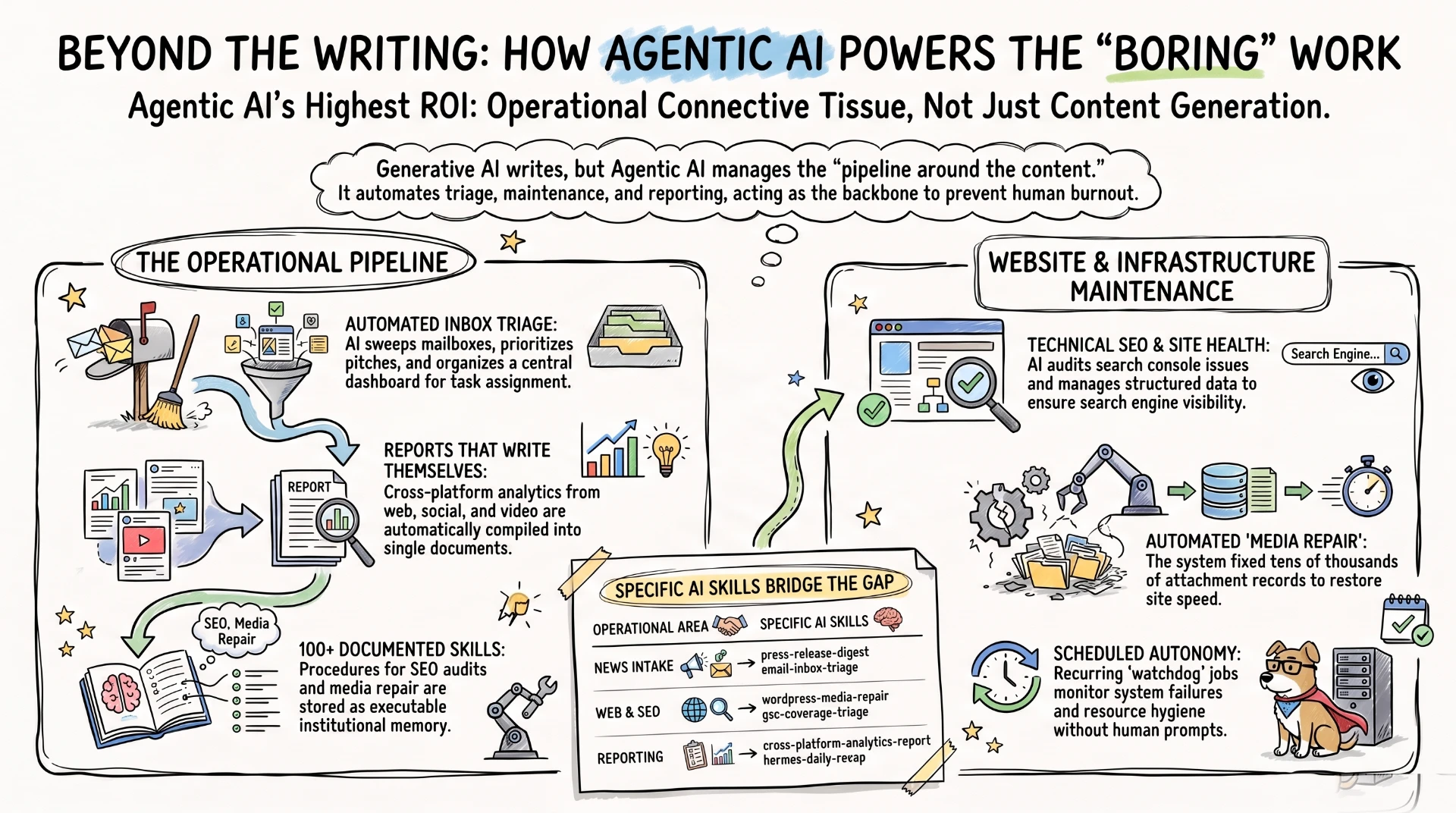
That division of labor is exactly why it works. And it is why I keep saying the most useful AI in a small business is the one you can point at the boring work, not the one that writes the newsletter.

Giancarlo Viterbo
Giancarlo Viterbo is a Filipino Technology Journalist, blogger and Editor of gadgetpilipinas.net, He is also a Geek, Dad and a Husband. He knows a lot about washing the dishes, doing some errands and following instructions from his boss on his day job. Follow him on twitter: @gianviterbo and @gadgetpilipinas.
View all articles →