




What Gemini 4 Argon is built for
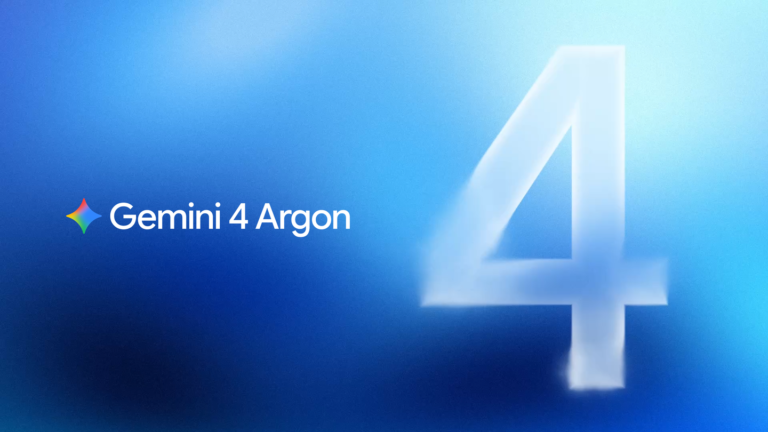
Google has opened Gemini 4 Argon to developers worldwide through the Gemini API and Google AI Studio. Builders can reach the new model with a paid Gemini API key or a Google AI Ultra subscription, and the model ships under the id gemini-4-argon.
Google positions it for deep work on complex, real-world tasks across coding, finance, legal, cybersecurity, and science, the domains named in the announcement. The first of the three highlighted use cases is long-horizon engineering and security work, where the model is handed a goal rather than a single prompt.
Hand it something like a migration from C++ to Rust, or a set of security vulnerabilities to remediate, and it will build verification harnesses of its own.
It then tests against runtime feedback and iterates independently until the task is complete, which is the part that separates it from a chat reply.
That loop matters for teams that cannot sit with a build for hours, and the verification harness is the detail worth noticing. The model writes its own tests and checks its output against real runtime behavior instead of stopping at a plausible answer.
The second use case covers business and professional workflows, where a mixed directory of videos, spreadsheets, and PDFs becomes the input. Argon cross-references facts across those formats to generate interactive dashboards or audited documents, work that usually means a person opening three applications at once.
The third covers 3D visualizations, simulations, and full-stack applications, built by combining spatial reasoning with visual code generation. The tools named are Blender, Three.js, and WebGPU, and the output ranges from complex scenes to physics simulations to complete web apps.
Google is also pointing developers at a set of demo apps built with the model, which can be tried directly or remixed into something new. A group of one-shot prompts ships alongside them, covering current flight times between New York and London and a six-round doubles tournament drawn for nine players.
One prompt asks how GPS satellites correct for Einstein’s relativity so that a phone map does not drift by miles every day. Builders can work through software development kits for Python, JavaScript, and Go, or make a direct REST API call with cURL.
For an enterprise team, a quarterly reconciliation can start as a folder of exports and finish as an audited document with the supporting figures attached.

A security team gets the same shape, where a queue of vulnerabilities can move from a flat list to a set of patches that arrive with their own test runs.
For a development team working through a legacy codebase, the appeal is the same, because the model stays on the task after the first answer.
The 1M-token context window
Argon unifies input, thinking, and output inside an industry-leading 1M-token context window.
Google says that window provides the depth, precision, and sustained reasoning required to carry the most demanding multi-step workflows from start to finish.
The size of the window is the detail that matters most for long-running work, because a workflow that would need several separate calls can stay inside one.
A sample call in the announcement sets the model id to gemini-4-argon and a thinking level of medium.
The same sample asks the model to build a single-file HTML drum machine with a 16-step sequencer, a tempo slider, and a live waveform visualizer.
Google also points to an advanced prompting guide for teams that want to get more out of long working sessions with the model.
The demo apps are the quickest way to see that in practice, and remixing one does not require a full development environment.
Pricing and availability
Gemini 4 Argon carries an introductory price of $2 per million input tokens and $10 per million output tokens. Cached input tokens are priced at 95 percent off the input token price, which matters for workloads that repeat the same long prefix.
The introductory period expires on November 30, 2026, after which the rate rises to $4 per million input tokens and $20 per million output tokens. The pricing note states that the quoted rates apply to the Argon model intended for public access only.
Google has also been widening what Gemini connects to, as a recent Gadget Pilipinas report on the Gemini app ecosystem noted, and this release extends that push to the paid API tier.
The full announcement is published on the Google blog, and the model is available now in Google AI Studio.
Developers who want to put Gemini 4 Argon through long multi-step work can start with a paid API key today.

Giancarlo Viterbo
Giancarlo Viterbo is a Filipino Technology Journalist, blogger and Editor of gadgetpilipinas.net, He is also a Geek, Dad and a Husband. He knows a lot about washing the dishes, doing some errands and following instructions from his boss on his day job. Follow him on twitter: @gianviterbo and @gadgetpilipinas.
View all articles →