
The team that spent last month rebuilding Adobe’s creative suite has moved on to Microsoft Office. ArtCraft published five more Rust applications on 7 October, and all five reached version 0.5.0 this week, with installers on GitHub. ArtCraft’s public app page still lists only the original seven.
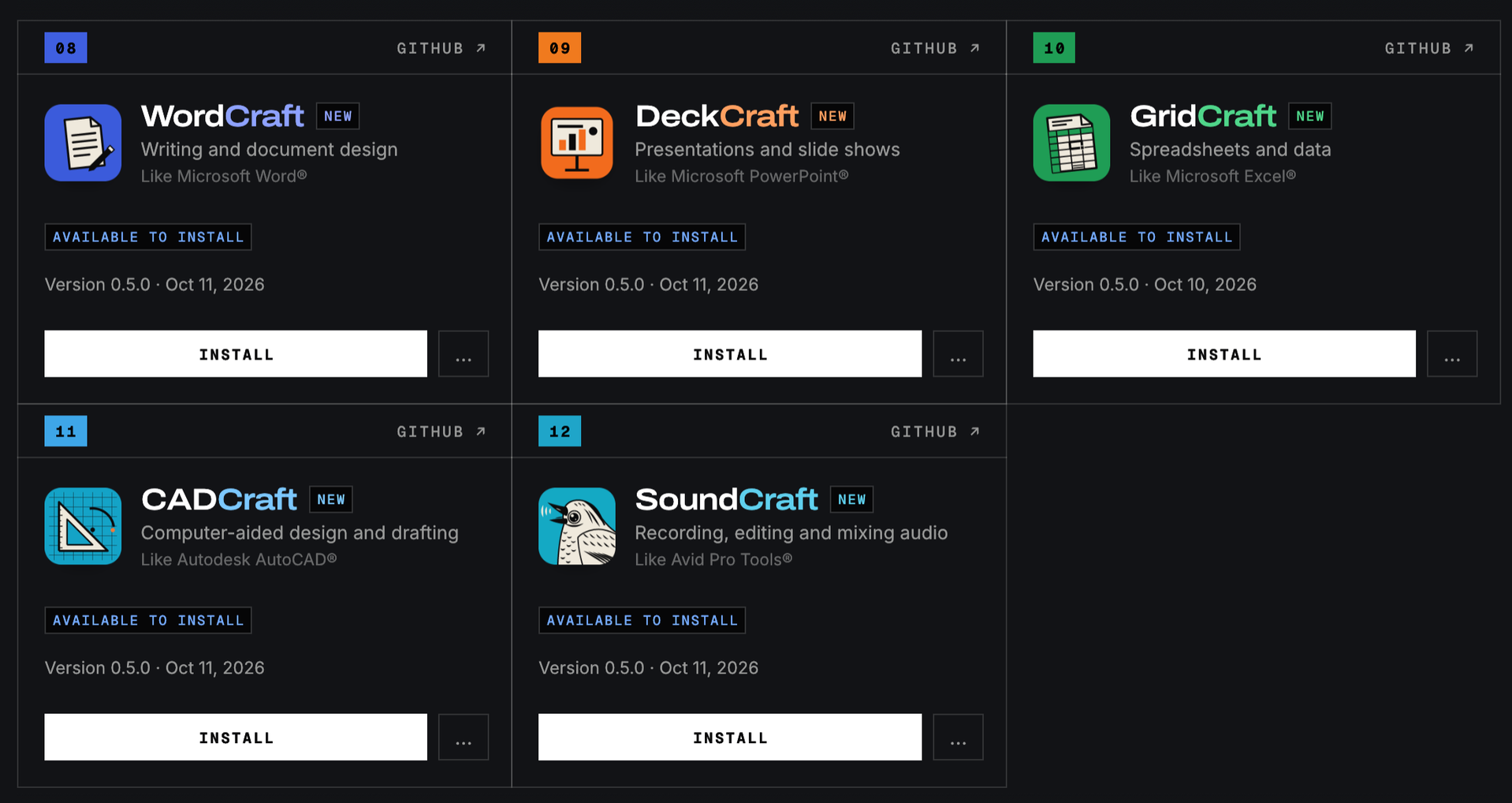
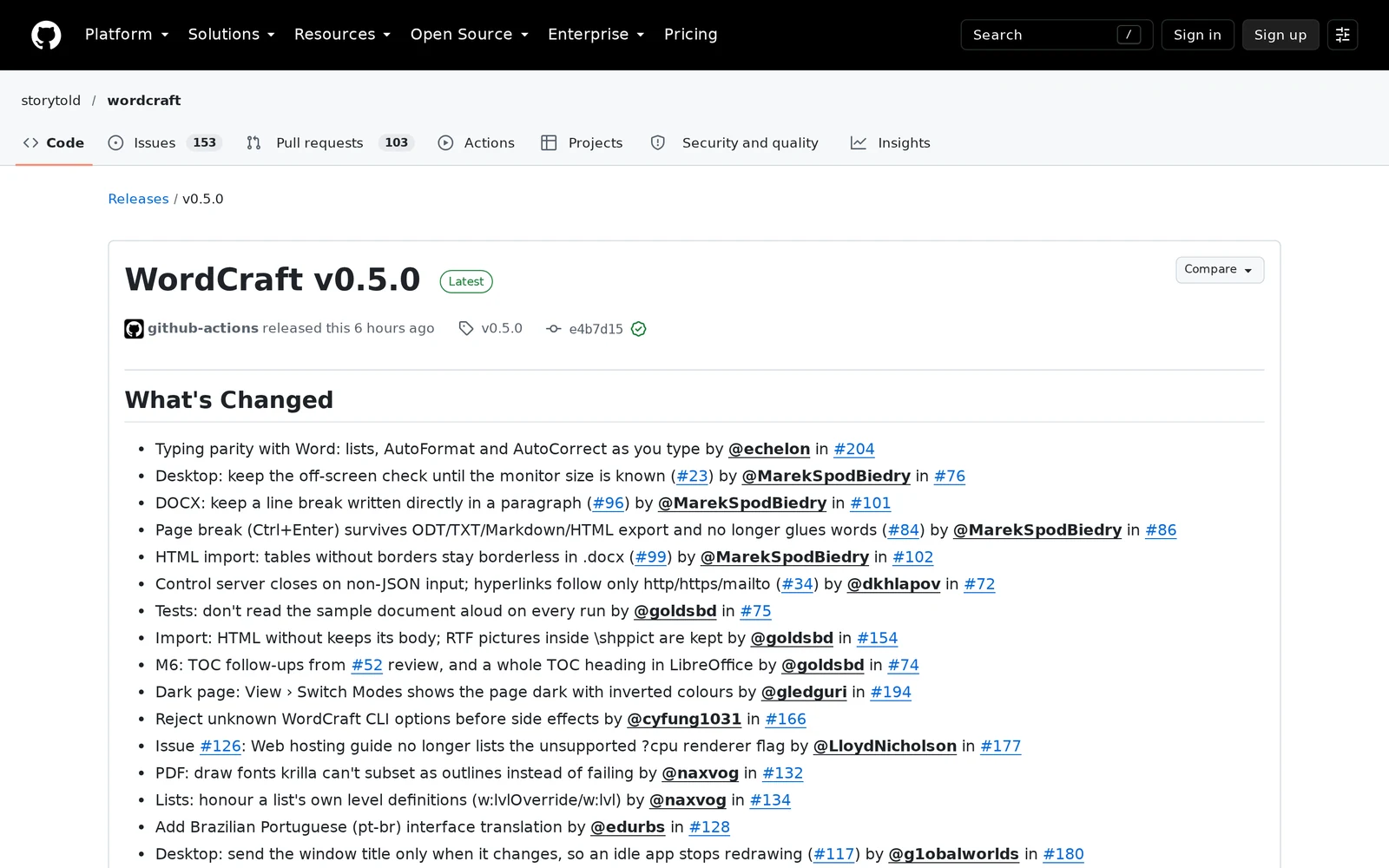
They are WordCraft for Word, GridCraft for Excel, DeckCraft for PowerPoint, CADCraft for AutoCAD and SoundCraft for Pro Tools. Like the earlier batch, they are a clean-room reimplementation of software that usually costs a subscription, written from scratch and released under Apache-2.0 or MIT.
Word, Excel and PowerPoint, rebuilt
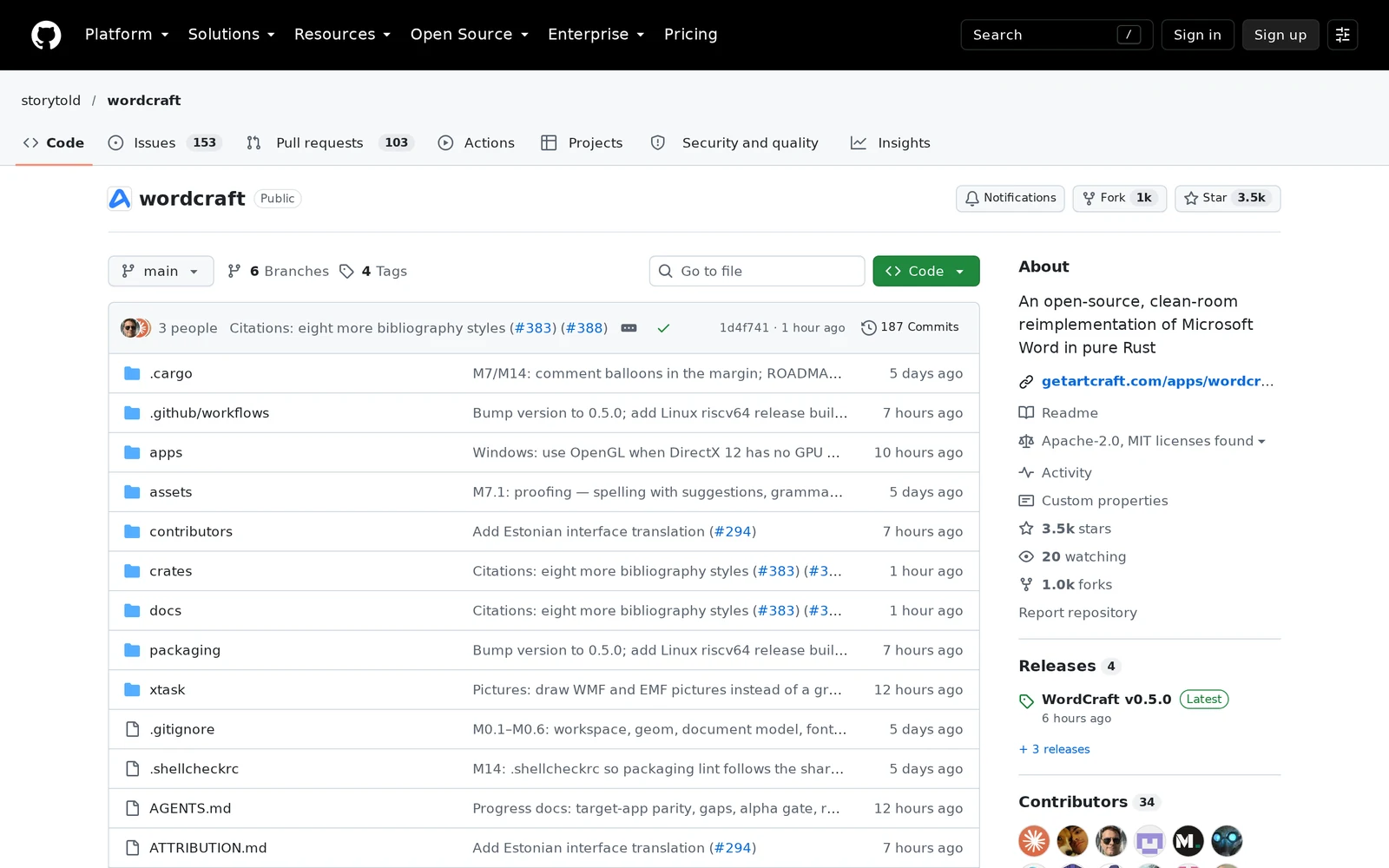
All five repositories were created on GitHub on the same day and have climbed quickly. WordCraft holds 3,477 stars, CADCraft 1,995, GridCraft 1,994, DeckCraft 1,516 and SoundCraft 1,407. The desktop builds share Rust code with browser versions compiled to WebAssembly, and the development history lists Claude Opus 5.5 as a co-author on the commit trail.
That is real traction, though it is a fraction of the Adobe rebuilds. PhotoCraft alone sits at 43,378 stars eight days after launch, more than the five new apps combined. The earlier set also had the advantage of a headline story: Adobe raised its photography plan prices by half, and Canva made Affinity free.
The open source Office alternatives are not ready for your files
The completion figures look strong. WordCraft’s roadmap claims 354 of the 405 commands in Word’s ribbon, about 87 percent, with real feature parity estimated closer to 62 percent. GridCraft claims 89 percent of Excel’s ribbon commands and 93 percent of its worksheet functions. DeckCraft sits at roughly 79 percent of PowerPoint’s features.
Those numbers count whether a feature can be invoked, not whether it behaves the same way or preserves what it is handed. WordCraft’s own roadmap is more candid: charts, SmartArt and OLE embedded objects are lost when a DOCX is loaded and saved. Validation, meaning opening real business documents and re-saving them without breaking content or layout, had not yet begun. Both the roadmap analysis and early hands-on write-ups make the same point.
Why the gap is hard to close
The file formats themselves are not the obstacle. Office Open XML is a published standard, so reading and writing DOCX, XLSX and PPTX is legal and achievable. Reproducing the way Word renders a complicated document is a different problem, and it belongs to the application rather than the specification.
ArtCraft’s method sets the ceiling. Developers may watch how Word behaves but may not disassemble it, so every quirk has to be re-derived by observation. The company has also drawn attention for building the whole line this way, with AI doing much of the writing.
What to watch
The gap closes fastest where documents are simple. A clean note or a basic deck is already within reach, and the spreadsheet claims are the strongest of the three. For anyone whose work arrives as a formatted report from a client and has to go back the same way, the honest answer today is to keep Word installed and watch version 0.6.

Gadget Pilipinas
Founded in 2009 by Gian Viterbo, Gadget Pilipinas is one of Philippines’ top sources for news, tutorials, reviews and tips about the latest trends in technology, gadgets, games, social and digital media and cyber culture.
View all articles →