

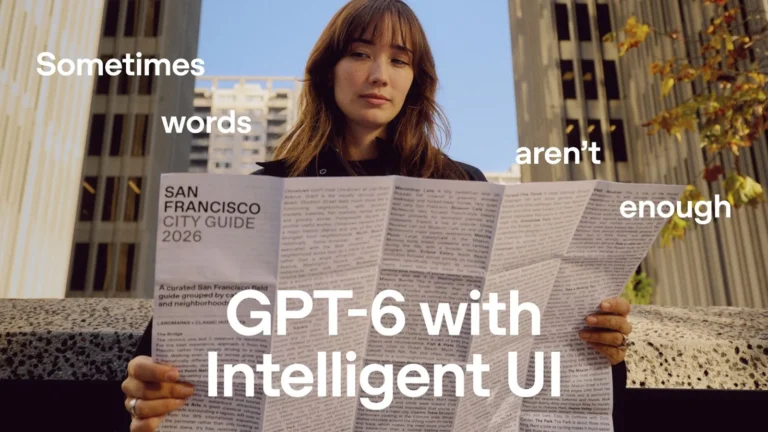
OpenAI is putting GPT-6 in front of everyone who uses ChatGPT, and it is packing the upgrade inside a new way of answering. The headline feature is Intelligent UI, a capability that lets ChatGPT reply with a working interface instead of a wall of text. According to OpenAI, the new model is built for the more than 1.2 billion people who open ChatGPT every week.
The company first put GPT-6 models in front of paying customers last month. This rollout extends the same generation down to the free tiers, which is the part that changes things for most users.
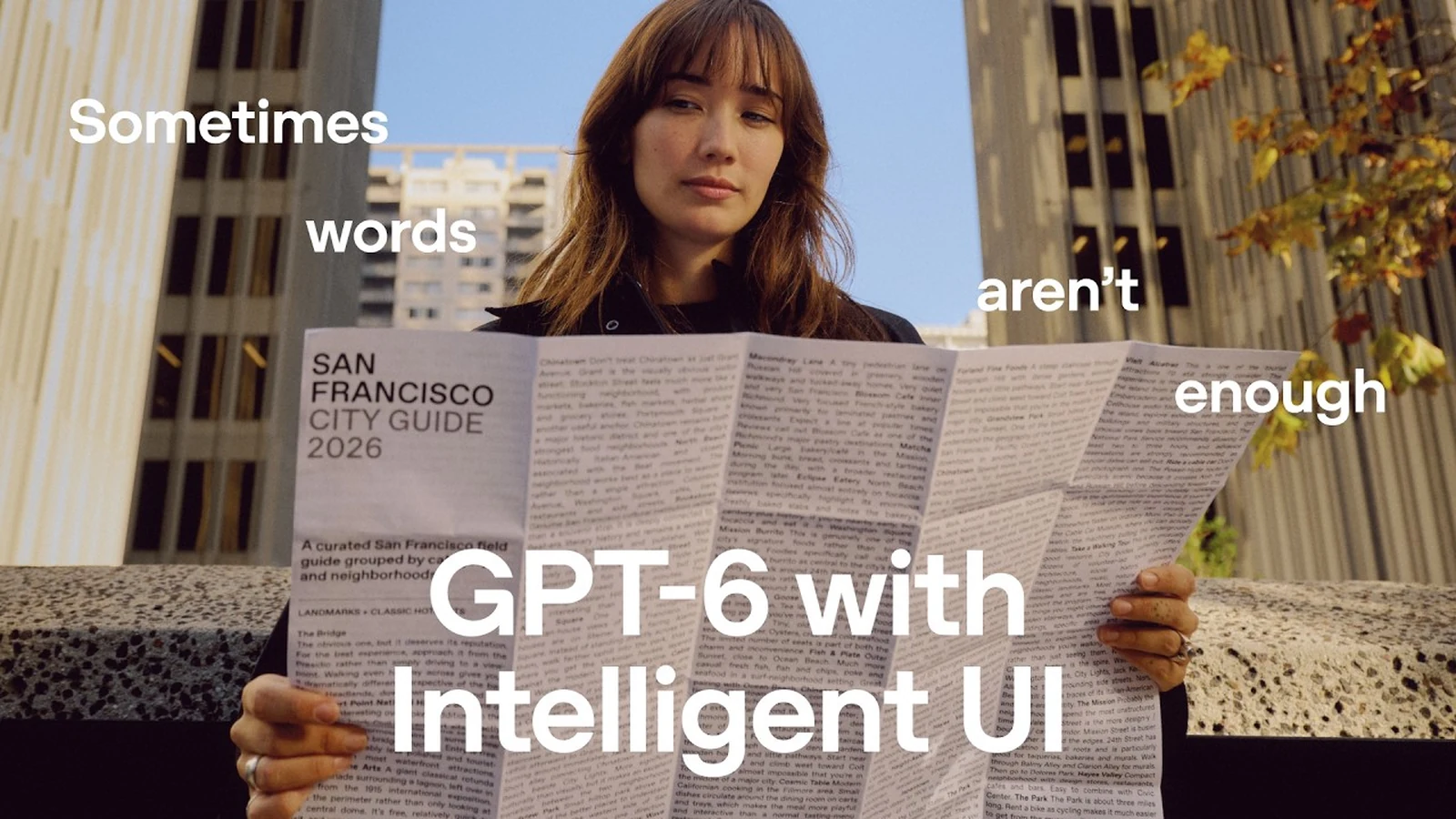
What Intelligent UI actually does
A normal chatbot answer is text, sometimes with an image pasted in. An answer built for Intelligent UI can include graphics, tappable buttons, forms and charts, assembled into something you interact with rather than read.
OpenAI lists the examples plainly: a side by side comparison, an interactive diagram, a timing calculator for cooking, a map for a road trip, a bill splitter, a small game. The answer to a question becomes a tool you can use in the moment.
The mechanism is worth understanding, because it explains why the answers arrive quickly. OpenAI trained the model to compose its replies from a library of native, streamable components, and built a compiler that processes the interface as the model generates it. The interface therefore draws itself progressively, rather than waiting for the full answer to finish before anything appears on screen.
The answers also got faster
The interface is the visible change. Underneath it, OpenAI reworked how the model handles thinking time.
ChatGPT can now give an initial response, then think further and follow up with more detail, a behaviour OpenAI calls interleaved thinking. The model was trained to account for how long a user has been waiting, composing an answer progressively instead of sitting silent.
On OpenAI’s internal evaluations, GPT-6 Extra High begins answering in the same time as the older GPT-5.6 Medium while scoring better than GPT-5.6 Extra High. For questions that need a web search, GPT-6 Instant starts answering 44 percent sooner on average than GPT-5.6 Instant. The company also says the model is better at judging when a lookup is actually needed.
Which model you get depends on what you pay for
The rollout is tiered, and the model name differs by plan. Paid users on Plus, Pro, Business and Enterprise are served by GPT-6 Sol. Free and Go users are served by GPT-6 Luna.
Intelligent UI reaches Plus, Pro, Business and Enterprise first, then expands to Free and Go the following day. Enterprise availability depends on workplace admin settings, so a company account may lag behind the public timeline. We have covered the expansion of ChatGPT Go before, which is the tier that now receives Luna.
Two scoping details matter. The change applies to the Chat experience only, and OpenAI says the models powering Work and Codex are not changing. Users who rely on those surfaces should not expect different behaviour from this update. The company previously detailed the GPT-6 Astra rollout, which sits above these tiers.
For users in the Philippines the practical effect lands on the free tier. GPT-6 Luna is the model most local users will meet without paying, and the second day of the rollout is the one that matters here. It also continues a pattern of ChatGPT spreading into more surfaces, from the Atlas browser to interactive answers inside the chat itself.

The safety work behind the rollout
OpenAI says the model builds on several of the safety advances introduced with Astra, its most capable GPT-6 model. The specific claim is better resistance to bypass attempts, particularly attacks that adapt across multiple turns of a conversation rather than arriving as a single prompt.
The company also updated safety training using real world lessons, naming cyberattacks, biological threats and violence as the areas addressed. It says the model is clearer about what it can and cannot do relative to GPT-5.6 Sol, and that it avoids unnecessary refusals. Alignment evaluations ran throughout training. The full detail is published in the GPT-6 system card.
What OpenAI is still not claiming
The announcement includes a caveat worth repeating. OpenAI states there is still work ahead to improve the model’s design judgment and to expand what it can create, which means the interfaces will not always be well chosen.
That is the honest framing of what Intelligent UI is today: a capable first version rather than a finished one. The ambition behind it is larger, and OpenAI states it plainly. Instead of people adapting to software, software will adapt to people.

Giancarlo Viterbo
Giancarlo Viterbo is a Filipino Technology Journalist, blogger and Editor of gadgetpilipinas.net, He is also a Geek, Dad and a Husband. He knows a lot about washing the dishes, doing some errands and following instructions from his boss on his day job. Follow him on twitter: @gianviterbo and @gadgetpilipinas.
View all articles →