
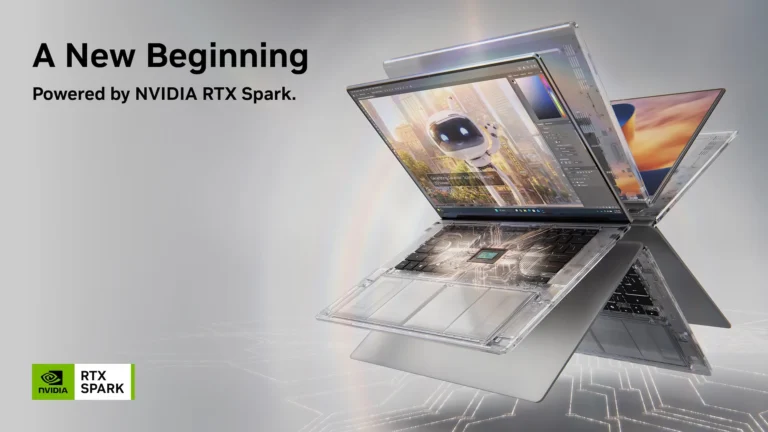

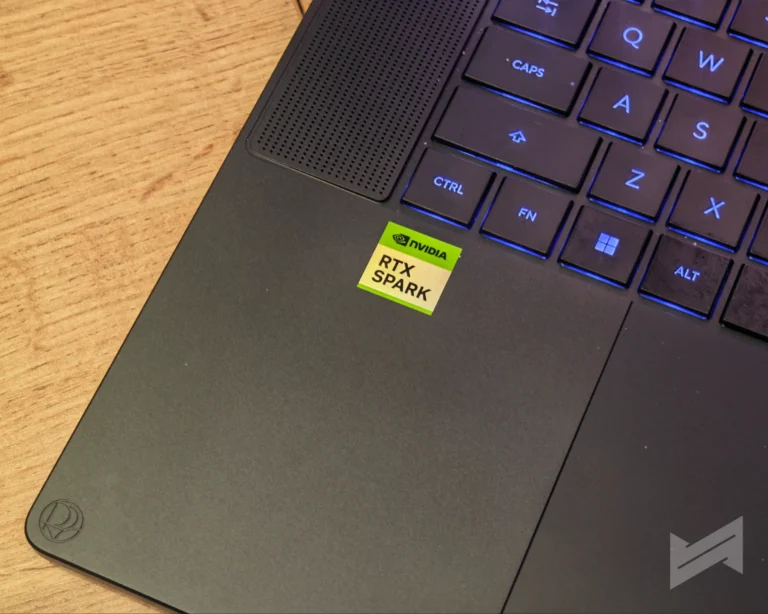
The most consequential detail to come out of NVIDIA’s RTX Spark Editor’s Day in San Francisco was the credit line NVIDIA and MediaTek share, not a specification or a benchmark figure.
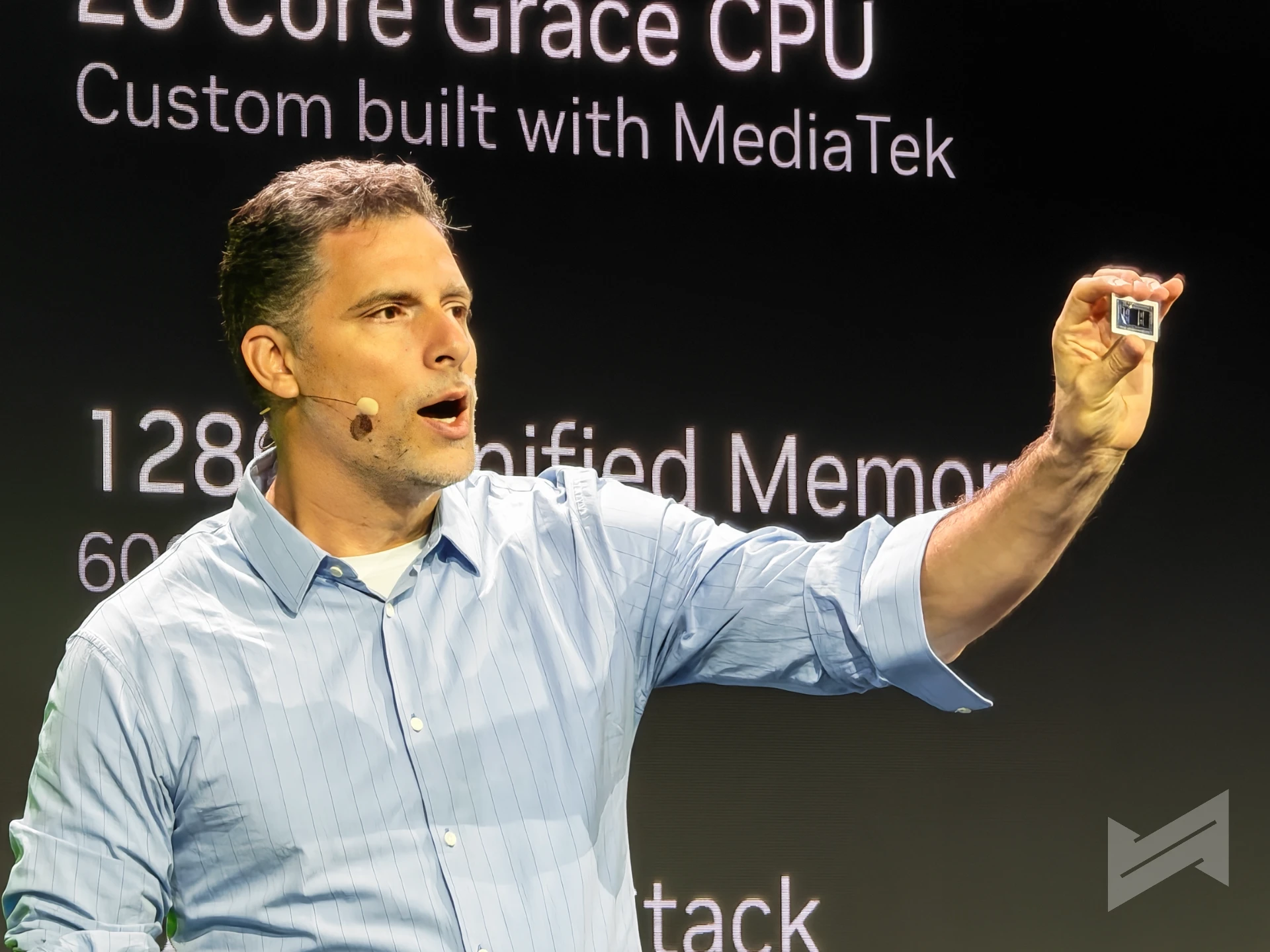
It was a credit line that the company’s own presenters kept repeating on stage, because the platform’s CPU, its I/O and its memory tile were custom built with MediaTek.
Behind that credit line is a phone call between two chief executives who decided to build something that neither company could have shipped alone. When NVIDIA introduced the platform at GTC Taipei, Jensen Huang recounted that he called Rick Tsai, his counterpart at MediaTek, to propose building the first agent computer together.
The two companies then placed hundreds of engineers on the problem for two years, and the result is the N1X, the Arm-based system on a chip that powers RTX Spark.
What MediaTek built for RTX Spark
It is worth being precise about who contributed what, because the split explains why the chip exists at all.
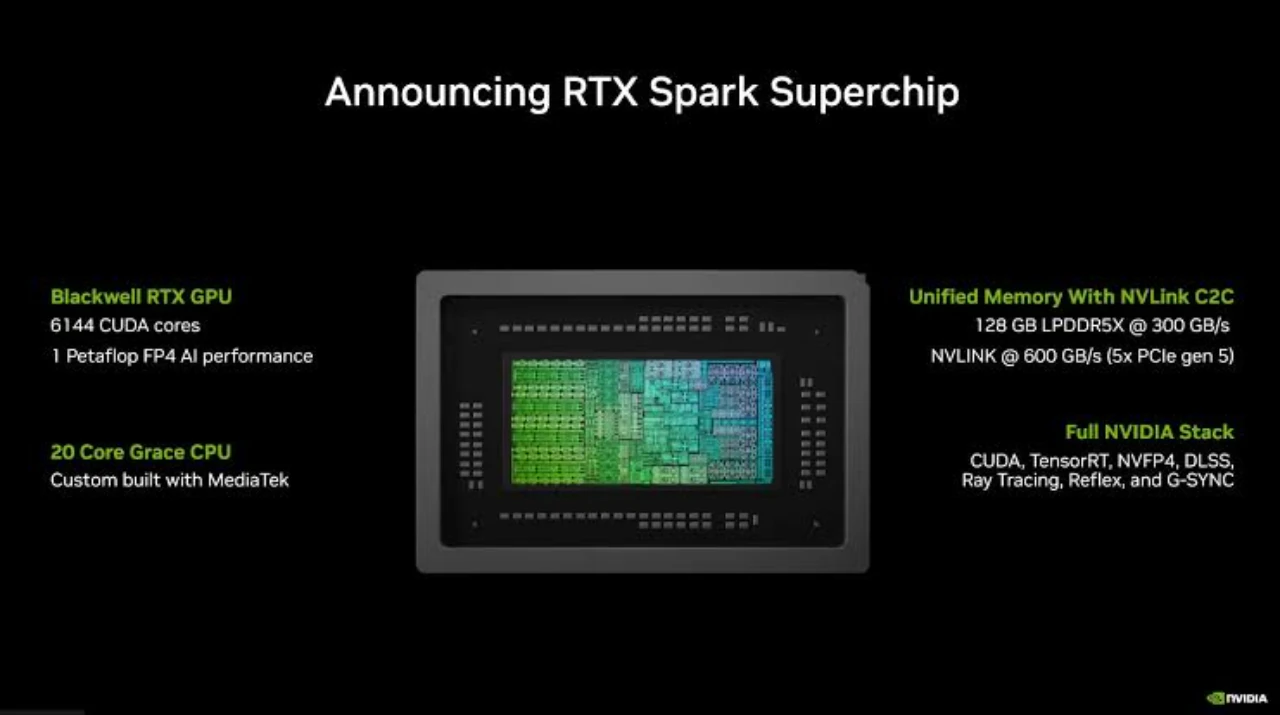
NVIDIA brought the Blackwell graphics processor with 6,144 cores, up to one petaflop of FP4 AI performance, the CUDA software stack and the developer relationships that make any of it useful. MediaTek brought the 20-core Arm CPU and its cache, a proprietary memory controller that supports up to 128 GB of unified memory, and the power delivery design that keeps a thin laptop alive under sustained load.
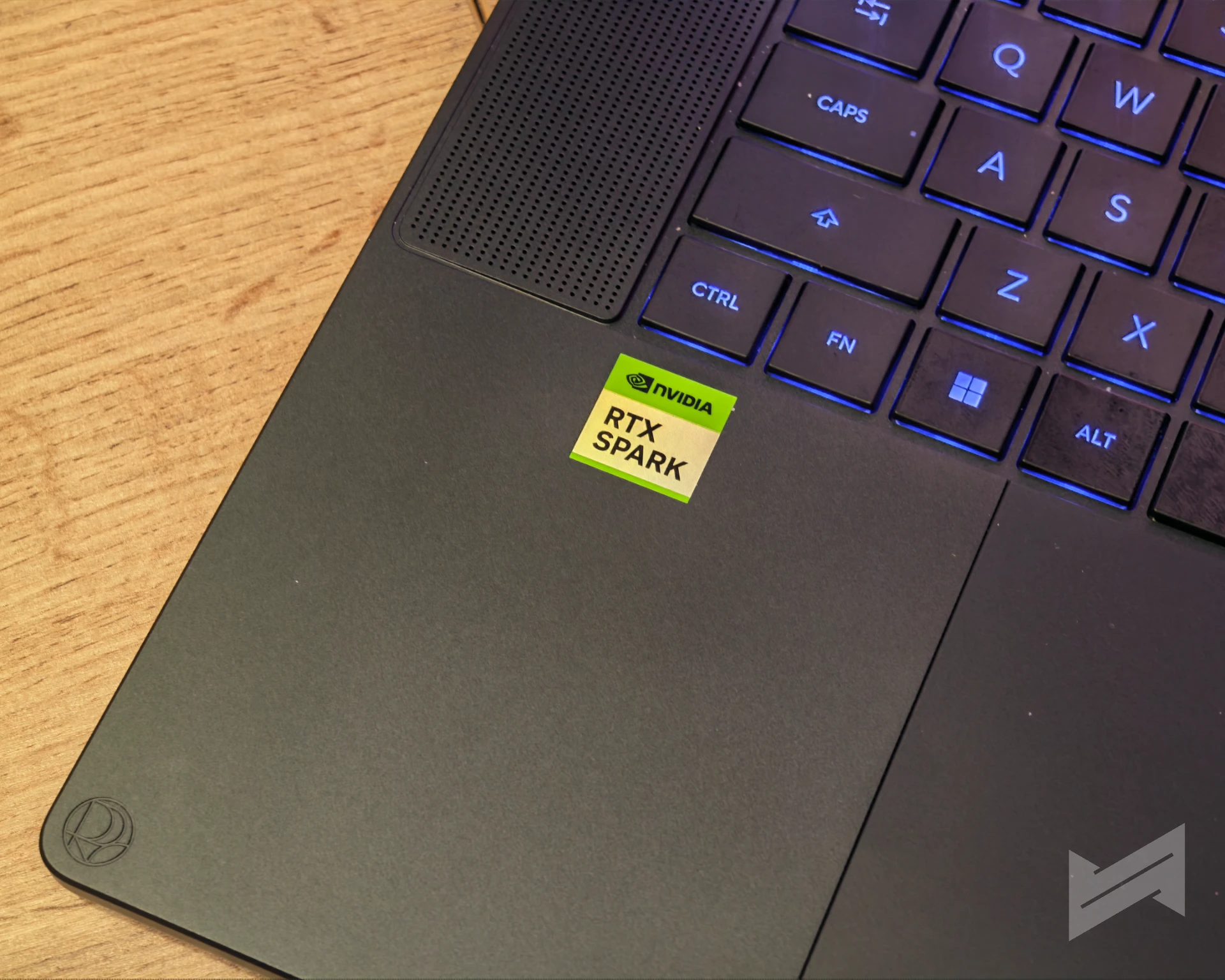
MediaTek also contributed Wi-Fi 7 connectivity and the manufacturing discipline that comes from a close working relationship with TSMC, which builds the chip on its 3-nanometer process.
Neither company could have shipped this alone, because NVIDIA has no consumer Arm system-on-chip practice at this scale and MediaTek has no CUDA. The bridge between them is not a handoff between two suppliers, and it is not a contract with a specification attached to it. It is the place where the product was invented.
NVIDIA has crossed this bridge before
That pattern is older than most people remember, and NVIDIA’s most memorable contributions arrived through it.
In 2001, Microsoft put an NVIDIA graphics processor into the original Xbox, and the NV2A inside that console was a derivative of the GeForce 3. The contract was NVIDIA’s first console win at scale, and it forced a company built around discrete PC cards to design under the thermal, cost and decade-long lifecycle constraints of a games console.
In 2017, Nintendo chose a custom version of the Tegra X1 for the Switch, which went on to ship more than 154 million units worldwide. A desktop graphics architecture became a mobile one, and Huang has said the company spent several hundred engineering years tailoring the chip and its logic board to Nintendo’s requirements.
In 2021, Epic Games shipped Unreal Engine 5 with Nanite and Lumen, and NVIDIA’s ray tracing, DLSS and Reflex were built into the engine rather than bolted onto it. Real-time global illumination stopped being a demonstration and became a default, which is the kind of two-way influence that a supply agreement cannot produce.
Then the scale changed, and the partnerships became infrastructure rather than product development.
In September 2025, OpenAI and NVIDIA announced a partnership to deploy at least ten gigawatts of NVIDIA systems, with NVIDIA committing up to 100 billion dollars as each gigawatt comes online. The two companies agreed to co-optimize their roadmaps, which is a formal way of saying that the model and the machine would be designed against each other.
The MediaTek relationship in miniature
The MediaTek relationship has followed the same arc in miniature, starting in automotive with Dimensity Auto Cockpit platforms that integrate NVIDIA graphics for intelligent vehicle cabins.
It continued with the GB10 Grace Blackwell Superchip inside DGX Spark, the desktop AI system, and it reached the consumer PC with the N1X.
NVIDIA has already confirmed that the N2X, the N3X and a lighter N1 will follow, and in August 2026 the two companies expanded the partnership into data center infrastructure through the NVLink Fusion platform.
NVIDIA also invested 3.5 billion dollars in convertible bonds issued by MediaTek as part of a record 3.9 billion dollar offering, which was its largest direct investment outside the United States.
The lesson is not that partnerships are pleasant, and it is not that collaboration is a virtue worth celebrating on its own.
Innovation at this scale needs an accelerator, a software ecosystem, a manufacturing process and a power budget that no single company owns outright.
When the bridge is built properly, each partner contributes the thing it does better than anyone else, and the result is a product category that did not exist before.
What the bridge costs, and what comes next
There is a cost, and it is worth stating plainly rather than burying in a footnote.
Two years of joint engineering across two corporate cultures is slow and expensive, and first-generation platforms always reach the market ahead of the software that makes them comfortable.
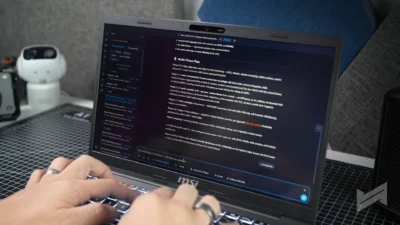
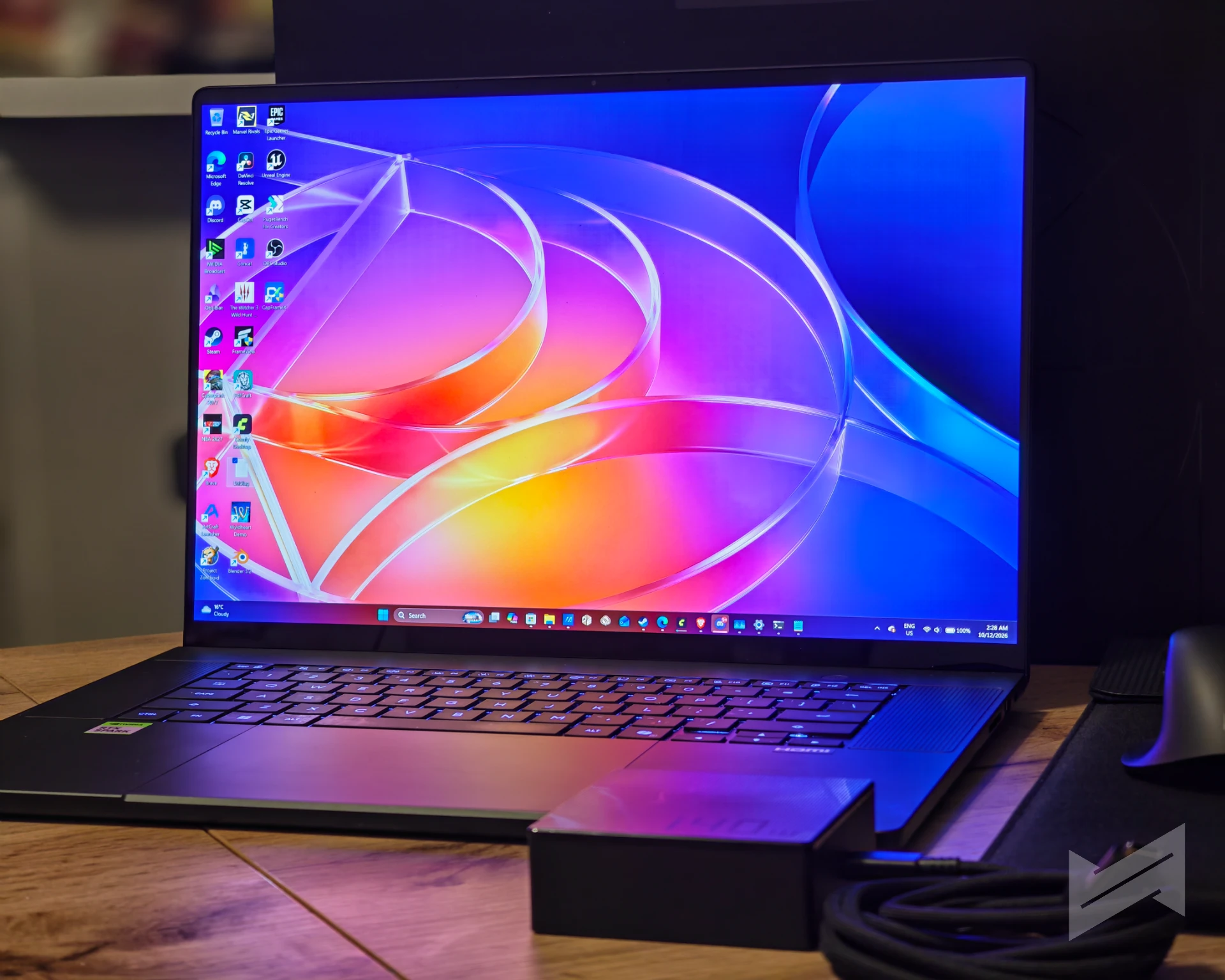
For buyers in the Philippines, the practical version of this arrives soon, when RTX Spark laptops from ASUS, Dell, HP, Lenovo, Microsoft and MSI reach stores. That list includes the ASUS ProArt P16 that we have been testing.
The more interesting question is what the next bridge produces, because NVIDIA and MediaTek have committed to several more generations of PC silicon while the automotive work continues in parallel.
If the past two decades are any guide, the innovations worth remembering will come out of those joint efforts rather than from any single announcement.
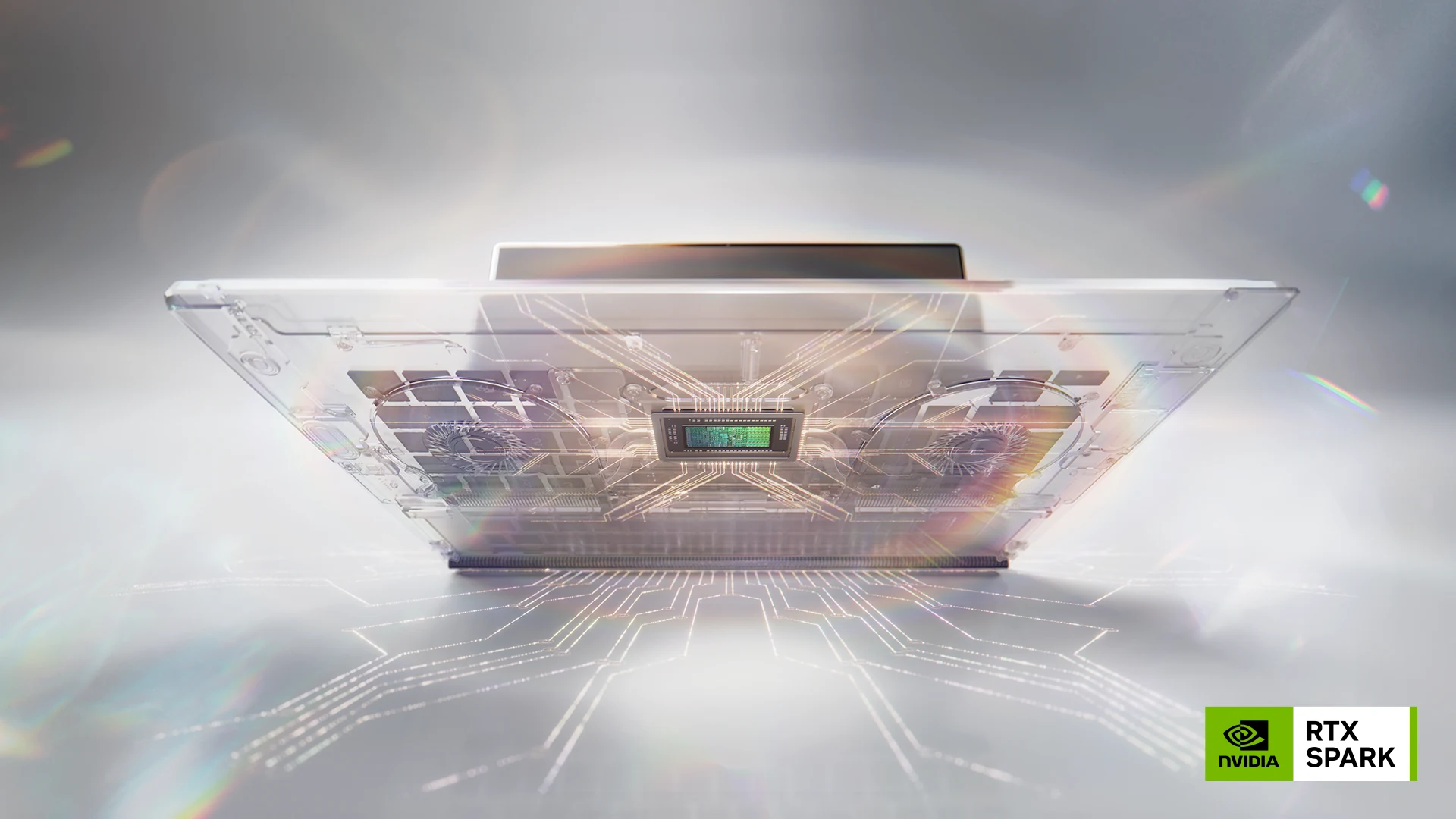
The chip is the product, and the collaboration is the invention.

Giancarlo Viterbo
Giancarlo Viterbo is a Filipino Technology Journalist, blogger and Editor of gadgetpilipinas.net, He is also a Geek, Dad and a Husband. He knows a lot about washing the dishes, doing some errands and following instructions from his boss on his day job. Follow him on twitter: @gianviterbo and @gadgetpilipinas.
View all articles →