



Samsung has introduced Flex Titanium technology for its upcoming Galaxy foldable devices, building on seven generations of foldable innovation. This new display structure features enhanced durability and reduced crease visibility through the integration of titanium-based components, balancing slimness, flexibility, and strength.
“Samsung’s strength in the foldable category comes from connecting user needs with our technologies that deliver tangible benefits in everyday life. For the next generation of Galaxy foldables, Samsung is building on years of expertise to bring display innovations into devices that enhance user experiences, anchored by exceptional viewing experiences.”
Sunghoon Moon, Samsung Electronics EVP and Senior Executive, Mobile R&D Office – H/W
Samsung: Building on Years of Foldable Experience
Samsung has been pivotal in mobile display innovation, notably with the introduction of AMOLED displays in 2007 and the development of flexible displays. Continuous refinement in practical conditions is essential for maximizing technology’s potential, particularly in foldable devices. Over seven generations of Galaxy foldables, Samsung has incorporated consumer feedback, leading to enhancements aimed at providing a larger, immersive viewing experience while minimizing visible creases without sacrificing durability or portability.
To meet these expectations, Samsung had to rethink how foldable displays are constructed by bringing together breakthroughs in technology, materials, and mechanical engineering. The result is the latest milestone in foldable display innovation: Flex Titanium technology. By successfully integrating display innovation with device engineering, Samsung will continue to shape the direction of the mobile industry and deliver standout user experiences.

Flex Titanium: Next-Level Viewing
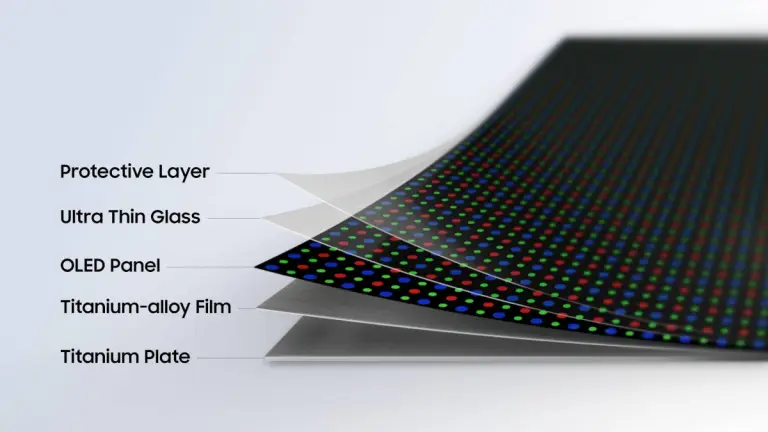
The company innovated in structural design for foldable displays by using titanium, which balances strength, flexibility, and thinness. Titanium’s resilience makes it ideal for rigorous applications, but its stiffness poses engineering challenges. To address these, Samsung incorporated titanium in two components: a titanium-alloy film and a titanium plate, enhancing the durability of the displays.
The titanium-alloy film, situated beneath the OLED panel, enhances display support with 20 times greater mechanical stiffness than a polymer film. Its precision-rolled, ultra-thin design, approximately one-third the thickness of human hair, allows for a slimmer display. Below this film is a flexible titanium plate that enhances bonding with the display module by eliminating air gaps, resulting in stable support during unfolding while maintaining folding flexibility. Additionally, the integration of high-resolution architecture and next-generation organic materials improves display resolution and power efficiency significantly.
Together, these advancements enable a strong foldable display that maximizes content immersion on a seamless screen and reduces crease visibility, all while keeping it slim. By balancing strength, flexibility and structural stability, Samsung continues to set the bar for foldable displays.
The new Flex Titanium technology will debut with the company’s next-generation Galaxy foldable devices. Further details will be unveiled at Galaxy Unpacked.
For more information, click HERE.

Miguel Palispis
Started his freelancing adventure in 2018 and began doing freelance Audio Engineering work and then started freelance writing a few years later. Currently he writes for Gadget Pilipinas and Grit.PH. He is also a musician, foody, gamer, and PC enthusiast.
View all articles →Related News



 Leaked Specs Reveal OPPO’s “Wide” Reno X