





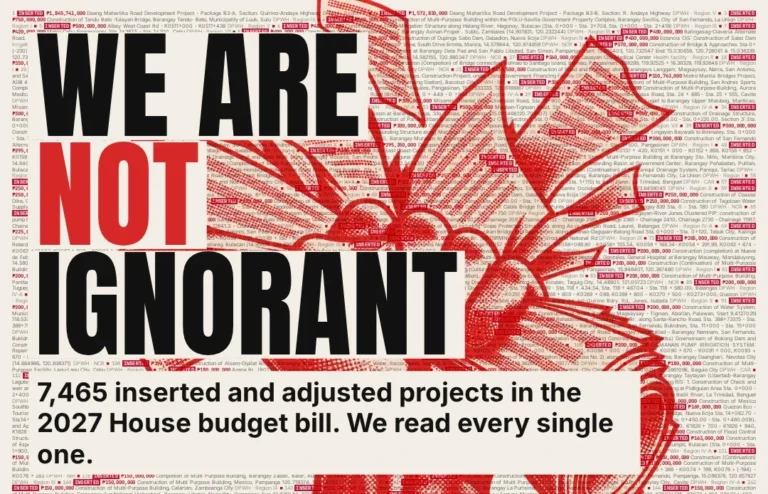
BetterGovPH has answered a House leader who said the group’s budget criticisms “betray ignorance” by publishing the work itself: a searchable record of 7,465 inserted and adjusted projects behind the 2027 budget insertions, every one of them listed, sorted and downloadable.
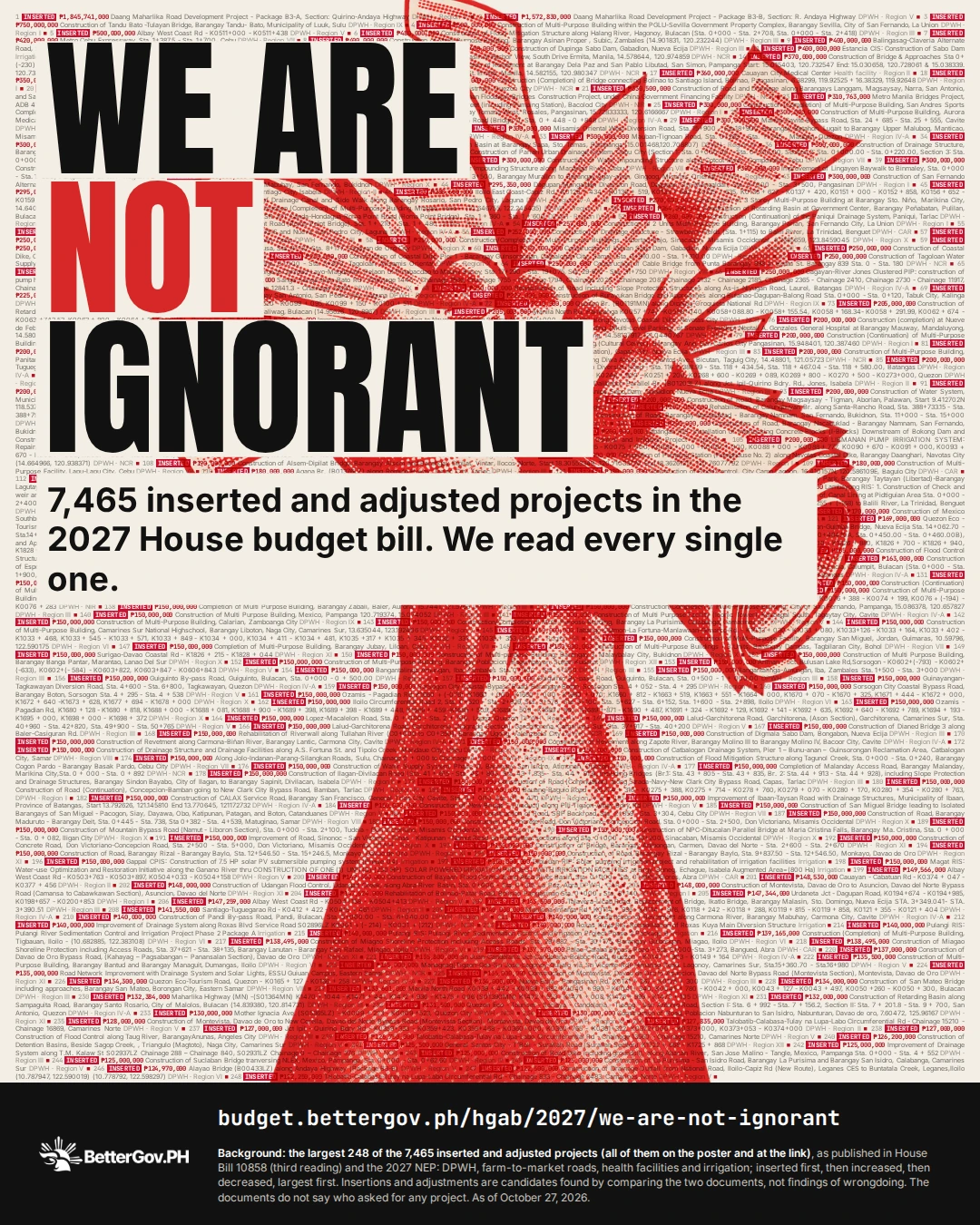
The reply went up at budget.bettergov.ph/hgab/2027/we-are-not-ignorant, a page titled, plainly, “We are not ignorant.” Its subtitle is the argument in one line: “7,465 inserted and adjusted projects in the 2027 House budget bill. We read every single one.”
What Ronnie Puno said
The remark came from Antipolo City Representative and House Deputy Speaker Ronaldo Puno during a press briefing on October 26, a day before Congress broke for the Undas recess. Responding to allegations of insertions in the PhP7.2-trillion proposal, Puno argued that the House does not write the budget at all.
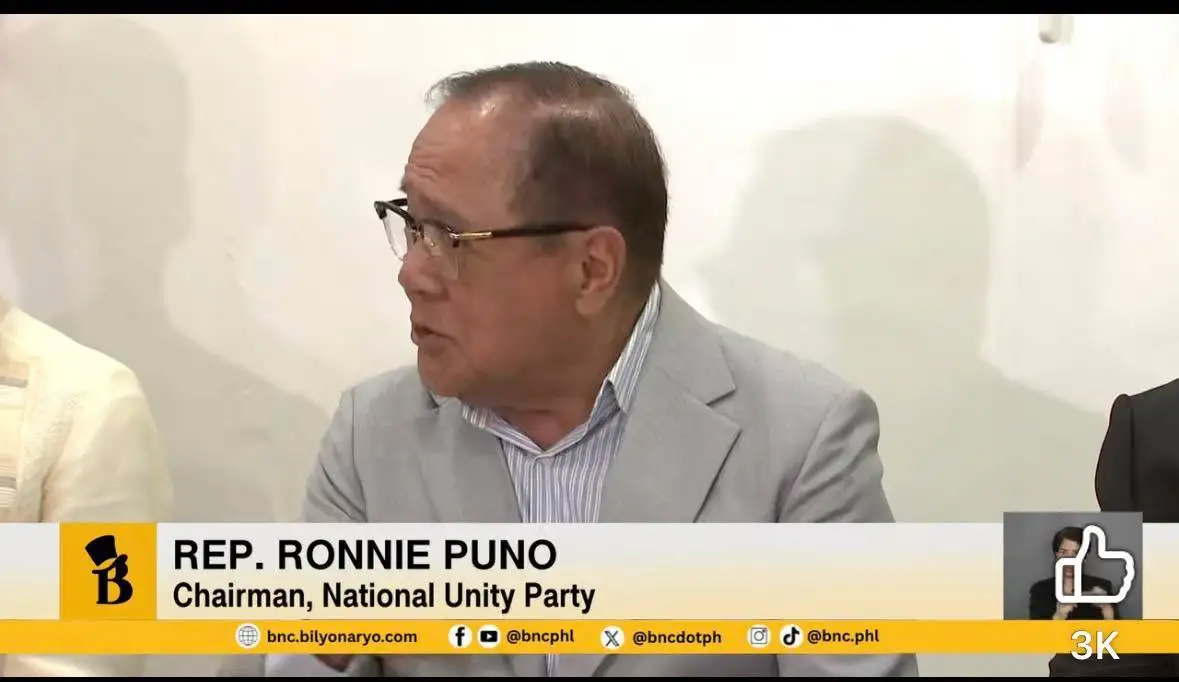
“Hindi nila naintindihan ang budget eh,” Puno said, as reported by NewsKo. “Hindi nga kami ang nagsa-submit ng budget, sina-submit ng mga agency. We only review it di ba. So the Congress does not really create the budget, we’re just reviewing what has already been submitted to us.”
He went further: “Sana maging seryoso sila sa mga banat nila ano, kasi it just betrays ignorance pagka-ganun eh.” In English, the group should be serious about its claims, because that kind of talk betrays ignorance.
Bataan Representative Albert Raymund Garcia, senior vice chair of the House appropriations committee, took a different line, asking the coalition to be specific. “The best we can do is if the People’s Budget Coalition can be more specific para ma-validate natin,” he said, suggesting that farm-to-market roads plotted in the sea may be typographical errors given the volume of documents involved. The committee is chaired by Nueva Ecija Representative Mika Suansing.
The response: publish the list, with a disclaimer
BetterGovPH did not answer with a statement. It answered with the dataset, and with the caveats attached to it. The page is explicit that its matches are leads, not verdicts: “Insertions and adjustments are candidates found by comparing the two documents, not findings of wrongdoing. The documents do not say who asked for any project.”
The full list is downloadable as a CSV file, and the underlying comparison runs across four programs: DPWH national infrastructure, Department of Agriculture farm-to-market roads, DOH health facilities, and National Irrigation Administration projects. Those four are the only parts of the bill that name individual projects on both sides of the comparison, which is why the whole bill is not covered.
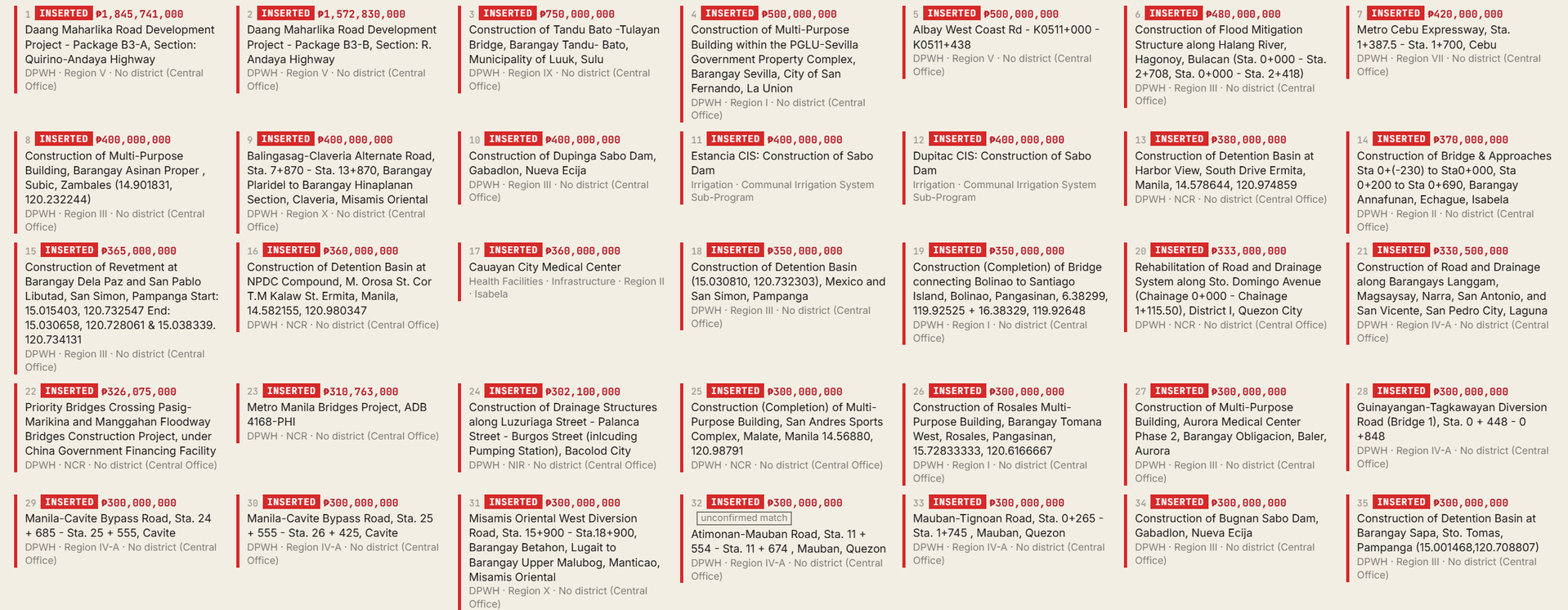
The methodology page lays out how each House line is matched to a line in the National Expenditure Program. A pairing is accepted only when a written rule finds exactly one fit, and the rule that produced it is stored alongside it. The project states that “identity between the two documents is never asserted.” Where several lines could be the same project, the match is left ambiguous on purpose.
What the Budget Coalition exposed on 2027 budget insertions
The substance behind the spat is larger than the exchange. The People’s Budget Coalition we reported on when it formed told the Senate finance committee on October 26 that the House version carries more than PhP1 trillion in what it calls “red flag” insertions, and it broke that total into three categories.
Co-convenor AJ Montesa put PhP695 billion in “hard pork” for politicized infrastructure, PhP210 billion in “soft pork” or patronage-driven ayuda, and PhP112 billion in “shadow pork” tucked into unprogrammed appropriations, according to reporting by The Philippine Star on the hearing. Coalition analyst Kenneth Isaiah Abante told senators that the House added PhP43 billion to multipurpose buildings in the DPWH budget alone, and that around 7,000 infrastructure projects worth PhP190 billion carry no detail.
The named numbers are specific. In the DPWH budget the House inserted 6,200 projects, most of them multipurpose buildings, worth PhP172 billion. Beyond that: 180 health facilities worth PhP2 billion, 350 farm-to-market roads worth PhP6 billion, and 200 irrigation projects worth PhP7 billion. AICS and MAIFIP each rose by PhP24 billion, and PhP10 billion went to assistance for farmers and fisherfolk.
What was cut to make room is the other half of the story. Abante cited roughly PhP27 billion taken from the Laguna Lakeshore Road, close to PhP20 billion from the Metro Manila Subway, PhP15 billion from the North-South Commuter Rail, PhP10 billion from pension and gratuity, and PhP7.75 billion from the National Disaster Risk Reduction and Management Council.
The coalition also flagged a substitution in health financing. The PhilHealth subsidy falls from PhP129.8 billion in 2026 to PhP74.4 billion in the NEP, and the House did not restore it, choosing instead to double MAIFIP to PhP49.2 billion. Montesa characterized that trade as one that pushes patients toward asking politicians for guarantee letters, and the Coalition flagged it as a program that converts medical need into political favor.
Where the biggest insertions landed
The coalition’s district ranking put House Majority Leader Sandro Marcos at the top of DPWH insertions, with 405 projects worth PhP4.37 billion for the first district of Ilocos Norte. Speaker Faustino Dy III’s sixth district of Isabela ranked fourth with 147 projects worth PhP1.68 billion, appropriations chair Suansing’s district ranked seventh, and Batangas second district Representative Gerville Luistro ranked eighth.
The coalition attached its own limit to those figures: the rankings are built on budgets assigned to DPWH district offices rather than to individual representatives, and the group stated that they are not evidence of wrongdoing.
The documentation gap is separate, and worse
A second finding does not depend on matching two documents at all, and it sits outside the 2027 budget insertions the tracker counts. During the Senate finance committee’s civil society consultation, Senator JV Ejercito said only 1,418 of 16,244 projects in the proposed DPWH budget arrived with supporting documents. The remaining 14,826, or 91.27 percent, came with none. That gap answers Garcia’s request for specificity most directly.
Why a tracker and not a press release
The choice of format is the interesting part. Rather than argue about whether critics understood the budget, BetterGovPH published the comparison so anyone can check it, including the parts that weaken its own case. The platform also exposes a public API and an MCP server for AI agents, which means the underlying budget data can be queried directly rather than taken from a screenshot.
That follows the pattern of BetterGov.ph’s political dynasty tracker that we covered in September. Puno’s objection was that the House only reviews what agencies submit. The tracker does not argue with him on that point. It simply shows, project by project, what changed between the document the agencies submitted and the document the House passed, and lets the reader decide what the difference means.
The House has said it will not recall its version, and that remaining issues can be settled at the bicameral conference committee. As of the tracker’s October 27 timestamp, none of the 7,465 lines had been answered individually by the chamber that passed them.

Gadget Pilipinas
Founded in 2009 by Gian Viterbo, Gadget Pilipinas is one of Philippines’ top sources for news, tutorials, reviews and tips about the latest trends in technology, gadgets, games, social and digital media and cyber culture.
View all articles →Related News



 OPPO Introduces New 80W and 67W Power Banks