


A coalition of citizens working in technology, media, apps and digital solutions development has formed to analyze House insertions in the 2027 national budget, and it is inviting the public to work on the same data. The group was convened by BetterGovPH together with the People’s Budget Research Alliance, which ran a budget monitoring workshop on 8 October 2026 and opened a volunteer sign-up.
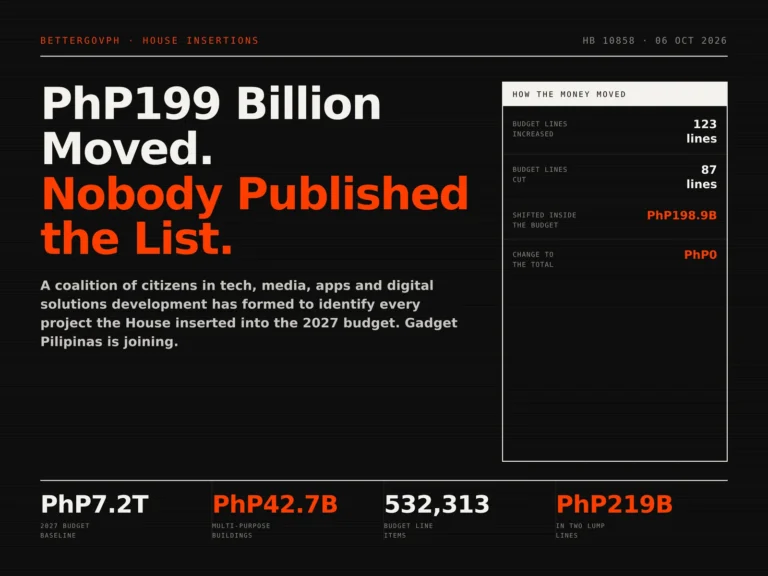
The work is not abstract. The House committee report on the 2027 budget, filed as HB 10858 on 6 October, kept the executive’s PhP7.2 trillion total and moved roughly PhP199 billion around inside it. The coalition’s job is to identify every House insertion at project level, and to establish whether any of them carry the documentation a project is supposed to have.
Where the House insertions came from
A detailed assessment published by analyst AJ Montesa puts the arithmetic on the record. The House raised 123 budget lines by PhP198.9 billion and cut 87 lines by the same amount. The total did not change to the million.
Four lines absorbed 61 percent of the additions: DPWH’s Basic Infrastructure Program for multi-purpose buildings at PhP42.7 billion, its access roads at PhP29.2 billion, the Assistance to Individuals in Crisis Situation fund at PhP24.8 billion, and the Medical Assistance to Indigent and Financially Incapacitated Patients program at PhP24 billion.
The money had to come from somewhere. The largest reductions landed on foreign-assisted bypass roads at PhP53.5 billion, the subway and the North-South Commuter Railway at PhP34.7 billion, the pension and gratuity fund at PhP10 billion, the calamity fund at PhP9.5 billion, and the health department’s immunization and family-health commodities at PhP4.9 billion.
That is the mechanism the coalition is targeting. House insertions inside this budget are financed by reductions elsewhere, so a project can appear well funded while another quietly loses the same amount.
Why the documentation gap matters
The flagged spending basket tracked by the coalition grew from PhP864 billion at the National Expenditure Program stage to PhP948 billion at the committee stage. Its patronage group rose 50 percent, from PhP140 billion to PhP210 billion, and Congress added PhP5 billion to its own budget.
The sharpest example sits in the districts. DPWH’s central office lost PhP42 billion while its 198 district engineering offices gained PhP54 billion, with 158 of them rising. Their share of the department climbed from 20 percent to 28 percent. The first district engineering office of Ilocos Norte went from PhP414 million to PhP4.8 billion. No project list and no sub-program breakdown by office has been published.
Two lump-sum lines now hold PhP219 billion between them. Because the projects have not been itemized, there is nothing yet to check against.
The tools volunteers will use
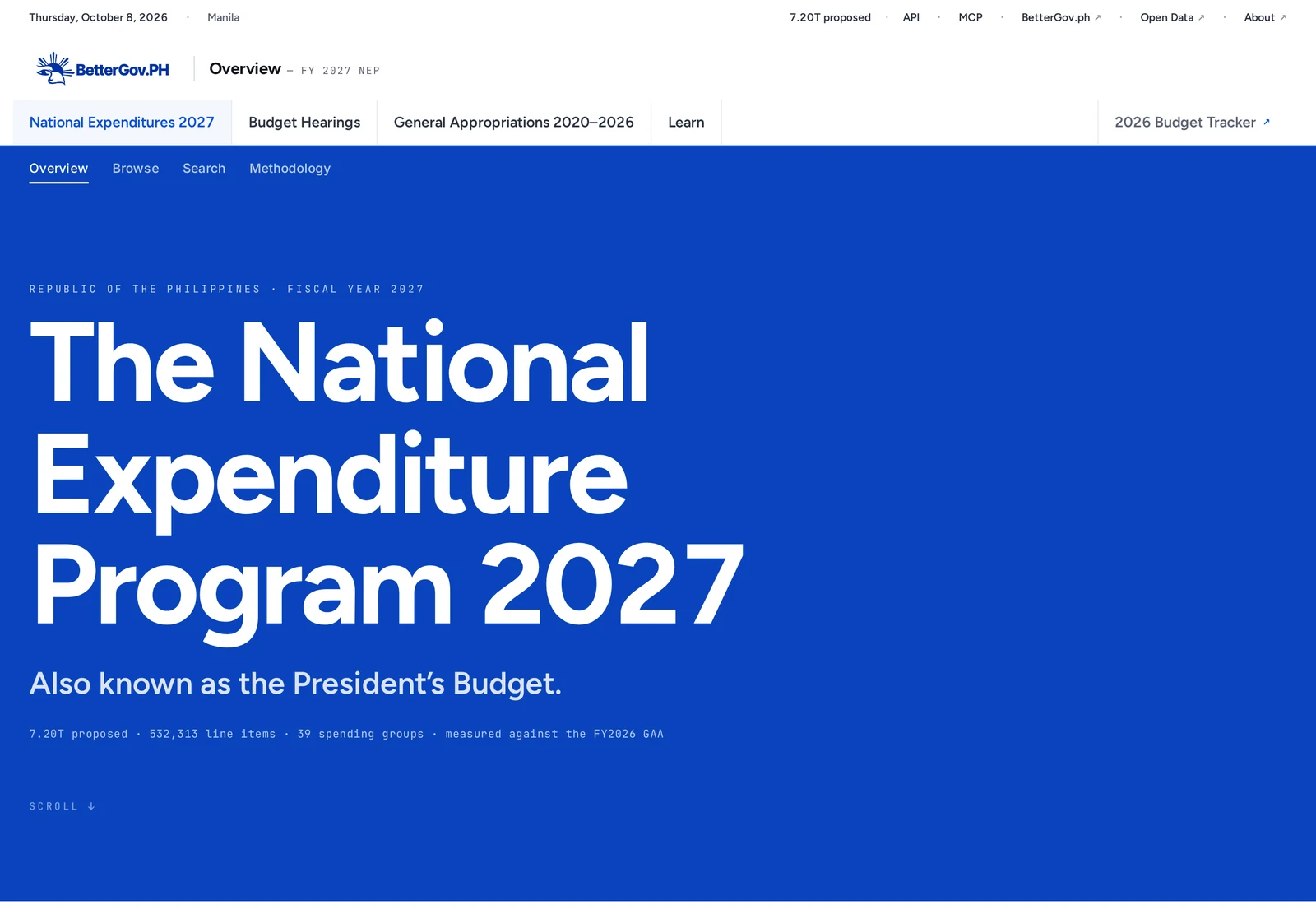
BetterGovPH has already built the infrastructure the analysis needs, and it is open. The Budget Transparency Portal carries the full 2027 program with 532,313 line items across 39 spending groups, alongside a public API and an MCP server that lets analytical tools query it directly.
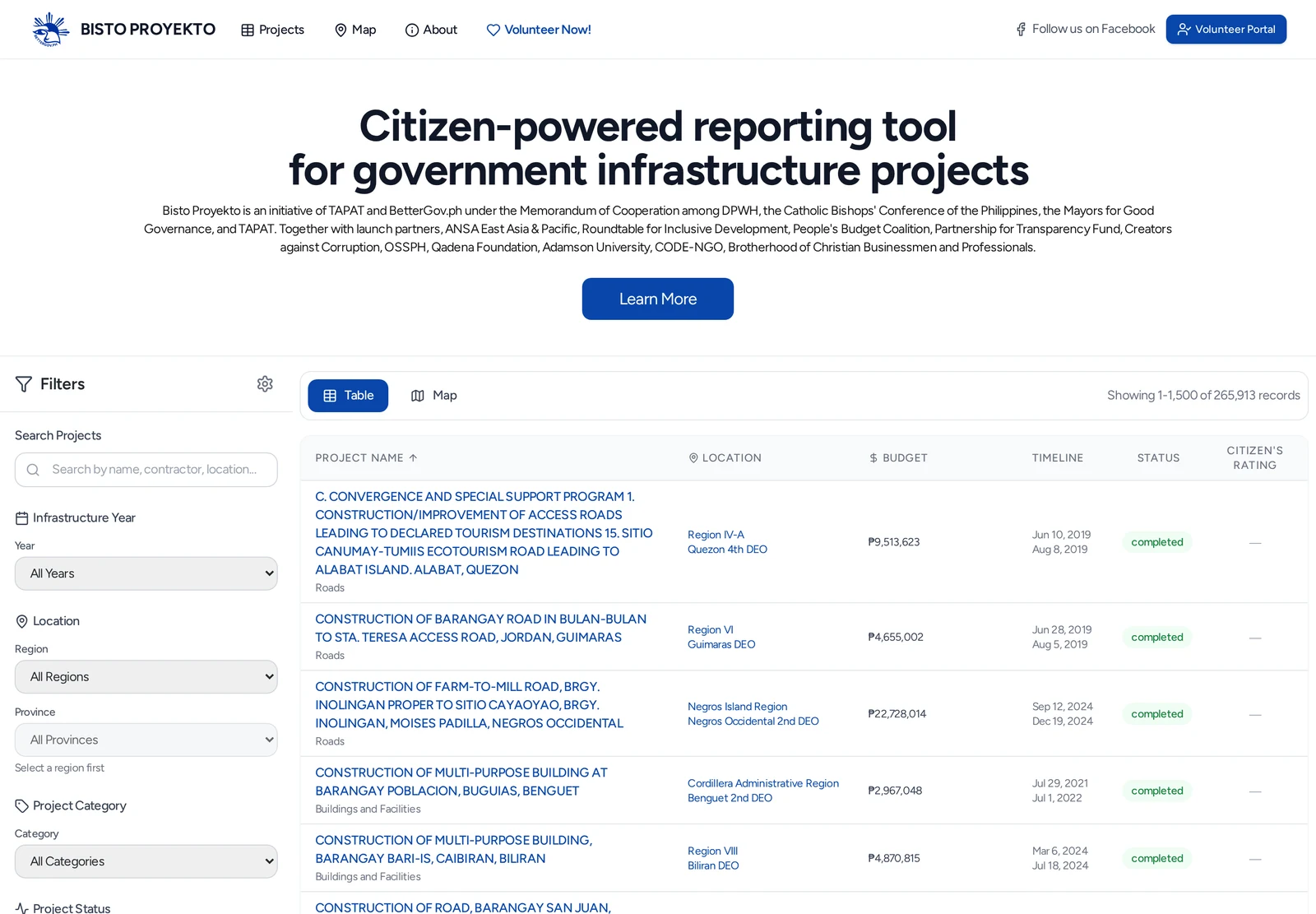
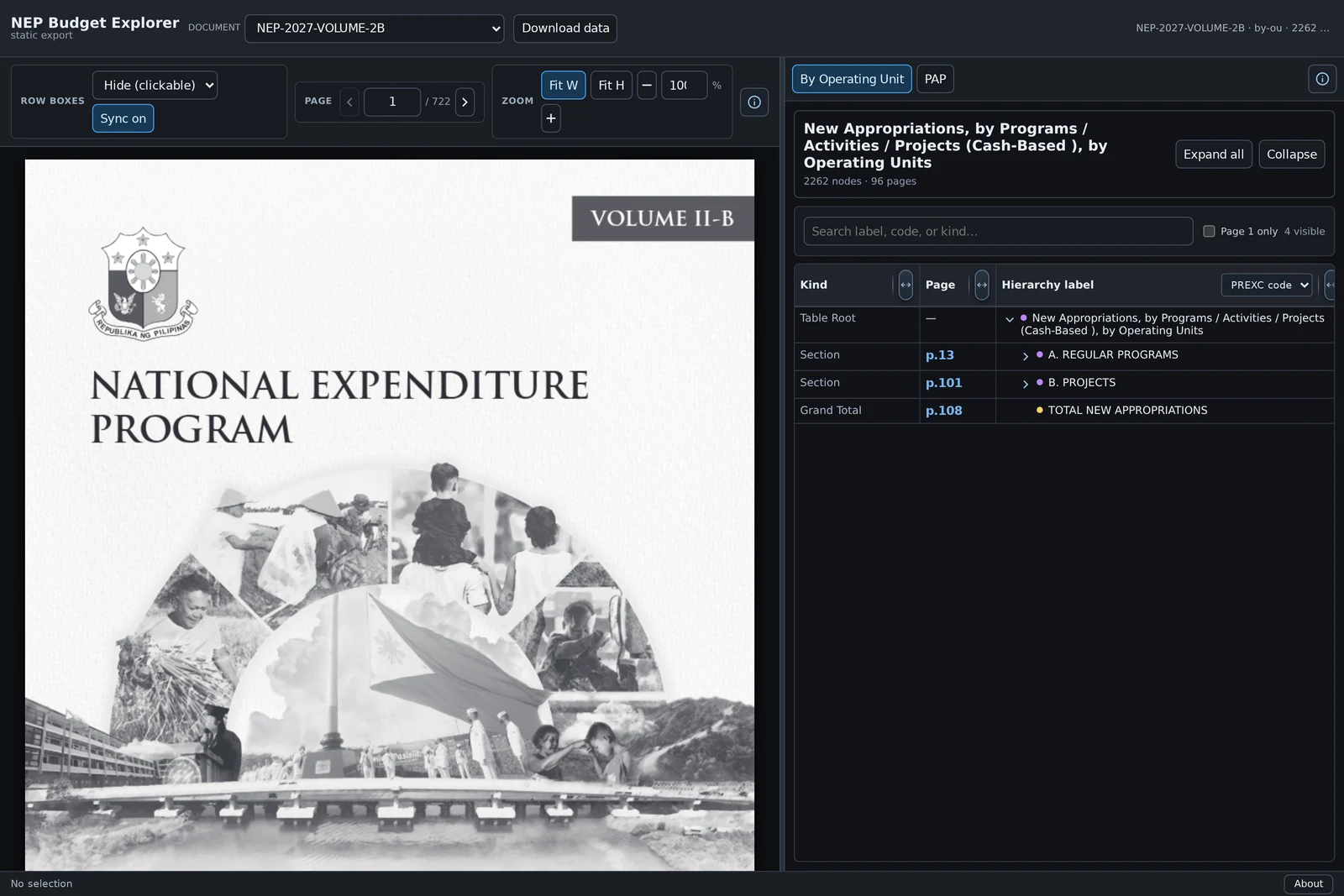
The project side is covered by Bisto Proyekto, a citizen monitoring platform where House insertions can be checked against real projects. It tracks 265,913 DPWH infrastructure projects and was built with the public works department and civil society partners. Datasets are mirrored on Hugging Face. Volunteers also have access to the group’s own AI assistant, and to the NEP Budget Explorer, which pairs a scanned 722-page budget volume with the structured data extracted from it.
That last tool points at the bottleneck. The budget’s project annexes are published as scanned documents rather than machine-readable files, so someone has to convert them by hand before any analysis can begin.
How the group is organized, and who is joining
Volunteers have been split into a data analysis and reporting team, a data parsing team, a data source and research team, and a line-items group covering farm-to-market roads, irrigation, classrooms and health facilities. Grouping by region is also under way. The initial deadline given to volunteers is Monday, framed as a target rather than an obligation.
Gadget Pilipinas is joining the effort. Giancarlo Viterbo, Chief Editor of Gadget Pilipinas, confirmed that the publication and its media agency Blip Media are committing to the cause started by BetterGovPH, and will contribute to the analysis.
The publication has followed the same organization’s work before, including its political dynasty tracker, its child safety portal, and its push for the CADENA Act.
What happens next
Volunteers are being asked to identify what the House added at project level, check whether each addition has proper documentation, and flag anything that looks wrong. Contributions do not have to be complete. A single finding, or even a question worth chasing, is being accepted and compiled. The coalition has been explicit that it will not prescribe a method, and that volunteers are free to use AI tools on the datasets.

Gadget Pilipinas
Founded in 2009 by Gian Viterbo, Gadget Pilipinas is one of Philippines’ top sources for news, tutorials, reviews and tips about the latest trends in technology, gadgets, games, social and digital media and cyber culture.
View all articles →Related News
 ArtCraft Is Rewriting the Search for Adobe Alternatives