



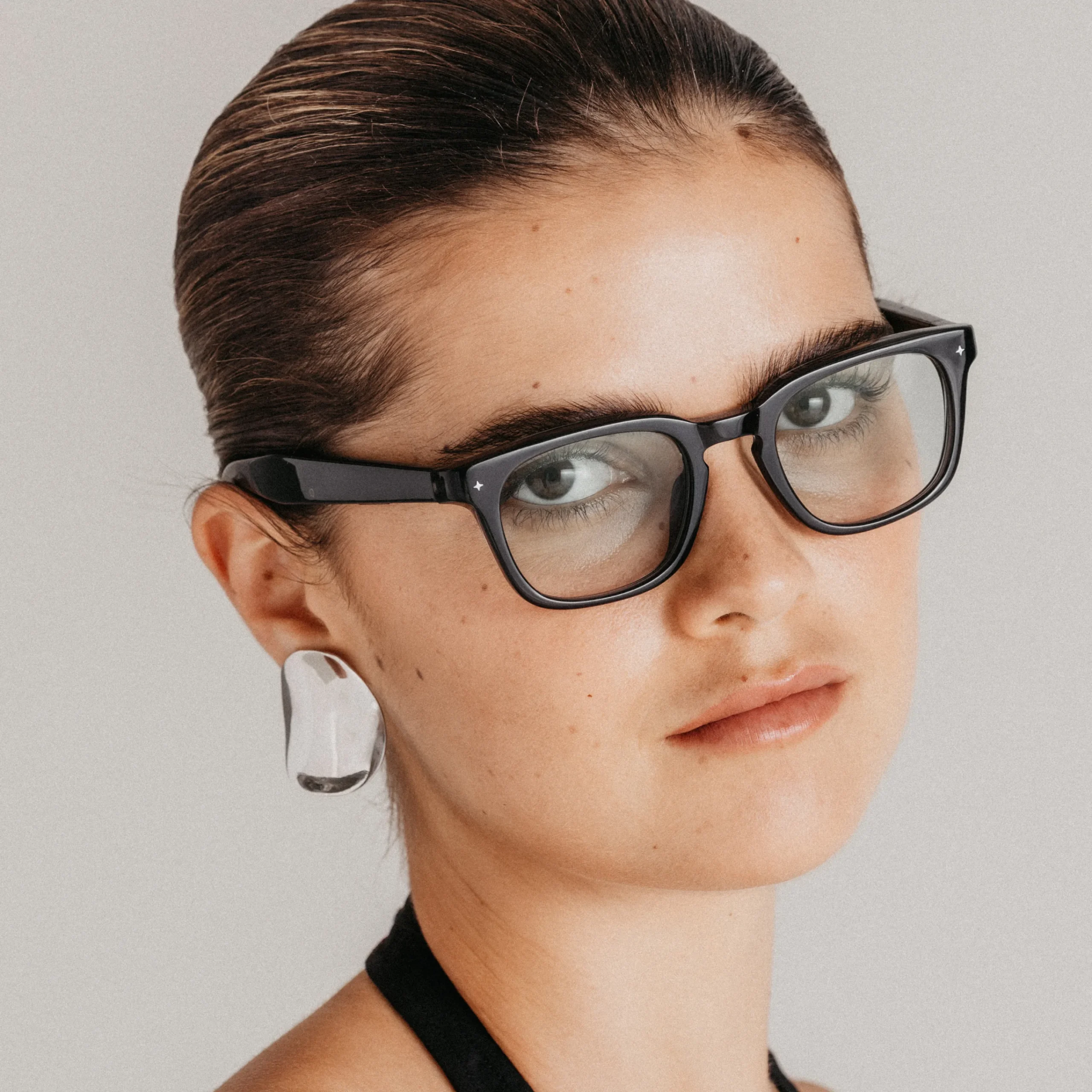
VONDER has introduced its debut collection: six acetate frames designed as everyday glasses first, made to the wearer’s prescription, weighing under 30 grams, and carrying no camera and no display. The VONDER intelligent eyewear line is the first product from a company founded in Silicon Valley by the people behind VITURE, which IDC ranks as the top XR glasses brand in the US by shipments.
Guillaume Hamon joins as Co-Founder and Chief Brand Officer, having previously helped build category-defining brands including Oura Ring and Rivian.

Frames first, intelligence second
VITURE spent five years building display glasses, and the lesson carried over was blunt: people will forgive a lot for a great display, but nothing for a bad pair of glasses. Display glasses are worn in sessions. A pair that stays on from morning to dinner with the wearer’s own prescription lenses is a different product.
The collection covers six frame shapes across three finishes, built in acetate and kept under 30 grams. Lens options include single vision, progressive, Transitions and gradient tints, with lenses supported by Essilor.
What the VONDER intelligent eyewear actually does
At the centre sits the VONDER Personal Memory Graph, a living map shaped by the wearer’s notes, conversations and recurring context. Instead of starting from zero, the glasses become more personal the longer they are worn, surfacing patterns and letting the wearer search or ask about memories.
That context powers personalized insights, voice notes and reminders, hands-free music and calls, and AI that connects with leading models including ChatGPT, Claude and Gemini, or a VONDER AI hybrid mode that combines several of them without extra subscriptions.
“Today we spend half our time explaining ourselves to AI. What if it already knew?” said Emily Wang, Co-Founder of VONDER. “The future of eyewear is not to replicate the phone. It is yours from the beginning: your style, your vision, your memory, and it helps you stay present and connected to the world around you.”
Privacy built into the hardware
There is no camera, no display, and no always-on recorder. Nothing is captured until the wearer chooses to capture it, and in everyday use the glasses are designed to recognize the wearer’s voice while discarding other voices on-device.
What VONDER keeps is text, not audio. The original recording is deleted, and no voiceprints or biometric data are retained. Every memory can be traced to its source in the VONDER app and deleted or erased. Meeting Mode must be explicitly activated and carries a visible indicator for people nearby, with a physical control on the temple that takes everything off the record. VONDER says data is protected with financial-grade encryption, and that it does not sell advertising or user data.
“Taking the camera out was the easy half,” Wang said. “The harder question was the microphone: whose voice gets in, and when? We built VONDER to hear you when you ask, remember your words, and leave everyone else out of it.”
Pricing and availability
Pre-orders open on September 28, 2026, at 6:00 a.m. PT through VONDER.ai and Best Buy, with prices starting at $299 and premium acetate frames from $399. VONDER is one of only two AI smart glasses brands sold through that retailer at launch, and shipping begins in November 2026.
It makes its first public appearance at SILMO Paris, September 25 to 28, Hall 7, Stand H148. There is no word yet on Philippine availability or local pricing. For now, VONDER intelligent eyewear is positioned as a pair of prescription glasses first, with the AI arriving only when the wearer asks for it.

Miguel Palispis
Started his freelancing adventure in 2018 and began doing freelance Audio Engineering work and then started freelance writing a few years later. Currently he writes for Gadget Pilipinas and Grit.PH. He is also a musician, foody, gamer, and PC enthusiast.
View all articles →