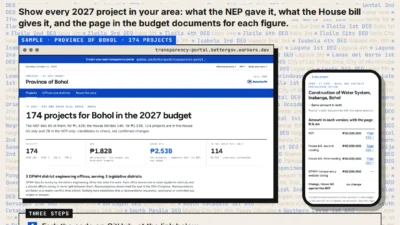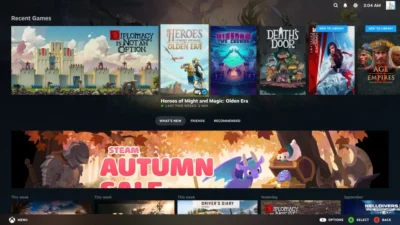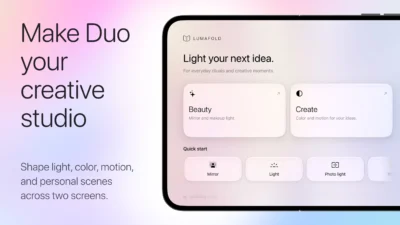


An open-source project called Craft Anything is doing something unusual: it studies how an existing piece of software works, then has a coding agent build a fresh version of it. It is written in pure Rust, dual-licensed MIT or Apache-2.0, and it is in early alpha.
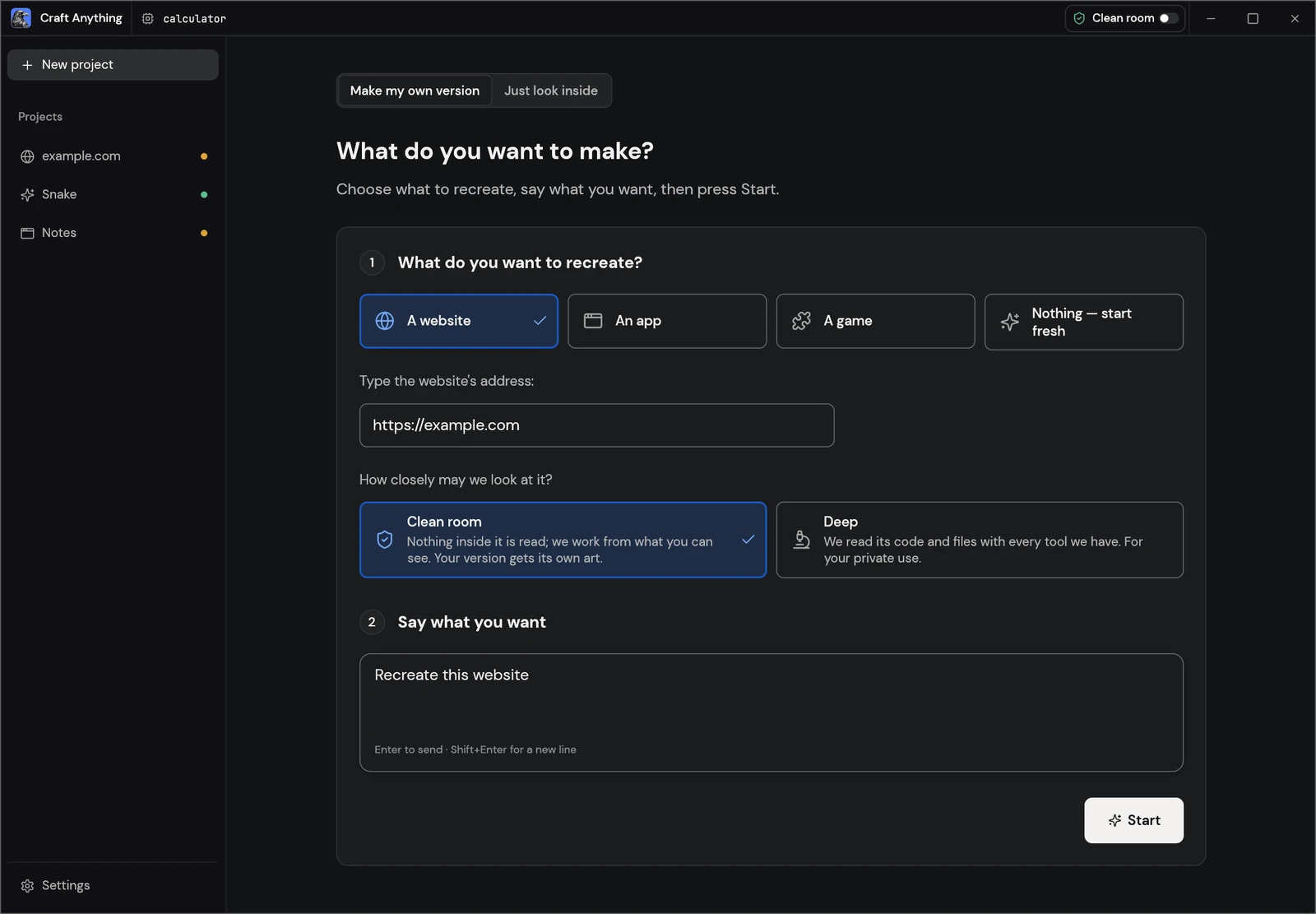
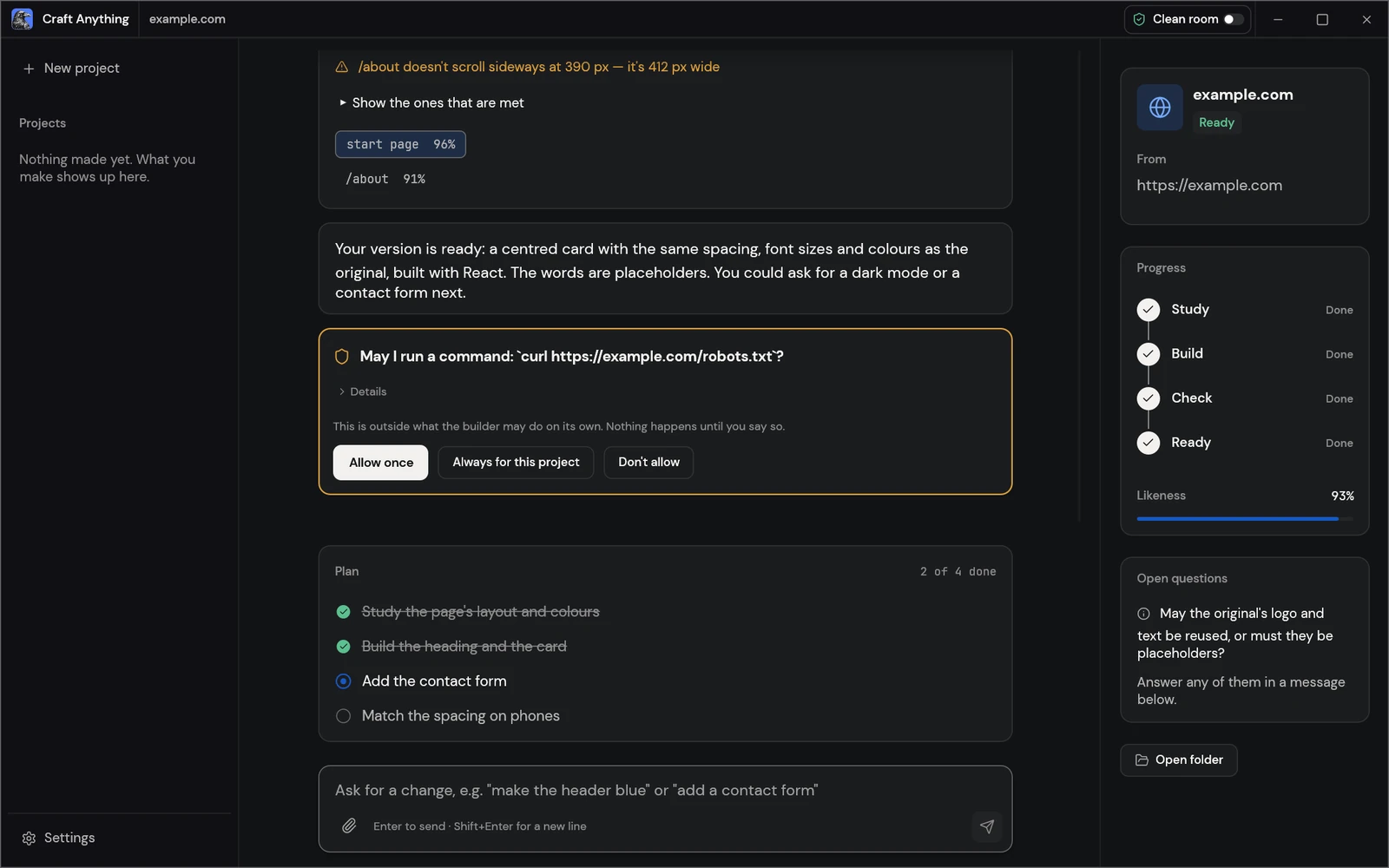
Point it at a target, describe what you want, and press Start. It runs in four steps: study the original, build a new project in the stack you name, compare the build against the original, then hand you something to open, play or preview. You can ask for changes and it refines.
Clean room by default
The most considered decision in Craft Anything is what it refuses to do by default. In Clean room mode, nothing inside the original is read, not its code, files or page source. It works only from what a visitor sees: screenshots, visible text, measured layout, colors, fonts, spacing and menus opened. Tools that would look inside are refused, and the app explains how to switch modes.
Deep mode uses everything, reading a program’s code and files with its own engines and Ghidra when installed, and watching a website’s JavaScript as its start page loads. The project frames that mode as being for your private use.
The Craft Anything engine is the actual product
Under the hood sits a reverse-engineering engine with 284 tools, 271 of them in the engine itself, covering native programs, .NET, Java, Android, Apple, Electron and JavaScript, websites, firmware, packet captures, databases and game files. Its own decoders, disassembler and decompiler work without any outside program.
Every tool is also a CLI subcommand and an MCP tool, so an agent can run a whole rebuild without the desktop app. The same engine powers the GUI built on egui, the CLI, the MCP server, and a browser viewer compiled to WebAssembly. Builds exist for Windows, macOS, Linux and FreeBSD.
It needs Claude Code to build
Building requires a coding agent signed in on your machine. Claude Code is supported first, and Craft Anything runs your own unmodified claude program using your own sign-in, so the app never touches your account. A Codex adapter exists but has not been verified on a real install.
The build side is also the least finished part. Website checks at three screen widths work today, and game rebuilds work in Unity, Unreal or Godot, but behavior checks for apps and games are only partly there.
What it will not do
The repository is explicit about the boundary. It never bypasses DRM, logins or anti-cheat, and it asks you to use it on software you own or are allowed to examine. Rebuilds recreate layout, style and behavior from evidence, and the agent is instructed not to copy logos, photos or text unless you confirm you own them or have permission.
That framing matters more than the feature list. A tool that can rebuild any application raises obvious questions, and the project has answered them in the product rather than in a blog post.
It has moved quickly in a short window: 379 stars and 46 forks since it was published, with 28 open issues. The project says a first public release and then a managed tier come next.

Gadget Pilipinas
Founded in 2009 by Gian Viterbo, Gadget Pilipinas is one of Philippines’ top sources for news, tutorials, reviews and tips about the latest trends in technology, gadgets, games, social and digital media and cyber culture.
View all articles →