



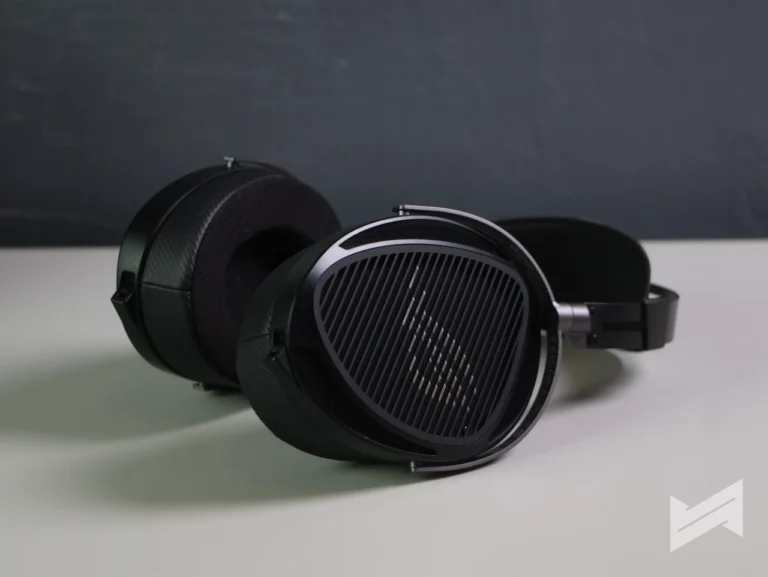
The ROG Kithara is a hybrid solution for gamers who want headphones that can rival pure audiophile-grade gear while still carrying the features gaming and communication need. That means a boom microphone and an inline mute switch, alongside a design built in collaboration with HiFiMan. It’s priced as low as PHP 21,990 depending on where you get it.
What’s in the Box
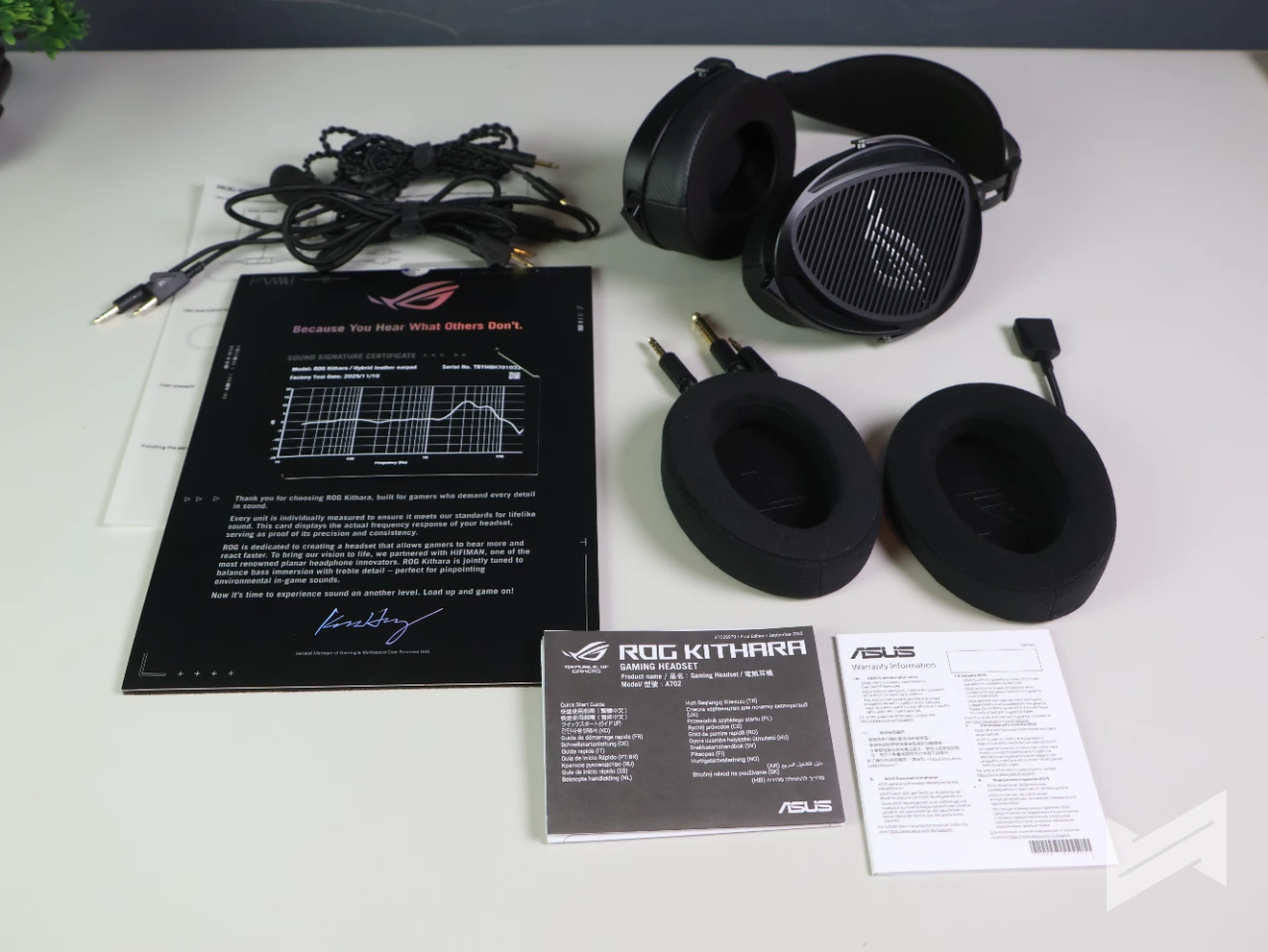
- Boom-mic cable that terminates into two 3.5mm plugs, with an integrated volume control and mute switch
- Braided cable with swappable ends for a 3.5mm single-ended adapter, a 6.35mm adapter, and a 4.4mm balanced adapter
- USB-C to dual 3.5mm adapter for smartphones, tablets, and gaming handhelds
- Extra ear cushions
- Documentation, including a Sound Signature Certificate, a Quick Start Guide, and a Warranty Booklet
- There’s no carrying case in the box. Given the purpose and design, I can see why they left it out.
Design and Build Quality
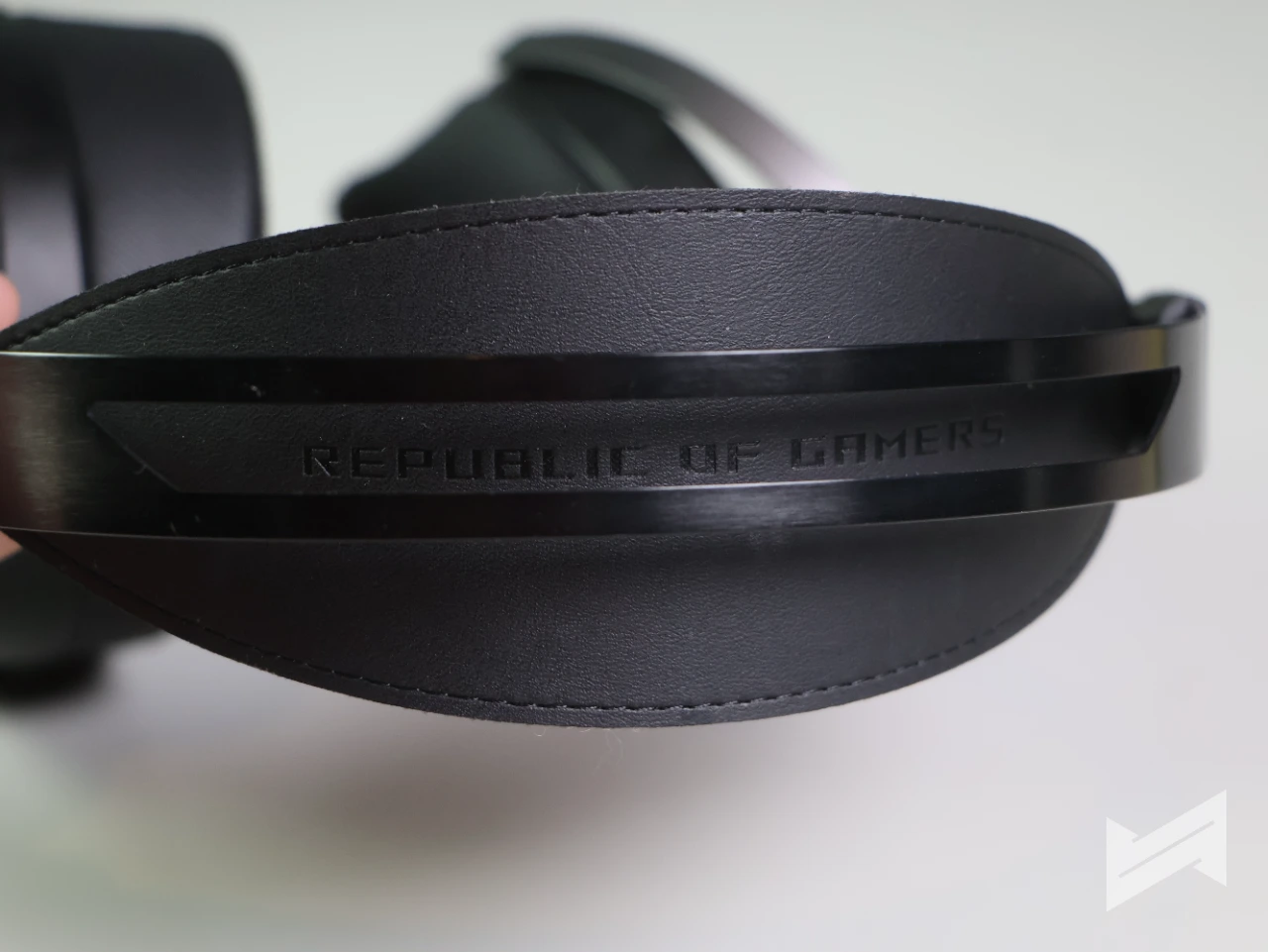
The looks of the ROG Kithara closely resemble the HiFiMan Ananda, with its large oval earcups and metal headband, except you mostly get ROG branding on the earcups and headband. There are other differences beyond the branding, like the bare metal sides on the headband, but the most noticeable, and probably the most major one, is that the earcups swivel and rotate, so you can wear the Kithara wrapped around your neck.
The metal headband flexes well, and the clamping force is just right for my personal preferences.
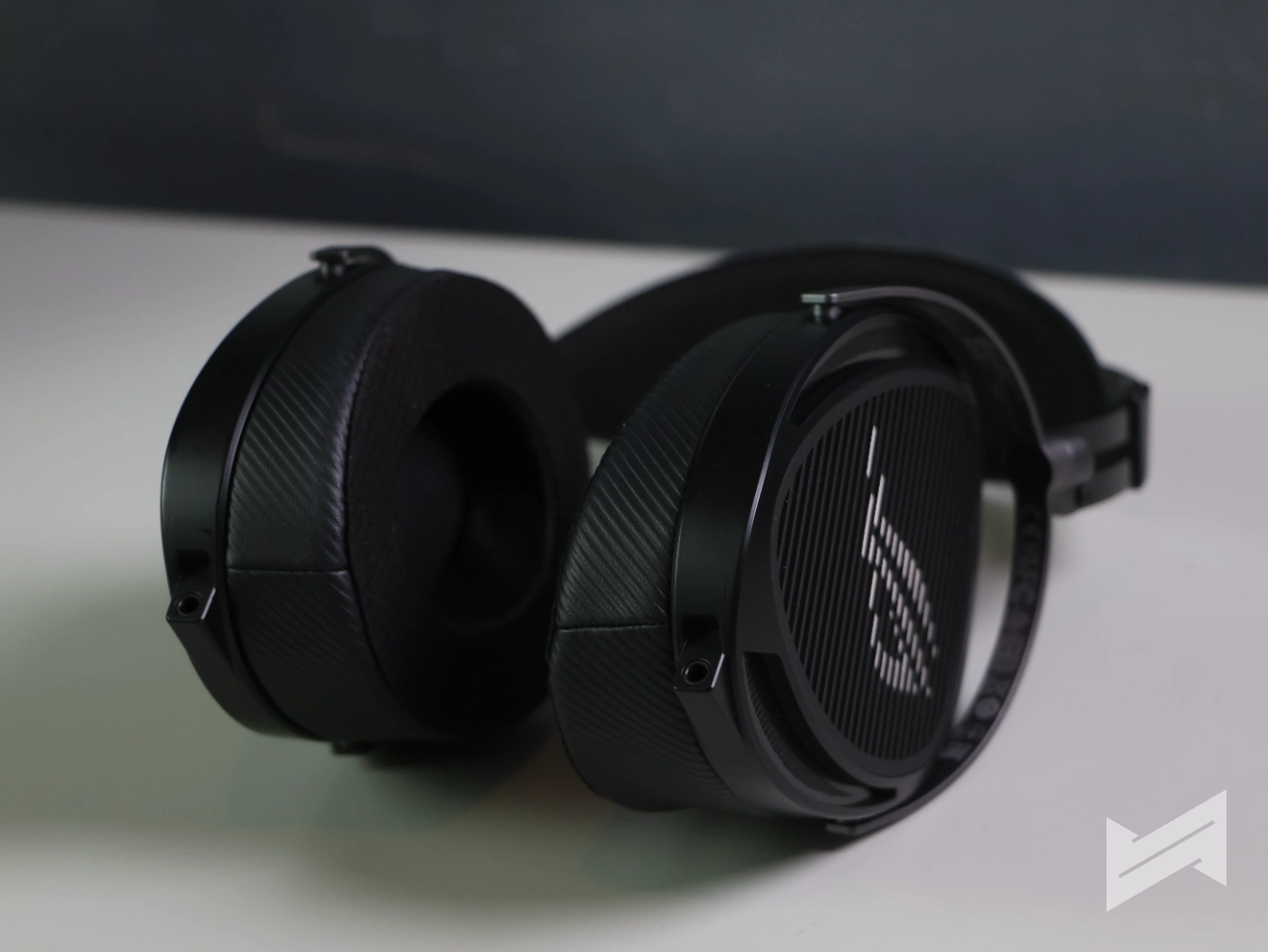
You can easily change cables on these headphones by disconnecting the 3.5mm ends from both sides.
Comfort
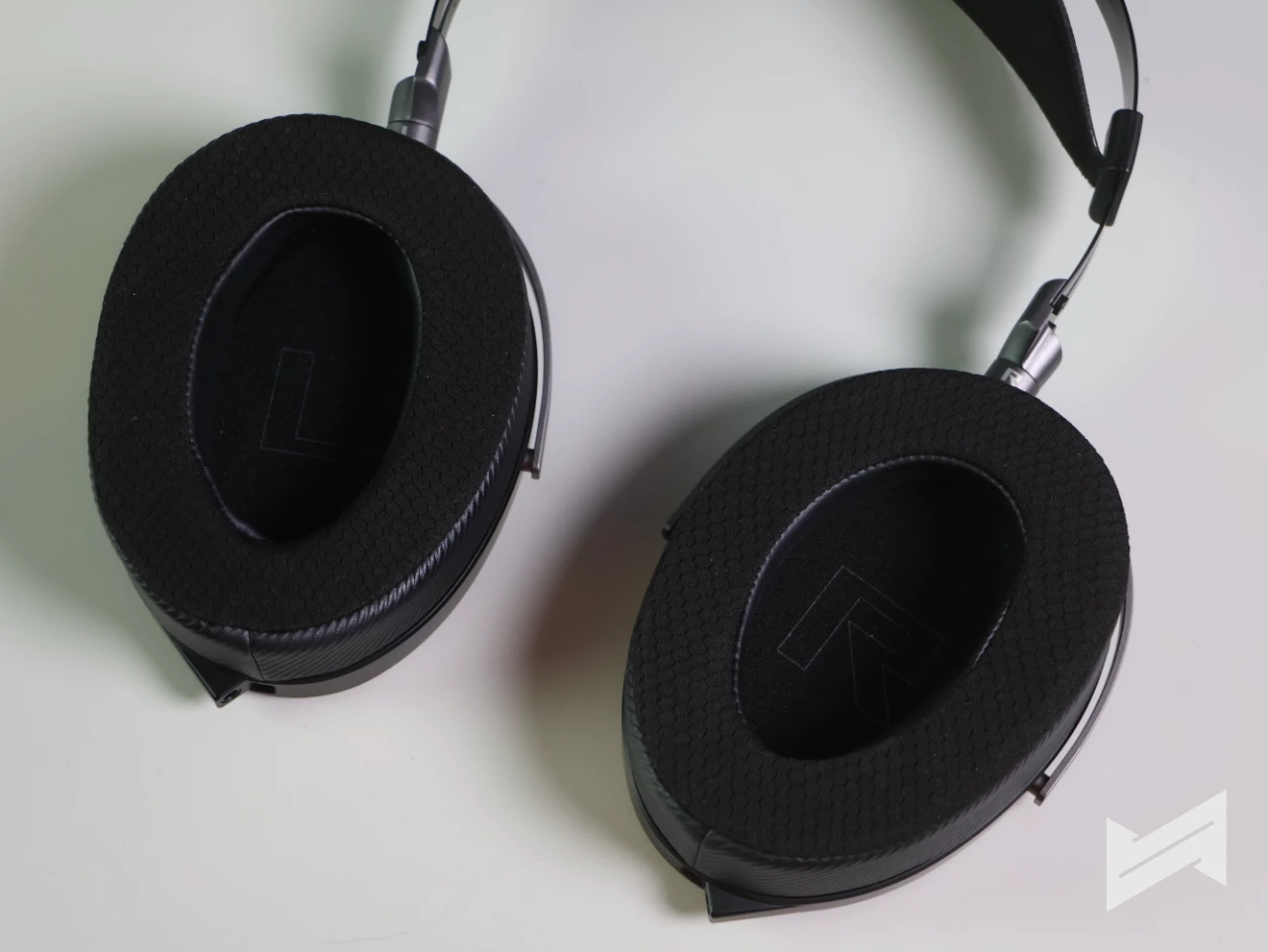
They feel premium and well-built, but I can definitely feel the weight compared to my HD660s. Thanks to the bigger earcups, they cover my entire ear while giving this sort of hanging feel. They aren’t the most comfortable pair to wear, but they’re not exactly irritating either. If it’s a choice between the Kithara and my Senns for long listening sessions, the latter would be my pick.
Performance
For Music and Movies
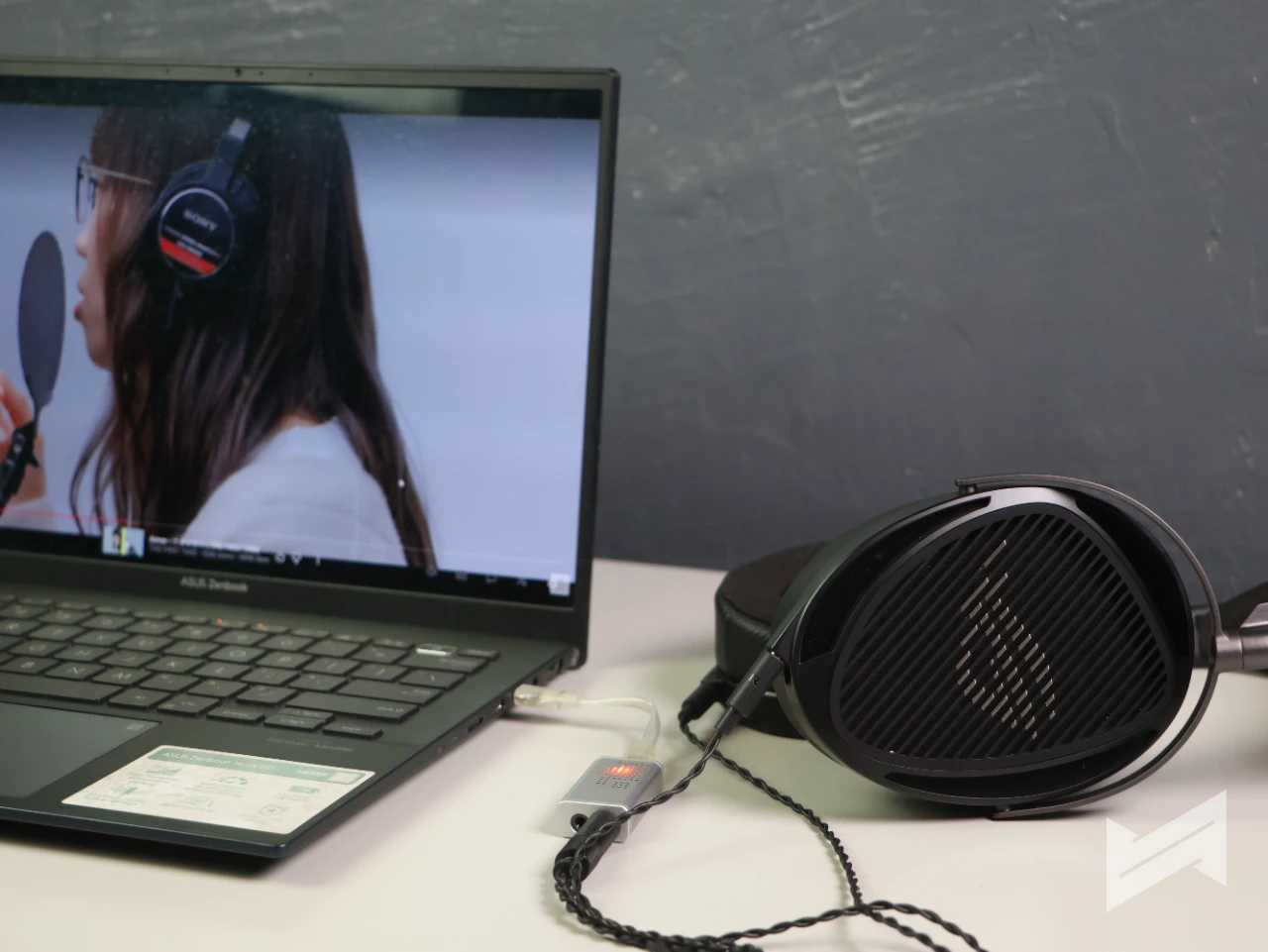
The ROG Kithara uses an open-back acoustic design with ROG-tuned 100mm HiFiMan planar magnetic drivers. I ran it connected to a Moondrop Dawn Pro through the 2.5mm balanced output with no EQ applied.
The first thing I noticed was the soundstage. It’s wide and airy, like nothing is in your face. As for detail, I’d say excellent, to a level where those extra bits float and become so noticeable. There were even some bass notes I’ve only heard clearer on these headphones. Instrument separation stays clear even when there’s a lot going on, the low end feels very controlled without ever feeling lacking, and vocals come across very clear.
There’s an airy treble with good sparkle. If I were to tweak it via EQ, I’d turn the treble down just very slightly, since it can be a touch harsh in some songs. That might just be a coloration brought by the Dawn Pro.
For Gaming
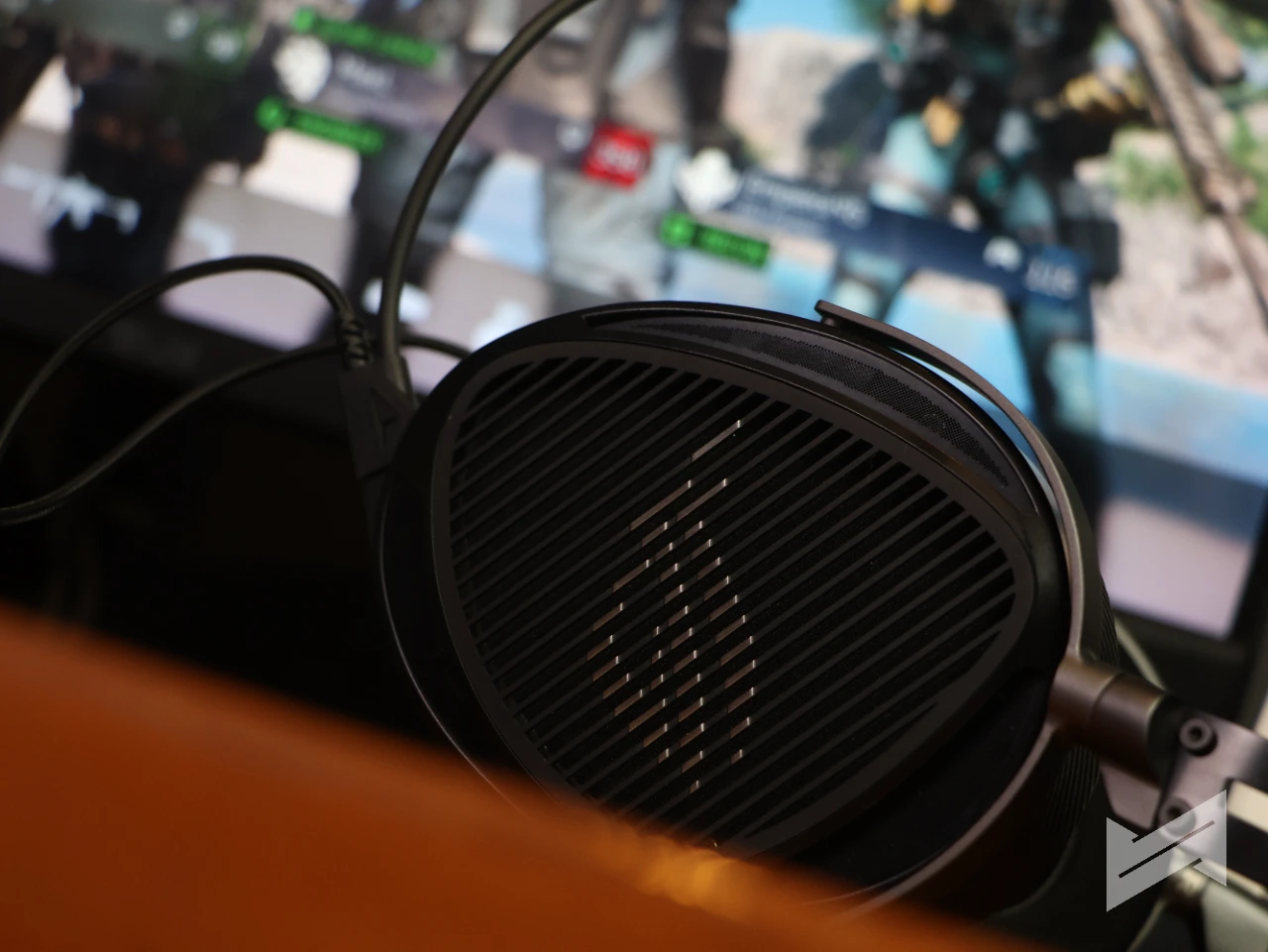
I also used the ROG Kithara connected directly to my motherboard’s 3.5mm and microphone jacks. In Battlefield 6, where positional audio plays a big factor, I could easily hear enemy footsteps and had a good sense of where bullets were coming from. Explosions and other effects feel lively at the same time.
It’s also pretty easy to drive, so I could get good volume even without an external amp and DAC. Even in a single-player game like Resident Evil 2, I could accurately tell when a zombie was walking up behind me, and the eerie atmospheric sounds felt amplified, which improves the immersion. One thing to note: without an amp or DAC on this setup, the volume is noticeably lower even at maximum. It’s enough, but I really have to crank the dials up.
The Open-Back Caveat
The disadvantage of open-back headphones is that you don’t get passive noise cancellation, and the sound leak can be annoying for the people around you. Using the ROG Kithara anywhere outside an environment like your home office or gaming room can be tricky.
Verdict
The ROG Kithara is one of the best headphones I’ve used to this day. The amount of detail, the soundstage, and the way it highlights the little things so clearly make it a genuine treat to listen to, and experiencing a true audiophile-grade product through a gaming headset is remarkable. For gaming, it offers precise directional audio when needed, while delivering clear and detailed effects, environmental sound, and dialogue. And should you need to communicate, the microphone performance is great too, with excellent detail and clarity.
On the downside, it’s not as comfortable to wear as my HD660s, and the usage scenarios are limited since you don’t get passive noise cancellation and the sound leaks. These are also easy to drive, but I suggest testing the Kithara with your device first, since in my case the volume is enough without an amp and DAC, but I have to crank the dials up. This one is a nitpick, but the treble can be slightly harsh in some songs.
At PHP 21,990, I think the ROG Kithara’s price is justifiable, considering the overall build quality and sound quality, plus the extras you get.
Final score
Gadget PilipinasWhat we like
- Audiophile-grade detail and soundstage
- Precise in-game positional audio
- Boom mic with inline mute switch
- Generous accessory set with balanced adapters
- Good build quality and flexibility
- Fair price for the package
Could improve
- Not as comfortable vs a lighter alternative like the HD660s
- Open-back design limits where you can use it
- Treble can be slightly harsh in some songs

Emman Tortoza
Emman has been writing technical and feature articles since 2010. Prior to this, he became one of the instructors at Asia Pacific College in 2008, and eventually landed a job as Business Analyst and Technical Writer at Integrated Open Source Solutions for almost 3 years.
View all articles →Related Reviews
 Samsung Galaxy S26 FE: Great Functional Elegance
 NBA 2K27 Review: A Better Game Than DLSS 5 Suggests
 TECNO Camon Slim 5G Review: The Best-Looking CAMON Yet
 ROG Gjallar Review: ROG’s First Soundbar Gets the Priorities Right
 PLDT StreamTV+ Review: Cinema in a Box, at a Price
 LG PuriCare AeroMini Review: Small Purifier, Big Relief for Home Offices