


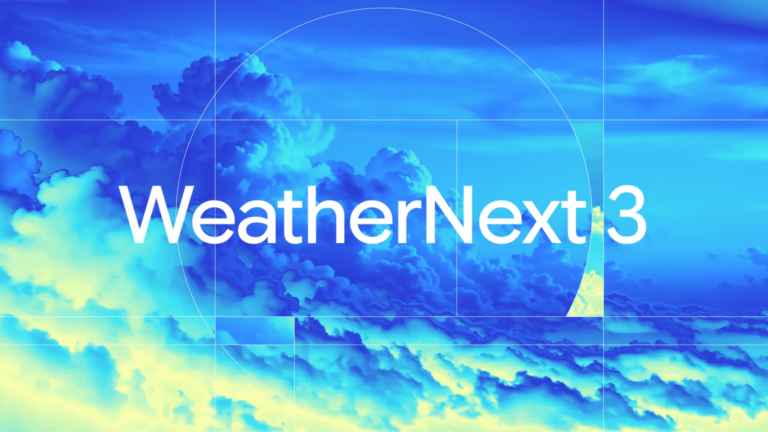
Google DeepMind and Google Research have introduced WeatherNext 3, an AI-powered global weather forecasting model that generates fresh forecasts every hour at up to 5-kilometer resolution — roughly five times sharper than its predecessor.
Rather than leaning on the slow, compute-heavy numerical approximations that traditional forecasting depends on, the model directly ingests live geostationary satellite mosaics alongside real-world ground station data. That combination is what lets it refresh predictions hourly instead of every few hours.
Sharper forecasts, down to the neighborhood
The model resolves surface temperature and moisture down to 5 km (0.05°), and surface winds to 10 km (0.1°). Google says that delivers hyper-local precision even in traditionally underserved areas, while precipitation error metrics fall by up to 50% on key benchmarks compared with traditional numerical weather prediction baselines.
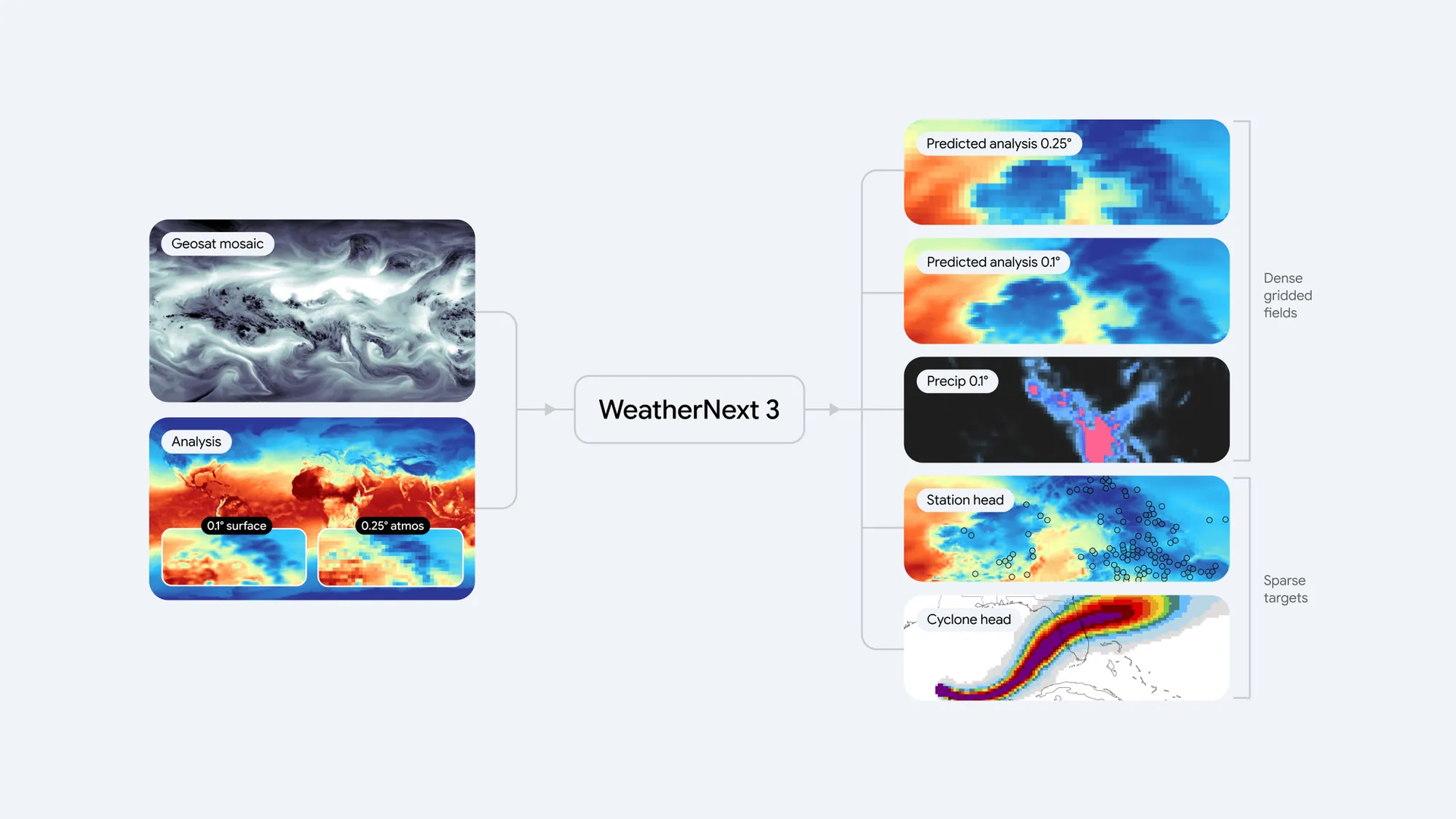
For anyone planning a day or more ahead, Google claims up to 50% more accurate precipitation forecasts, with the greatest improvements in regions where forecasts have historically been less reliable — the kind of gain that matters in a market like the Philippines, where the rainy season and tropical storms are a constant planning factor.
What else WeatherNext 3 outputs
Alongside standard forecasts, the model produces parameters aimed at energy work: 100-meter turbine-height wind speeds, multi-layer cloud cover, and solar irradiance. Google says these are meant to help grid operators and clean-energy producers plan around weather-driven swings in supply.
Where it is rolling out
The update is already powering weather experiences starting today in Google Search, the Gemini app, Google Maps, Google Maps Platform Weather API, and Google Earth Engine. Google has also been widening its AI products for Philippine users, most recently with a free year of Google AI Plus for Filipino college students, and the model now runs inside those same consumer surfaces.
The announcement did not include Philippine-specific rollout dates or local pricing details. Full technical background sits on the official Google blog post, and Gadget Pilipinas will update this story as WeatherNext 3 rolls out to more users.

Giancarlo Viterbo is a Filipino Technology Journalist, blogger and Editor of gadgetpilipinas.net, He is also a Geek, Dad and a Husband. He knows a lot about washing the dishes, doing some errands and following instructions from his boss on his day job. Follow him on twitter: @gianviterbo and @gadgetpilipinas.

Giancarlo Viterbo
Giancarlo Viterbo is a Filipino Technology Journalist, blogger and Editor of gadgetpilipinas.net, He is also a Geek, Dad and a Husband. He knows a lot about washing the dishes, doing some errands and following instructions from his boss on his day job. Follow him on twitter: @gianviterbo and @gadgetpilipinas.
View all articles →