







On April 22, each year, Earth Day serves as a global call to safeguard the planet for future generations. As such, OPPO embraces its pivotal role in fostering sustainability.
Apart from bringing innovative products, the company embeds eco-friendly practices into core operations and has committed to achieving carbon neutrality by 2050. This means greener manufacturing, developing environmentally conscious devices, and motivating global communities toward actionable environmental change.
Packaging Innovations
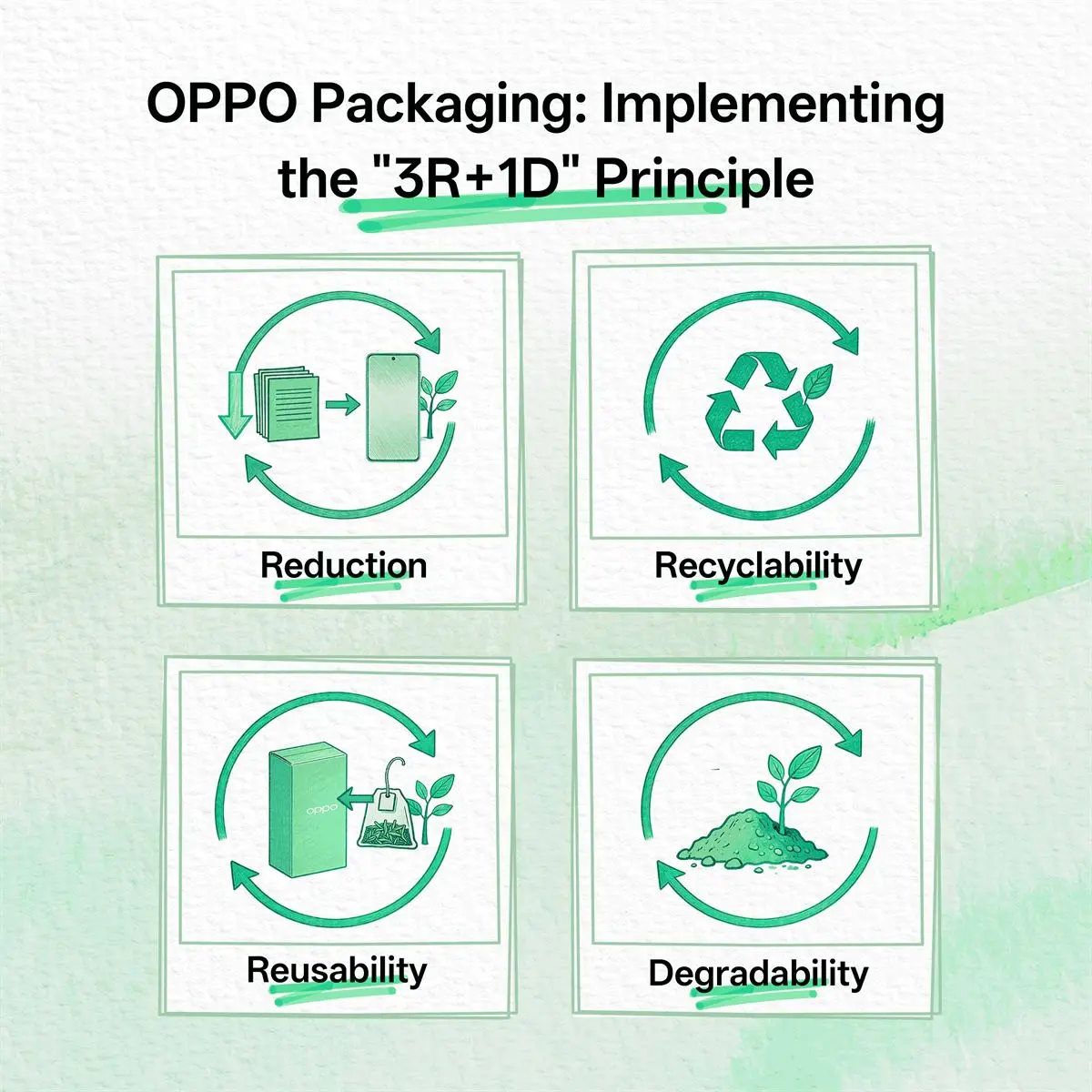
The consumer electronics sector grapples with excessive packaging waste which straining natural resources worldwide. OPPO counters this by applying the 3R1D framework—Reduction, Recyclability, Reusability, and Degradability—to its packaging strategies.
This approach upgrades both materials and processes for minimal environmental footprint. Globally, paper and paperboard production hits about 405 million tons annually, consuming roughly 3 billion trees for packaging alone. To combat this, OPPO transitioned product manuals and guides to digital versions. In 2025 alone, this shift conserved roughly 110 million A4 sheets, sparing around 13,000 mature trees and slashing carbon emissions by approximately 3,500 tons.
Plastic pollution presents another urgent threat, with over 430 million tons produced yearly and more than 11 million tons polluting oceans. OPPO innovates by integrating biomass like tea residue into packaging, substituting 10 to 30 percent of petroleum-based plastics.
This cuts plastic use and repurposes agricultural waste, which turns potential refuse into a resource. These material shifts exemplify OPPO’s dedication to circular economy principles, ensuring packaging aligns with planetary health.
E-Waste Management Advances
Electronic waste surges unabated, totaling 62 million tons in 2022 and growing by 2.6 million tons yearly, projected to exceed 82 million tons by 2030—outpacing recycling capacities.
OPPO addresses this by enhancing device longevity via superior durability to extend its product lifespans. Simultaneously, the company bolsters its e-waste recycling infrastructure, urging consumers to return old gadgets for reuse, disassembly, or safe disposal.
In 2025, amid shipping 35,300 tons of new products, OPPO recycled 1,187 tons of used devices in China and Europe, demonstrating robust closed-loop systems that include non-OPPO items.
Community Engagement Initiatives
OPPO extends its impact beyond operations by partnering with communities to amplify green actions. In Kenya’s Ol Pejeta Conservancy, the company collaborated with Peaceland Foundation and Impact Steps to supply OPPO Find X9 series smartphones.

Researchers leverage the devices’ advanced telephoto lenses to capture detailed rhino eye patterns from afar, aiding non-invasive tracking of movements, migrations, births, and deaths for endangered species conservation. This lightens fieldwork gear while boosting data precision.
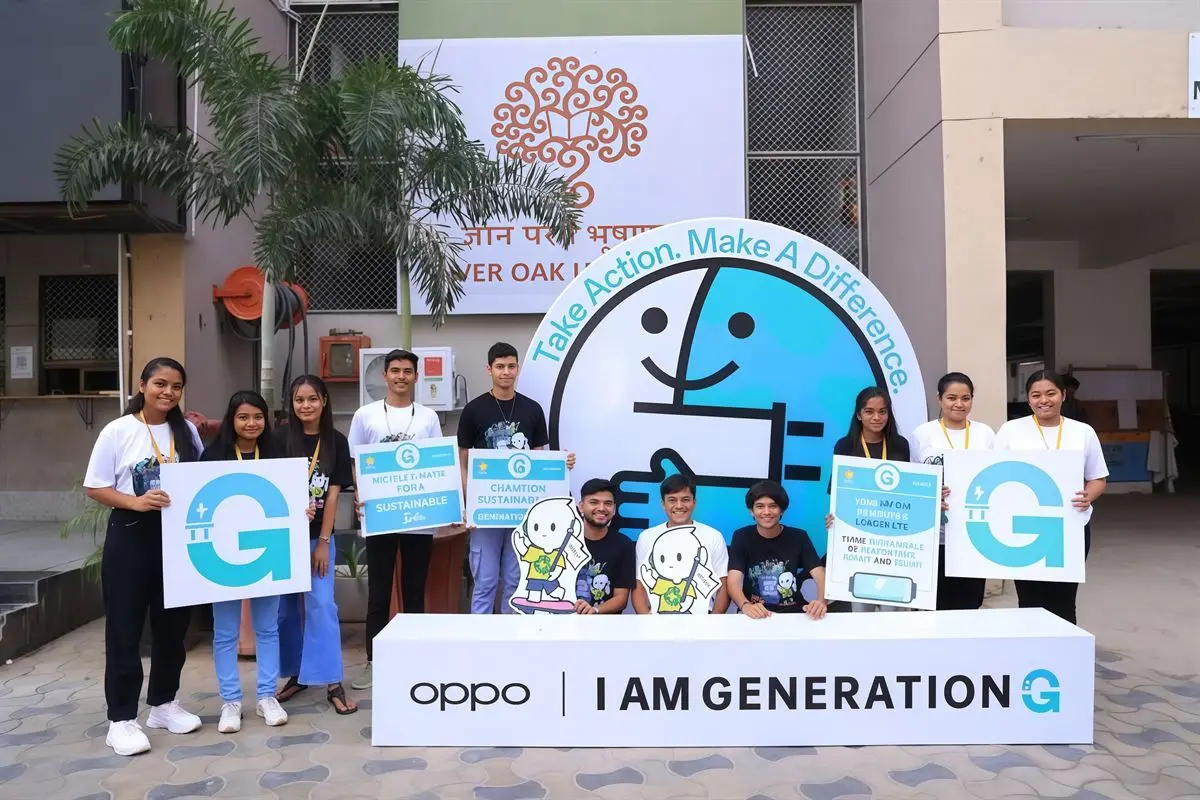
In India, OPPO also joined forces with the All India Council for Technical Education on the Generation Green Initiative. Engaging 5,000 interns and over one million youth, participants logged 469,500 volunteer hours to manage 10,339 kilograms of e-waste.
Under its ethos of Technology for Mankind, Kindness for the World, OPPO presses forward with worldwide sustainability drives. By uniting with users, partners, and society, the company forges pathways to a greener tomorrow, proving technology can harmonize progress with preservation.
For more information on OPPO and its products, visit its official website.
Frequently Asked Questions (FAQ)
Q: What is OPPO’s long-term sustainability goal?
A: OPPO has pledged to achieve carbon neutrality across all its operations by 2050.
Q: How does OPPO reduce paper in packaging?
A: By shifting product guidance to digital formats, saving 110 million A4 sheets in 2025, equivalent to 13,000 trees.
Q: What is the 3R1D principle used by OPPO?
A: It stands for Reduction, Recyclability, Reusability, and Degradability in packaging design.
Q: How much e-waste did OPPO recycle in 2025?
A: 1,187 tons in China and Europe, while selling 35,300 tons of new products.
Q: What community project does OPPO support in India?
A: The Generation Green Initiative, where youth processed 10,339 kg of e-waste over 469,500 volunteer hours.

Emman Tortoza
Emman has been writing technical and feature articles since 2010. Prior to this, he became one of the instructors at Asia Pacific College in 2008, and eventually landed a job as Business Analyst and Technical Writer at Integrated Open Source Solutions for almost 3 years.
View all articles →Related News
 What 12 Reviewers Agree On About the iPhone Duo



![[Photo 1] LG Apple Home Collection](https://cdn.gadgetpilipinas.net/wp-content/uploads/2026/10/Photo-1-LG-Apple-Home-Collection-400x225.webp) LG and Apple Team Up for the Apple Home Collection
LG and Apple Team Up for the Apple Home Collection