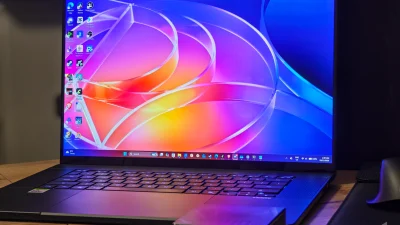


For most of the last decade a portable SSD was a compromise you accepted. It was fast enough to move a folder and slow enough that you planned around it. The Samsung P7 is the first portable drive we have tested that makes you stop planning around it. On our test environment, it moved data at 3,366MB/s, which is quicker than the internal drive on plenty of the laptops it will be plugged into.
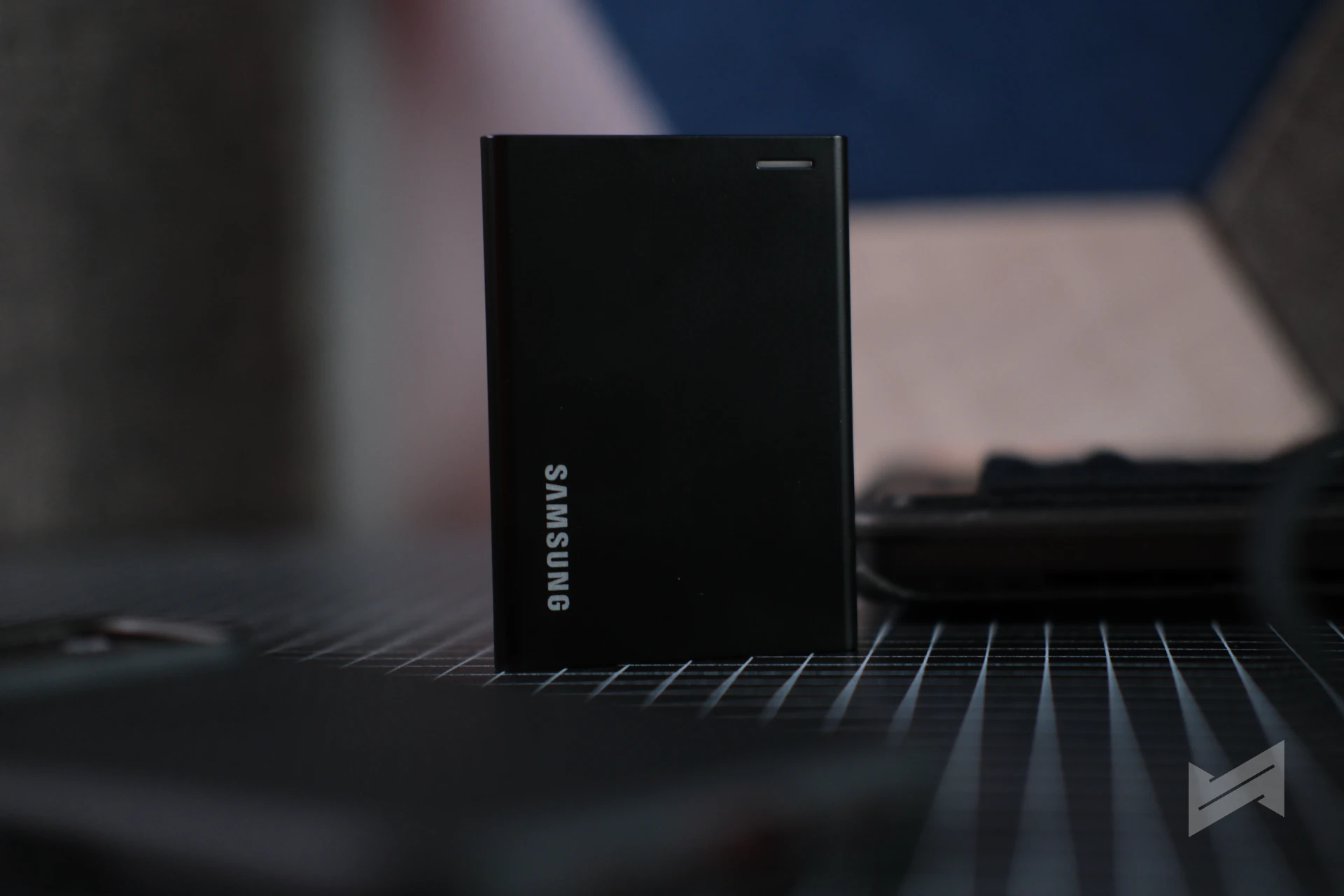
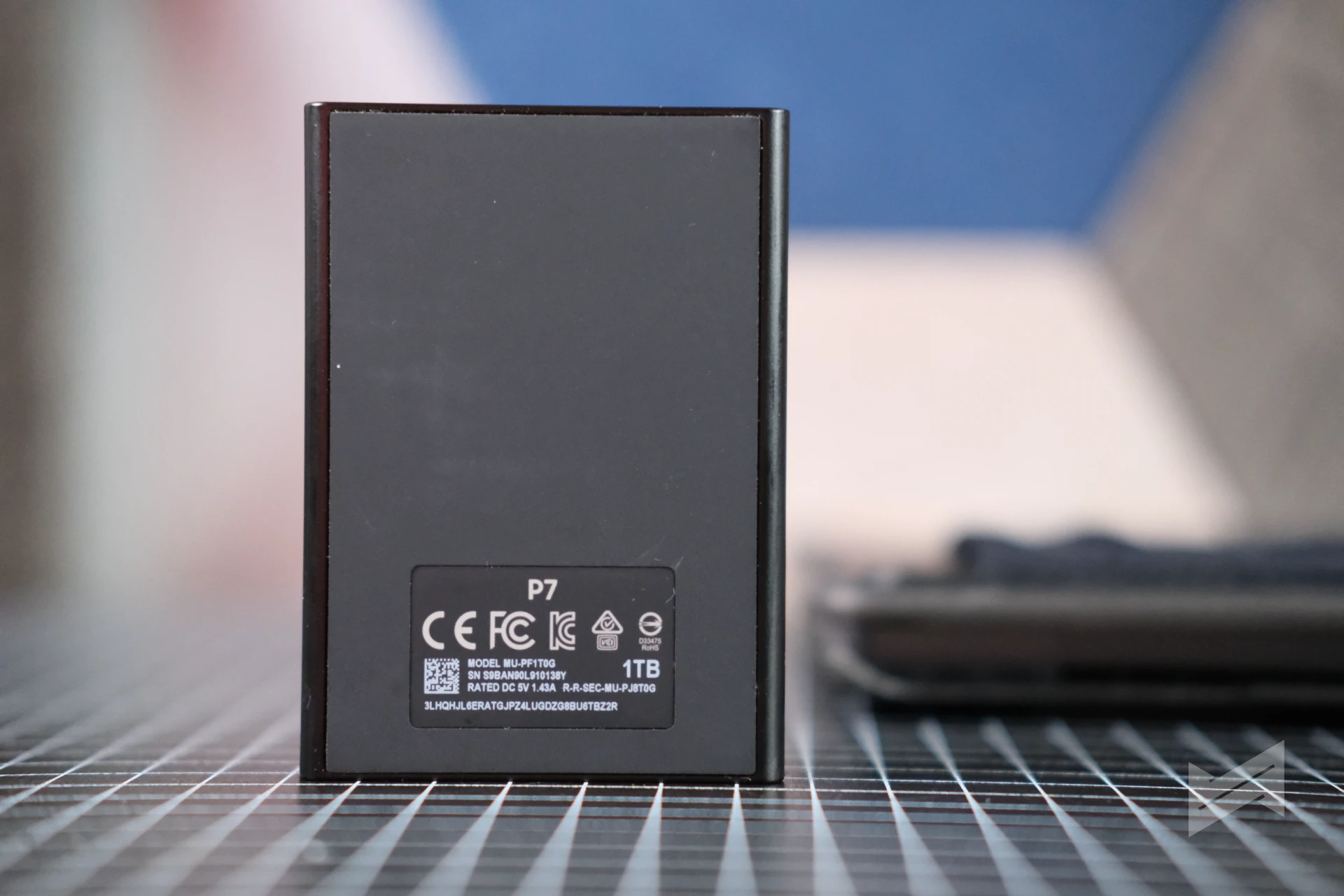
Samsung built the P7 on USB4 Gen 3×2, the 40Gbps link that finally gives a portable SSD more bandwidth than the flash inside it can use. The 1TB model is rated at 4,000MB/s read and 3,700MB/s write, carries a five-year warranty, and is listed at PhP17,650 locally. We ran it against the T7 Shield we have been using and AGI’s EDM38, and the gap is not incremental.
A closer look at the P7
The P7 is a 90 x 65 x 8.3mm slab that weighs 98 grams. Put it next to the T7 Shield and the difference is thickness. The Shield is a 13mm rubberised block, while the P7 is 8.3mm with a top plate that has a soft, leather-like grain and a matte base that stops it sliding around a desk. Total volume works out to roughly 28 percent less than the Shield, and it disappears into a jacket pocket.
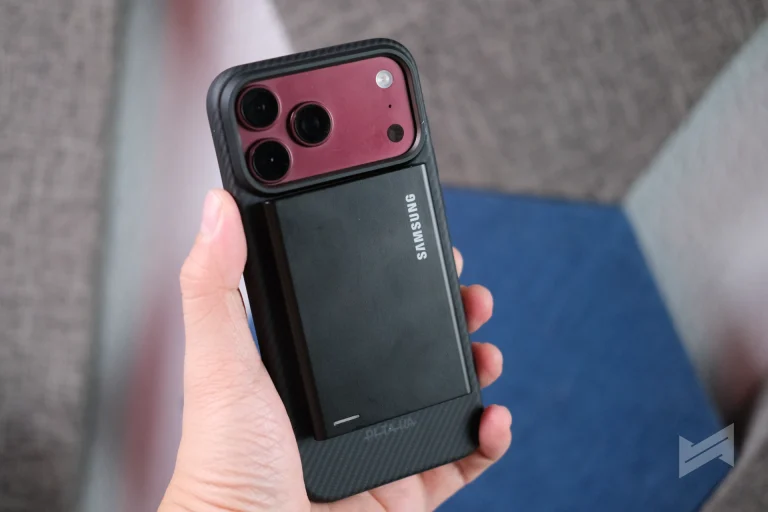
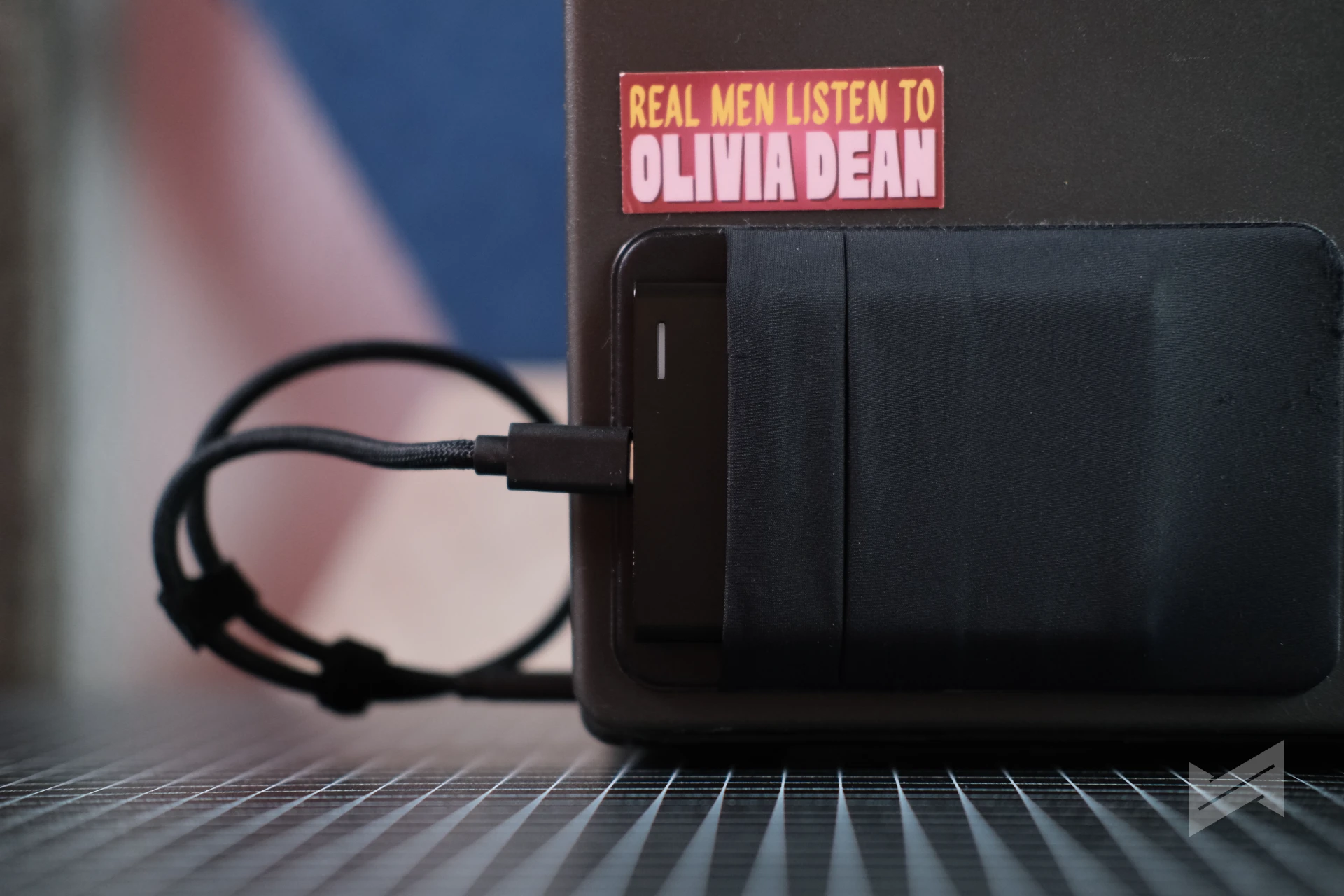
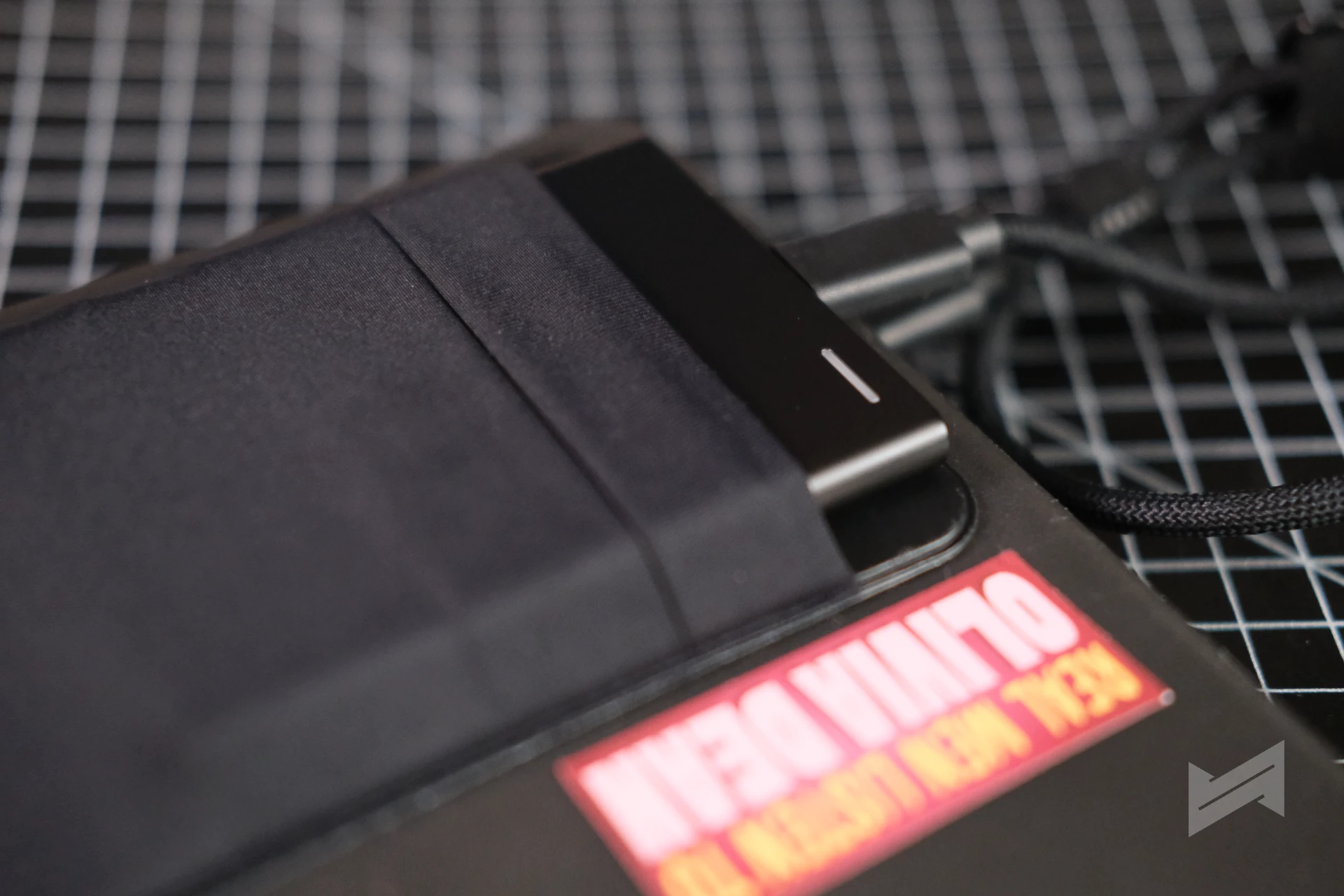
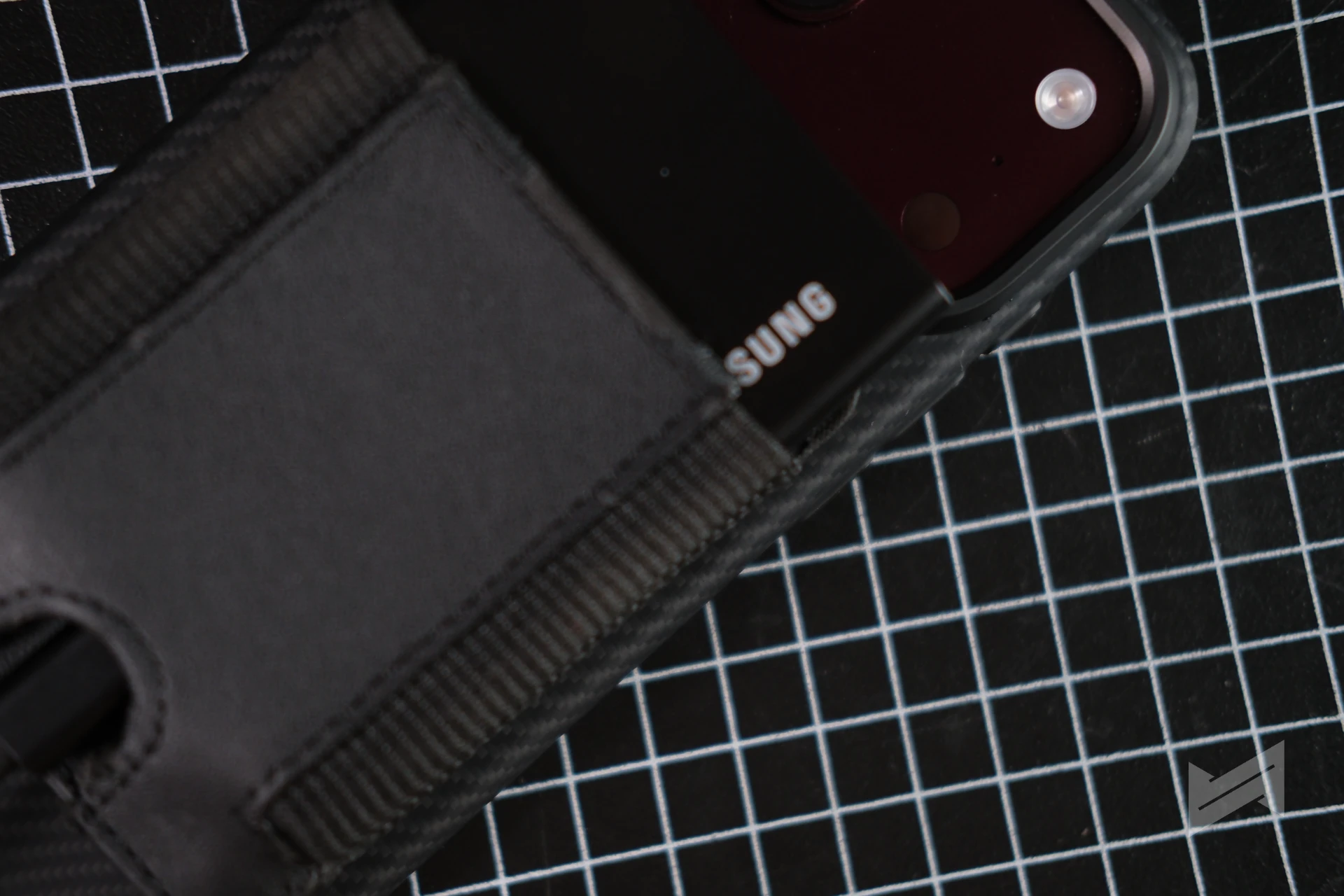
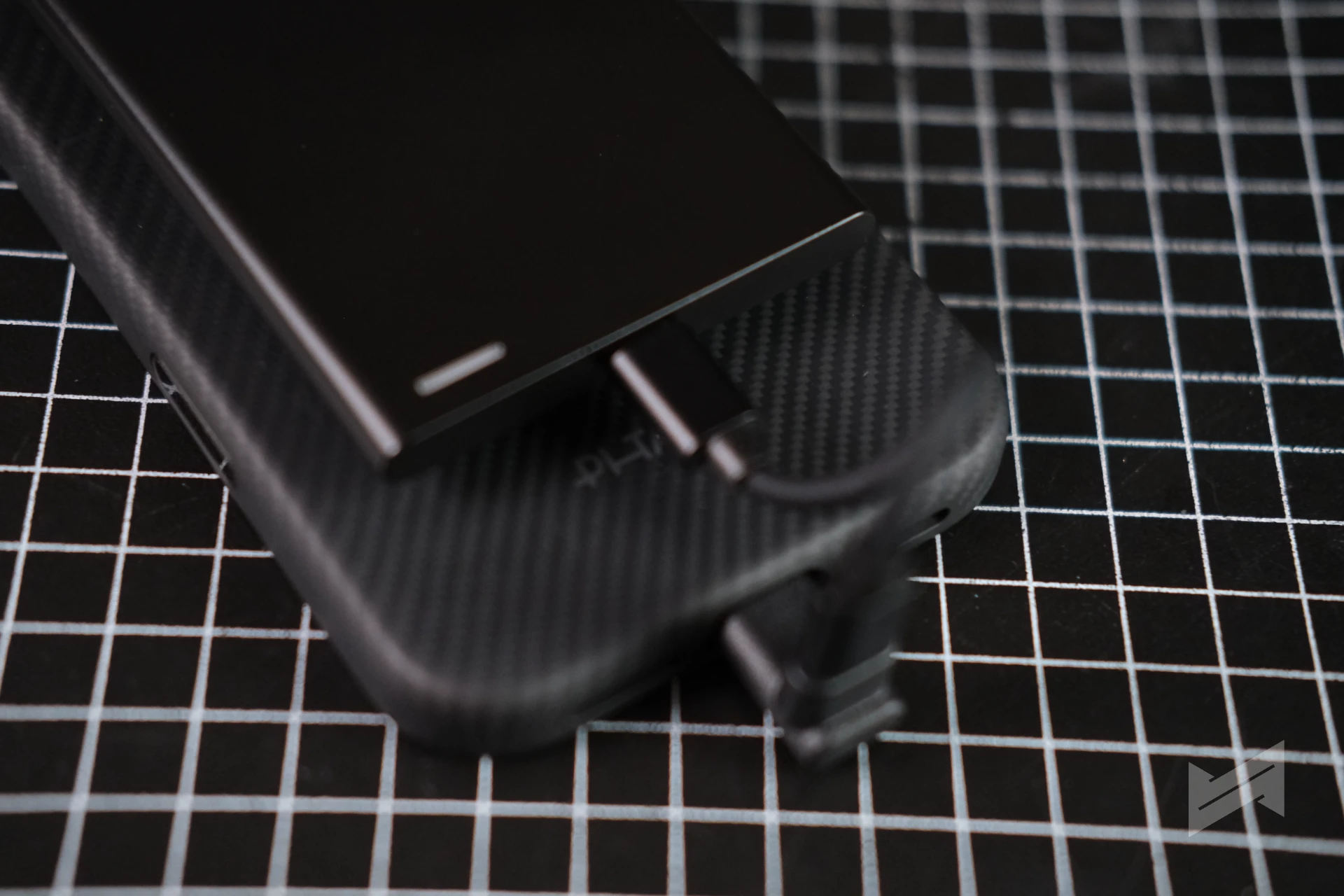
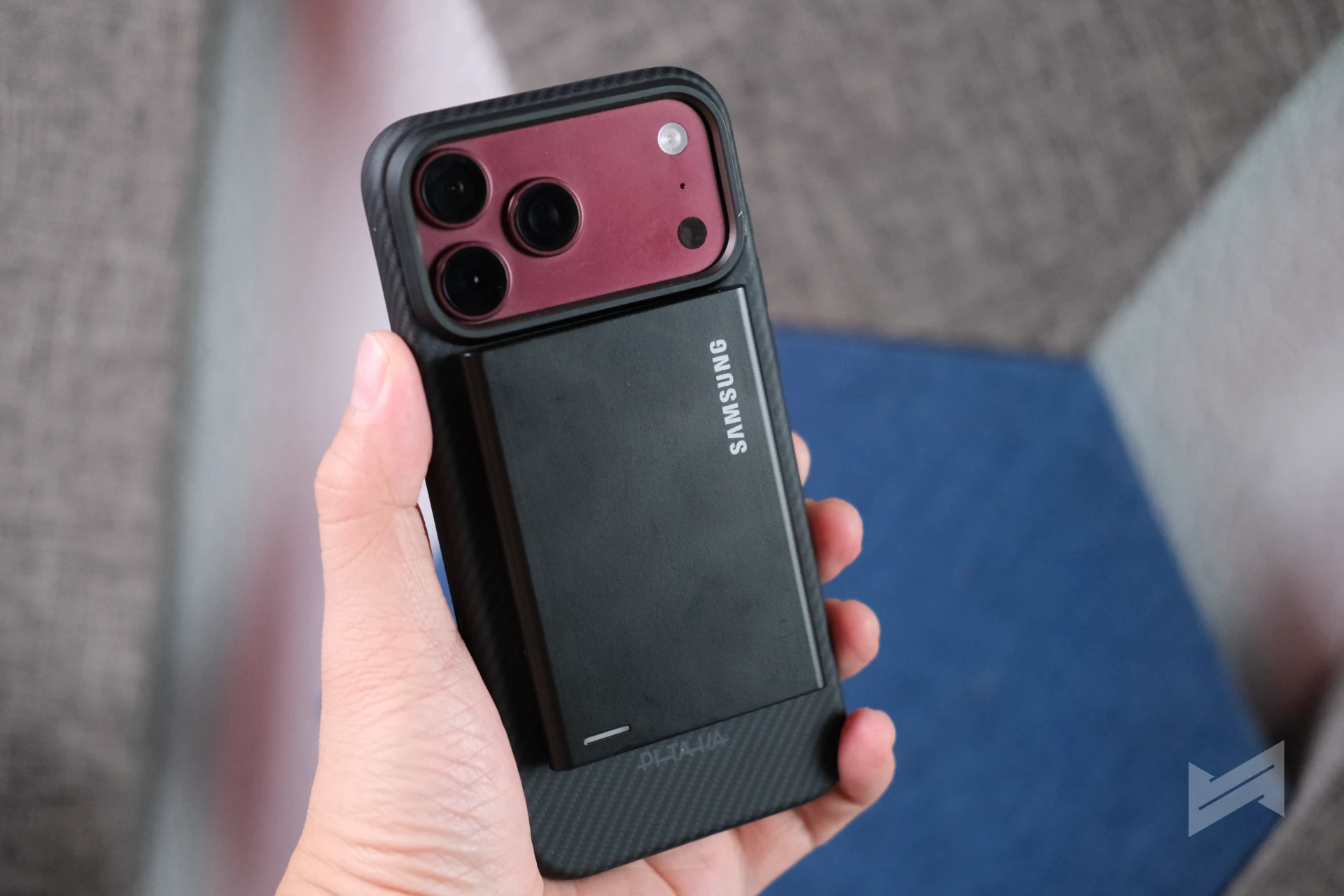
The one thing the P7 does not have is a magnet. AGI builds a magnetic ring into the EDM38 so it snaps onto the back of an iPhone, and Samsung leaves that to you. A stick-on magnetic ring on the back plate solves it in a minute. If you would rather not glue anything to a PhP17,650 drive, a MagSafe wallet wrapped around the body holds it just as securely. Either approach is worth the trouble if you shoot video on a phone.
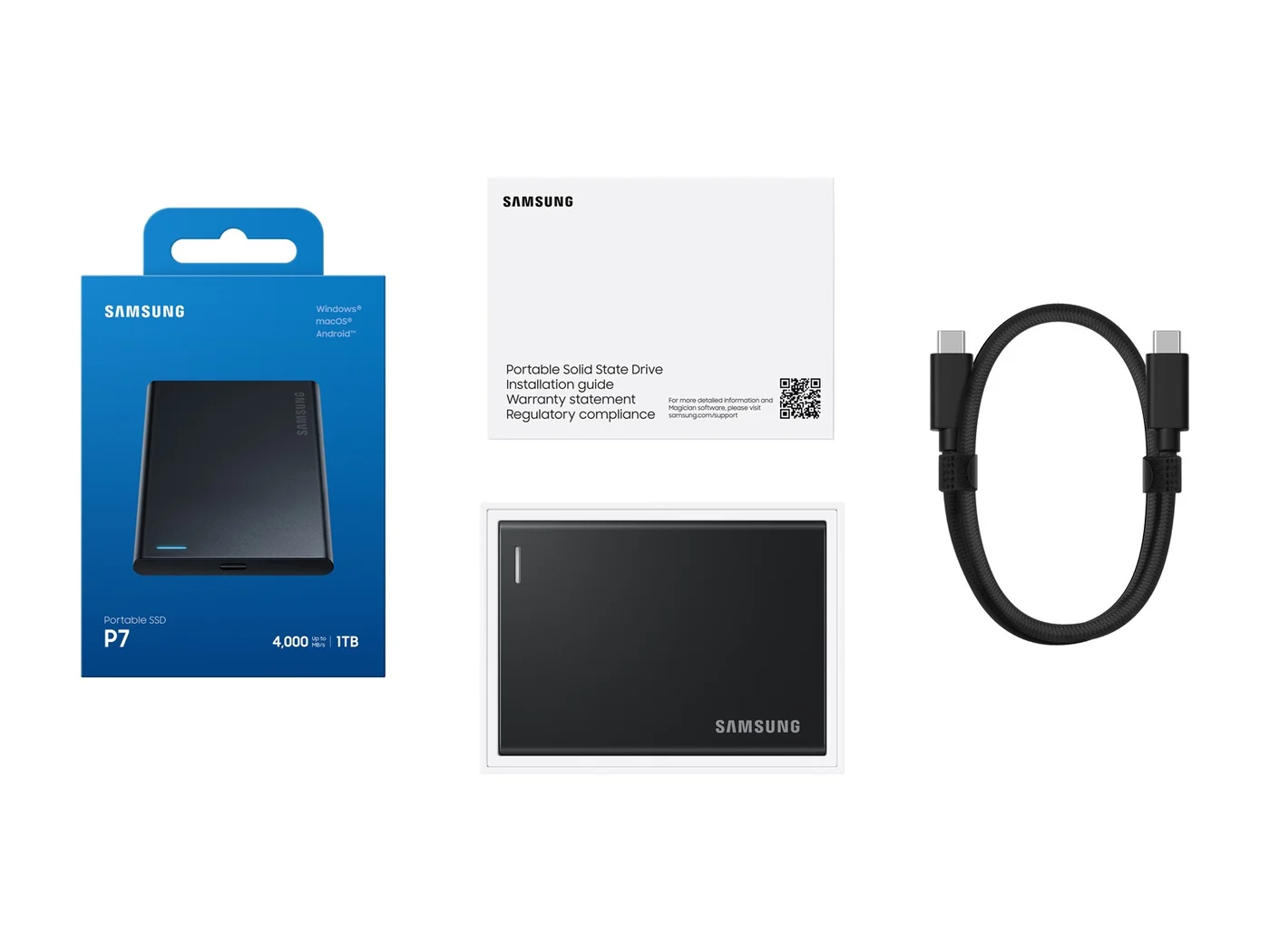
Inside the box you get the drive, a woven USB-C to USB-C cable rated for 40Gbps, and a quick start guide. The cable matters more than it looks. A USB4 drive on a 10Gbps cable behaves like a 10Gbps drive, which is the most common reason people conclude that these drives are overrated.
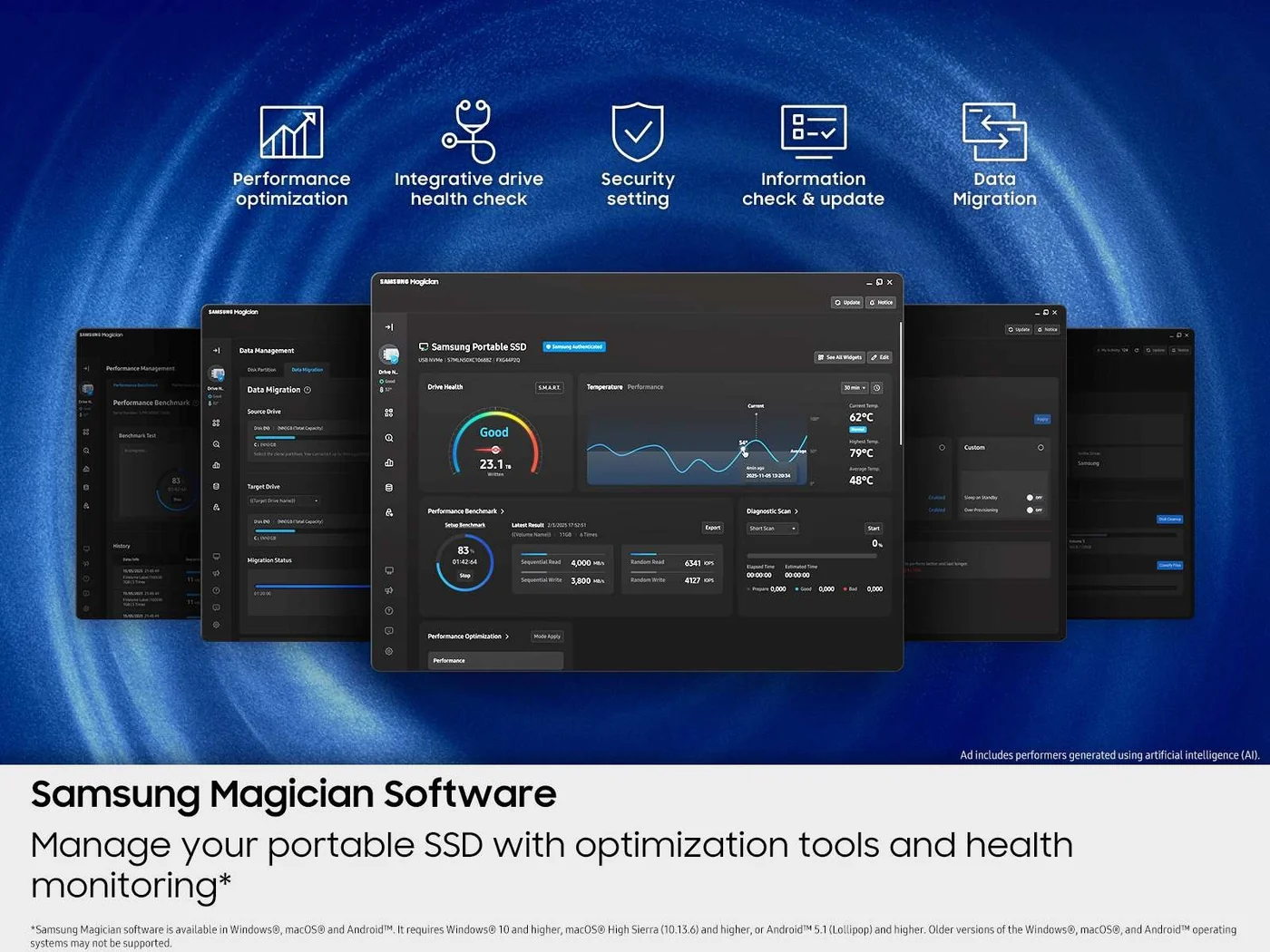
Samsung Magician 9.1 handles firmware updates, drive health, the built-in benchmark and the optional password lock, which runs on AES 256-bit hardware encryption. Durability is rated for a 2m drop, backed by shock and vibration testing. Unlike the T7 Shield there is no IP65 rating, so this is a desk and bag drive rather than a beach drive.
Samsung P7 1TB specifications
| Specification | Samsung P7 1TB |
|---|---|
| Model | MU-PF1T0G |
| Interface | USB4 Gen 3×2 (40Gbps), USB-C |
| Rated sequential read | Up to 4,000MB/s |
| Rated sequential write | Up to 3,700MB/s |
| Capacities | 1TB, 2TB, 4TB, 8TB |
| Dimensions | 90 x 65 x 8.3mm |
| Weight | 98g |
| Encryption | AES 256-bit hardware encryption |
| Software | Samsung Magician 9.1 |
| Durability | 2m drop, shock and vibration tested |
| Warranty | 5 years limited |
| Price (1TB) | PhP17,650 |
Benchmark setup and test methodology
Every drive was formatted, empty, and connected to the same Windows 11 ARM64 laptop. Sequential and random throughput came from CrystalDiskMark 9.0.3 at a 16GiB test size, and AS SSD Benchmark 2.0 ran at 1GB and 10GB for the small-block, access-time and copy results. Each drive used the cable it shipped with.
One caveat before the numbers. The P7 is the only drive here that can use the laptop’s USB4 link. The EDM38 tops out at USB 3.2 Gen 2×2 and the T7 Shield at USB 3.2 Gen 2, so neither can reach the same ceiling. The Shield’s 559MB/s result also sits below its own 1,050MB/s rating, which points to a 5Gbps link on the port it was given. Read the Shield’s bars as a floor rather than its ceiling. The P7’s numbers are what the drive does when the host is not the limit.
Sequential throughput
On CrystalDiskMark’s 16GiB test the P7 posted 3,366.74MB/s read and 3,154.94MB/s write at Q8T1. That is 84 percent of Samsung’s 4,000MB/s read claim and 85 percent of its 3,700MB/s write claim, which is about as close to a rated figure as a portable drive gets on a real machine.
At a queue depth of one the drive still held 1,978.06MB/s read and 1,471.63MB/s write, and that is the number that matters for how people actually use a drive. Dragging a folder in Explorer or Finder is a Q1T1 workload, not a Q8T1 one.
The comparison is not close. The P7 moved 6.03 times the T7 Shield’s sequential read and 3.89 times the EDM38’s, and it held 4.05 times the Shield’s Q1T1 read.
Samsung P7 vs T7 Shield vs AGI EDM38
1TB models, same host, same cable set. Values in MB/s unless noted.
Random 4K and IOPS
AS SSD is the harder test, because small random reads and writes are where portable drives usually fall apart. On the 1GB run the P7 hit 39.64MB/s read and 15.18MB/s write at 4K, or 10,149 and 3,886 IOPS.
The number that counts is 4K-64Thrd: 485.88MB/s read and 309.89MB/s write, which works out to 124,385 and 79,332 IOPS. The EDM38 managed 24.68MB/s and 6,319 IOPS, the T7 Shield 19.11MB/s and 4,892. That is roughly 20 to 25 times the small-block throughput of the two USB 3.2 drives, and it is the difference between an external drive that stutters through a photo catalog and one that does not.
Access time tells the same story from the other side. The P7 posted 0.035ms read and 0.338ms write on the 1GB pass, against 0.231ms and 0.395ms for the EDM38 and 0.395ms and 0.156ms for the Shield. All three are quick enough that you will not feel latency in normal use, but the P7 is the only one behaving like an internal NVMe drive throughout.
AS SSD’s composite score lands at 1,783, against 307 for the EDM38 and 273 for the T7 Shield.
Sustained performance at 10GB
This is where a fast drive usually embarrasses itself. Run AS SSD at 10GB instead of 1GB and the P7 held 2,754.23MB/s read and 2,592.00MB/s write, which is 101 percent of its 1GB result. Sequential throughput does not fall away at all.
Random 4K-64Thrd does drop, from 485.88MB/s to 353.90MB/s read, a 27 percent slide once the cache is working harder. Even at that reduced figure it is 14.3 times the EDM38’s 1GB result. The overall AS SSD score falls from 1,783 to 1,552, and write access time moves from 0.338ms to 4.431ms, the one figure in the whole run that looks ordinary.
The copy tests back that up. The P7 held 86 percent of its 1GB ISO speed at 10GB, at 802.14MB/s against 928.26MB/s, while the T7 Shield managed 451.23MB/s and the EDM38 202.71MB/s. Samsung’s dynamic thermal guard is doing its job quietly, because the drive never fell out of USB4 territory.
On a phone, which is where it earns its price
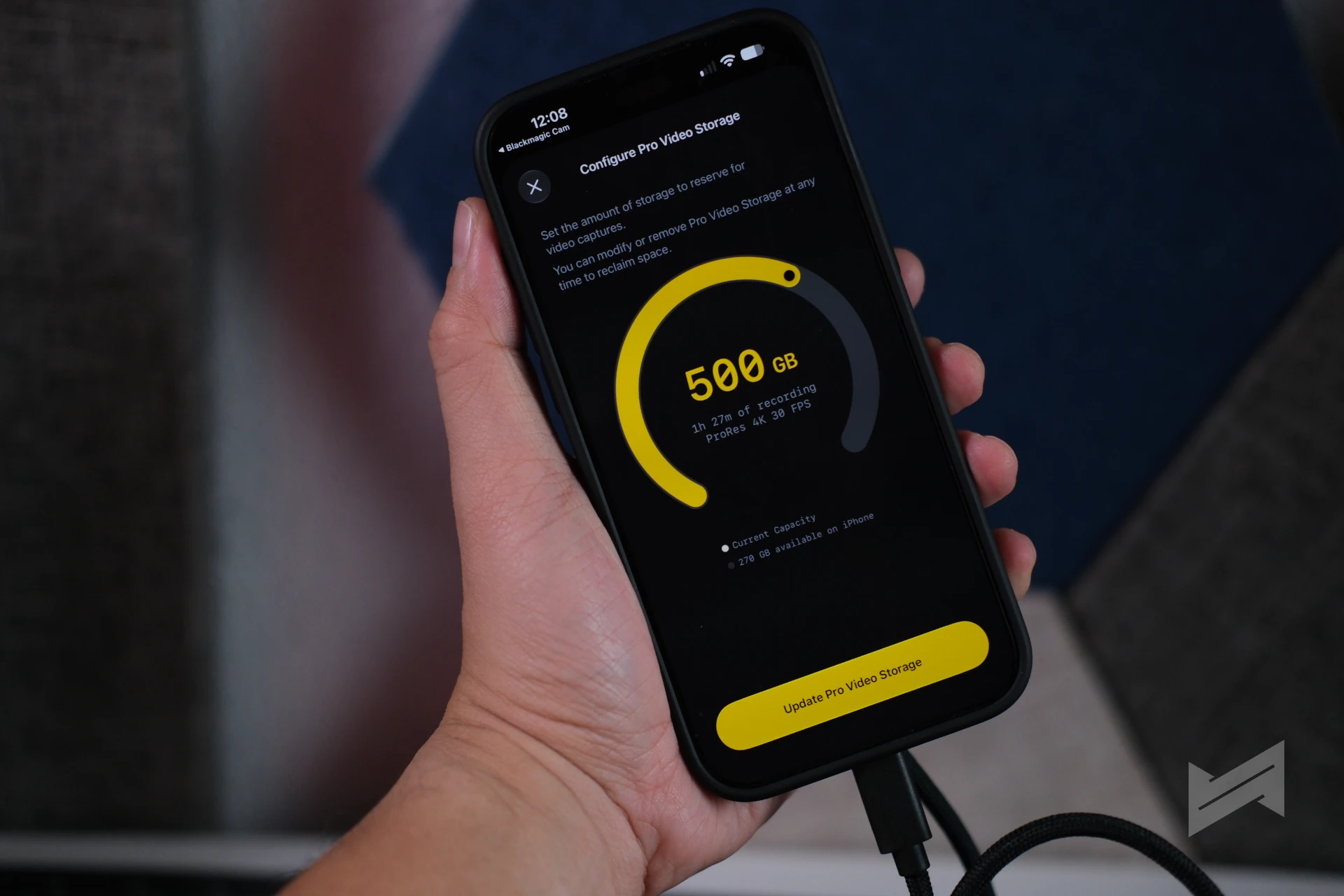
Most of my testing happened on phones rather than a laptop, because that is where a drive like this proves itself. The P7 mounted on the Xiaomi 18 Pro Max and the iPhone 18 Pro Max without a fuss, and moving a folder of footage from one phone to the other was quick enough that the drive stopped being the bottleneck. Copies to my laptop were just as painless.
The iPhone 18 Pro Max is the more interesting case. ProRes Log2 recording to an external drive needs sustained write speed with headroom, and the P7 clears Apple’s requirement with room to spare. It is the first portable SSD I have used on an iPhone where I stopped thinking about the drive while shooting, and that is the whole point of buying one this fast.
Price and who should buy it
PhP17,650 for 1TB works out to about PhP17 per gigabyte, which is not cheap, and this is not a year for cheap storage. The T7 Shield still sells for around PhP13,500 at local retail, so the P7 asks roughly 30 percent more. What that premium buys is four to six times the sequential speed and up to 25 times the small-block throughput. If you move large files every week, the time saved pays that difference back quickly.
Buy the T7 Shield instead if you need IP65 and you work outdoors, or if your machine only has USB 3.2 ports, because the P7 will run at the port’s speed and you will have paid for bandwidth you cannot use. Buy the EDM38 if the magnetic mount is the entire point and the budget is tight. Neither is a better drive. Both are cheaper answers to narrower questions.
Verdict
The P7 is the first portable SSD we have tested that does not feel like a compromise. It reaches 84 percent of Samsung’s rated read speed on a real laptop, holds its sequential speed when the test file grows tenfold, and clears the ProRes requirement on an iPhone with headroom to spare. The missing magnet and the missing IP65 rating are the two things to know before you buy, and neither is difficult to work around.
At PhP17,650 the P7 is a premium over the T7 Shield that the numbers justify. In a year when storage got expensive, this is the drive to buy once and stop thinking about.
Samsung P7 Portable SSD 1TB
Gadget PilipinasWhat we like
- 3,366.74MB/s read and 3,154.94MB/s write, within 16 percent of Samsung's rated figures
- 8.3mm thin and about 28 percent less volume than the T7 Shield
- 485.88MB/s at 4K-64Thrd, roughly 20 times the USB 3.2 drives here
- Holds 101 percent of its sequential speed at a 10GB test size
- Mounts on Android and iPhone without fuss, with headroom for ProRes Log2
- Five-year warranty, AES 256-bit encryption and Magician 9.1
Could improve
- No magnetic ring built in, unlike the AGI EDM38
- No IP65 rating, unlike the T7 Shield
- Needs a USB4 host to earn its price
Testing notes
Test host: a Windows 11 ARM64 laptop, drive connected to its USB-C port, no hub. CrystalDiskMark 9.0.3 at 16GiB, AS SSD Benchmark 2.0.7316 at 1GB and 10GB. Comparison units were a Samsung T7 Shield 1TB and an AGI EDM38 1TB, both tested on the same machine with their own cables. Price is the local retail listing for the 1TB model at the time of writing.

Giancarlo Viterbo
Giancarlo Viterbo is a Filipino Technology Journalist, blogger and Editor of gadgetpilipinas.net, He is also a Geek, Dad and a Husband. He knows a lot about washing the dishes, doing some errands and following instructions from his boss on his day job. Follow him on twitter: @gianviterbo and @gadgetpilipinas.
View all articles →Related Reviews
 UGREEN MagFlow 2-in-1 Foldable Magnetic Wireless Charger Review
 Anker soundcore AeroClip 2 Review: Clear Calls, Clean Sound
 GIGABYTE AI TOP ATOM DGX Spark Review
 MacBook Neo Long-Term Review: My Bedside Mac
 Sony 1000X The Collexion Review: Three Months Later