



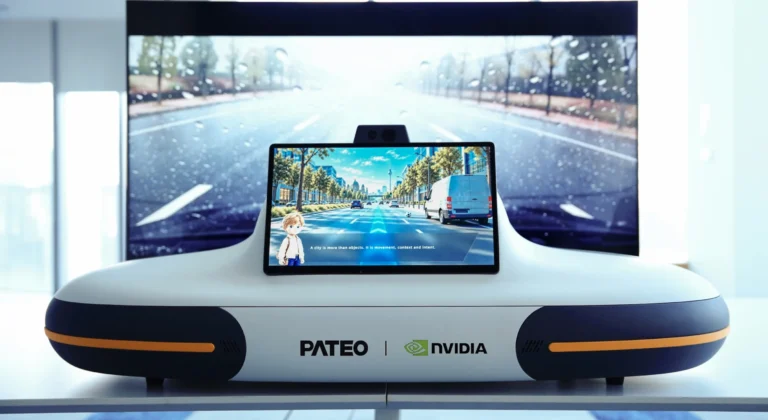
Car cabins are turning into computers, and the chips that shipped with many of them cannot keep up anymore. PATEO is betting that the answer is a second computer rather than a new vehicle, and its PATEO AI Box now runs two large AI models on board.
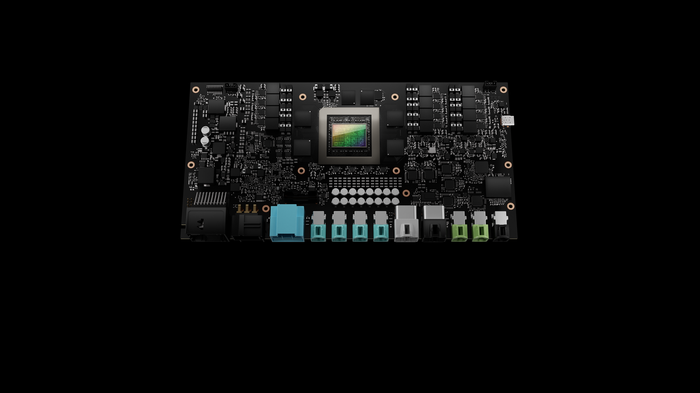
The Shanghai-based smart cockpit supplier said on November 3, 2026, that the AI Box, built on NVIDIA DRIVE AGX Thor, runs NVIDIA Nemotron for speech and ByteDance’s 35-billion-parameter Doubao language model locally. PATEO announced joint development of the solution with ByteDance and a leading new energy vehicle automaker at Auto China 2026 in Beijing.
AI that keeps working when the signal drops
PATEO integrated NVIDIA Nemotron 3.5 ASR for speech recognition, and worked with ByteDance to bring in Doubao, a 35-billion-parameter mixture-of-experts model. The suite also carries text-to-speech synthesis and a 2-billion-parameter model that sorts requests and rejects the ones it should not handle.
All of it runs inference locally, without a cloud connection. That keeps multilingual voice interaction and real-time streaming speech recognition available in tunnels, underground parking, and on provincial roads with weak coverage, while connected services and cloud updates extend the system later on.
What the PATEO AI Box adds to the cabin
The PATEO AI Agent platform combines voice, visual, and sensor inputs to read a request together with the state of the cabin. Inside vehicle safety permissions, it can operate cabin controls and online services, run several tasks at once and carry longer requests to completion. With user authorization, it remembers preferences and habits.
PATEO lists concrete uses for the setup. Sentinel AI flags parking violations, flooding, and fire. Occupants set their own climate settings by voice or gesture. On long highway runs, the agent watches for driver fatigue and offers to open a window or start the seat massage, and in poor air quality it suggests closing the windows and switching to recirculation.
An upgrade path for cars already on the road
Because the box adds dedicated AI computing without replacing the main control chip, it gives existing vehicles a hardware route to larger models. The brand points to memory bandwidth as the constraint that matters as much as peak compute, since the model’s key-value cache grows with every conversation turn and agent action during a trip.
The modular software stack is meant to be reused across automakers and vehicle programs, a line of work MediaTek and NVIDIA opened up in 2023. PATEO holds a project nomination for a new-generation vehicle from a leading new energy vehicle automaker, with mass production expected in the second quarter of 2027.
PATEO is also pushing beyond one-time hardware sales. Its Tokenomics strategy targets recurring revenue from AI deployment and use, following June 2026 partnerships with Mininglamp Technology, Xunce Technology and Saimo Technology on a token-based physical AI world model and TokenOS. The company reports a project nomination from a domestic robotics computing provider as well.
No Philippine availability, pricing, or automotive partner has been announced for the PATEO AI Box, and the production date puts the first cars carrying it well into 2027.

Miguel Palispis
Started his freelancing adventure in 2018 and began doing freelance Audio Engineering work and then started freelance writing a few years later. Currently he writes for Gadget Pilipinas and Grit.PH. He is also a musician, foody, gamer, and PC enthusiast.
View all articles →Related News





 GTA VI Pre-Load Starts on November 10