




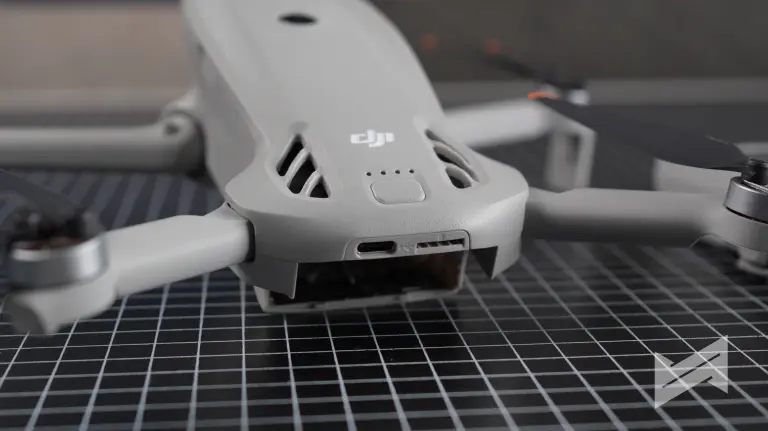
The FCC is widening its enforcement effort around DJI-related hardware, fining eight companies it suspects of acting as stand-ins for the Chinese drone maker and moving against a test lab that helped certify some of the gear. The latest step shifts attention from DJI itself to the companies, labs, and certification channels that allow DJI-style products to reach the US market.
Eight companies face fines
The FCC has issued USD $25,000 penalties to Cogito Tech, Fixaxo Technology, Lyno Dynamics, Skyhigh Tech, Spatial Hover, SZ Knowact, WaveGo Tech, and Xtra Technology. Each company has been given until July 20 to respond to the FCC’s questions about whether it markets radio equipment in the US that belongs on the Covered List. The companies did not reply when the FCC first asked whether they were marketing covered radio gear.
Several of these names have already been watched closely because they appear to sell DJI-like products through mainstream US retailers. DJI has not acknowledged any connection to these firms, and each publicly presents itself as an independent business.
While the FCC’s current action does not directly punish the products themselves, it puts the companies on notice as regulators push deeper into the distribution chain.
Why a drone issue reaches cameras
Any manufacturer that wants to import, sell, or market a radio-transmitting device in the US needs FCC approval for that device’s radios. Once the FCC placed foreign drone makers on its Covered List, it also gave itself the power to retroactively revoke existing authorizations, including cases where a product contains a component from a listed company.
That is why the policy can affect more than drones. A camera is not a drone, but if it includes a DJI radio transmitter, the FCC now has a route to block it from sale, import, and marketing. DJI is still contesting its placement on the Covered List and has pointed to an independent security audit of two of its drones as part of its appeal.
Xtra and the pocket camera angle
Among the companies under scrutiny, Xtra has drawn especially close attention as it has promoted videos comparing its Xtra Muse to the DJI Osmo Pocket 3, and is now accepting $20 reservations for an Xtra Muse 2 Pro that closely resembles DJI’s Pocket 4 line.
DJI reportedly cleared the Osmo Pocket 4 Pro through the FCC on November 26, while Xtra pushed its own paperwork through on June 17. Neither filing currently appears in the FCC’s public search system, which has been returning an error about missing attachments. It’s unclear whether it reflects an active review, a filing problem, or something else, but it suggests the path to market is tightening.
Test labs under pressure
The FCC is also looking at the certification labs that handled some of this hardware. The DJI Osmo Pocket 4 and 4 Pro were tested by SGS-CTST Standards Technical Services Co, and so was WaveGo Tech. On May 11, the FCC signaled that it intends to disqualify SGS as an accredited test lab.
SGS Shenzhen is 15 percent owned by China Standard Science & Technology Group Company Limited, which is wholly owned by the China National Institute of Standardization.
The organization is tied to a country the US Department of Commerce has formally identified as a foreign adversary. Losing an accredited lab matters because certification depends on a limited number of approved test houses, so removing one can complicate the route to market for many products, not just DJI-related ones.
What this means for users
For current DJI shooters and other creators, the immediate effect is not a ban on using existing gear. The action targets importers, certification, and market access rather than end users. The bigger impact is on future availability, especially for filmmakers and creators who rely on affordable tools that offer strong performance.
The policy raises a broader consistency problem as well. If the concern is Chinese-made devices with radios moving data, then the scrutiny appears uneven when other Chinese brands and products remain available. That makes the overall campaign look less like a broad security framework and more like a concentrated push against DJI and closely related brands.
Frequently Asked Questions (FAQ)
Q: Who did the FCC fine?
A: The FCC fined Cogito Tech, Fixaxo Technology, Lyno Dynamics, Skyhigh Tech, Spatial Hover, SZ Knowact, WaveGo Tech, and Xtra Technology.
Q: How much is each penalty?
A: Each company was fined $25,000.
Q: Why does the action affect cameras and not just drones?
A: The FCC can block radio-equipped devices, and the source says that can include a camera if it contains a DJI radio transmitter.
Q: What is the issue with the test lab?
A: The FCC plans to disqualify SGS as an accredited lab because of its ownership structure.
Q: Can people still use gear they already own?
A: Yes. The source says the action targets importers and certification, not end users.

Emman Tortoza
Emman has been writing technical and feature articles since 2010. Prior to this, he became one of the instructors at Asia Pacific College in 2008, and eventually landed a job as Business Analyst and Technical Writer at Integrated Open Source Solutions for almost 3 years.
View all articles →