

ASUS Knows When to Pivot
Innovation in tech often gets confused with being first. But after spending time dissecting answers from Sascha Krohn, ASUS’s Director of Technical Marketing for PC and Laptop, it’s clear that the company’s real superpower isn’t just creating new things. It’s actually knowing when to double down, when to pivot, and when to wait.
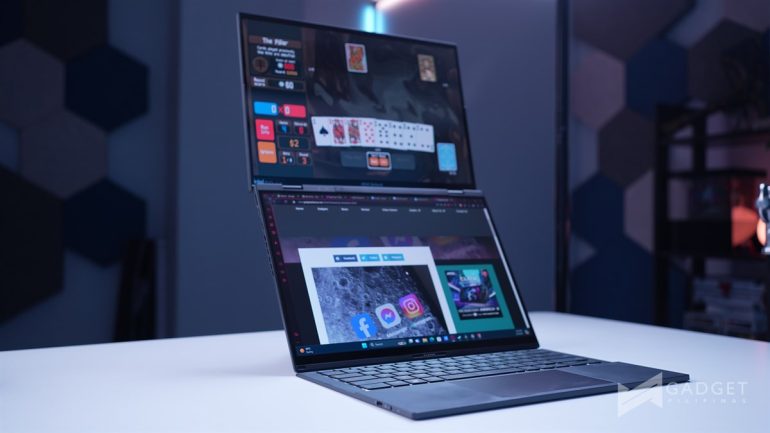
Take the Zenbook Fold story. ASUS was among the first to bring a foldable OLED laptop to market, a gorgeous piece of engineering that turned heads at every trade show. But here’s where it gets interesting. Instead of iterating on the Fold and pouring resources into improving foldable display technology, ASUS did something smarter. They created the Zenbook Duo. In case you missed it, I wrote an article about the first iteration of the redesigned Zenbook Duo 2 years ago. This 2026, ASUS has yet again pushed themselves further by improving it, even the features that already work.

“This kind of form factor is much more affordable, we can mass produce it at much higher quantity, and we don’t have to worry about durability at all,” Krohn explained. The Duo delivers most of what the Fold promised, with glass-protected displays, better performance, and none of the anxiety that comes with babying a folding OLED screen. It’s innovation with its feet firmly planted in reality.
Smart Engineering, Not Just Flashy Features
The devil is in the details, and ASUS’s attention to physics-based problem solving shows in unexpected places. Consider the dual-battery system in the 2026 Duo laptops. The challenge was simple but critical. When you stack two touchscreens vertically with a kickstand, every touch causes wobble. As a user of a Zenbook Duo (2024), I know this by heart.

Here’s what ASUS did to solve that issue. Split the battery into two cells and place one at the bottom of each screen, using the battery’s weight as ballast to pull both displays down and stabilize the entire structure.
It’s the kind of elegant engineering that doesn’t make it into marketing materials but fundamentally improves the user experience. These batteries are also individually replaceable, not glued in place. ASUS maintains replacement parts for four to five years after launch. That’s not innovative in the sexy, headline-grabbing sense. It’s innovative in the “we actually give a damn about longevity” sense.
Market-Responsive, Not Market-Reactive
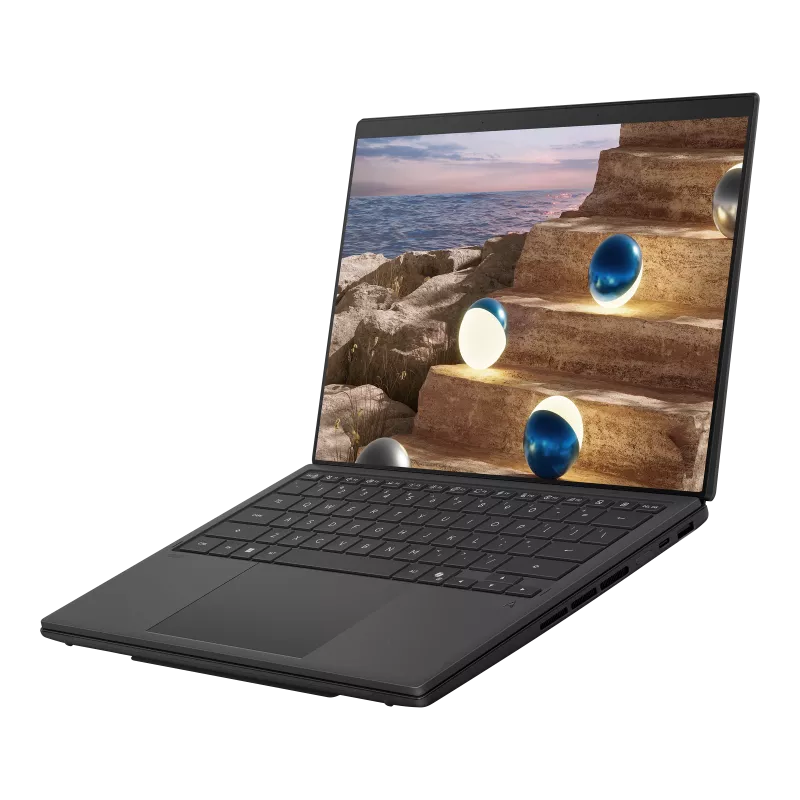
ASUS’s approach to regional customization demonstrates sophisticated market understanding. The Zenbook A14 launched with multiple configurations globally, but for Asia Pacific markets including the Philippines, they created a special 899g version using an IPS panel instead of OLED and a smaller 48Wh battery instead of the standard 70Wh pack. The result was the lightest 14-inch laptop at launch, hitting a price point that mattered for the market.
To ASUS and Krohn, this isn’t compromise. It’s understanding that different markets value different things. Sometimes the lightest wins. Sometimes the longest battery life wins. ASUS builds for both.
Knowing When NOT to Innovate
Perhaps most telling is ASUS’s restraint with the Snapdragon X2 Elite Extreme chip in the Zenbook A14. They could have stuffed the top-tier processor in their compact laptop for bragging rights. Instead, they reserved it for the A16, where it can actually run at full 65W (80W+ total package power) with proper cooling.

“We feel that we don’t want to run it at just 45W in the Zenbook A14. We wouldn’t be able to run it at the full performance, so that’s why we don’t have plans to do that,” Krohn stated. It’s like putting an RTX 5090 in a case with inadequate cooling. Sure, you can do it, but why would you?
The same philosophy applies to foldable OLED laptops. While competitors rush to market with new folding displays, ASUS is waiting. Krohn acknowledges the technology “feels like a concept device” and expresses concern about durability and serviceability. “We love to innovate at ASUS. If you’re the first to try something, it usually isn’t ready,” he noted, adding that panel technology needs to mature beyond requiring service every few months.
Innovation When Pricing Turns Ugly
Innovation is easy to talk about when component prices are stable. It gets a lot more interesting when RAM and SSD costs spike. In our interview, Krohn did not sugarcoat it. ASUS fully expects prices to go up across the board in 2026, not just for new laptops but even for 2024 and 2025 models, as the shockwave of higher memory prices slowly works its way through the global supply chain. Phones, tablets, laptops, desktops, even gaming consoles are likely to feel it.
What impressed me was not a promise to magically absorb those costs. That would be unrealistic for any OEM that does not manufacture its own memory chips, and ASUS is very clear that they do not. Instead, Krohn called out competitors that already announced fixed 10 to 30 percent price hikes this early, pointing out the simple truth. Nobody really knows yet how bad things will get in the first quarter of 2026. For ASUS, committing to specific increases now would be premature at best and misleading at worst.
ASUS is signaling that pricing will go up, because physics and supply chains do not care about brand loyalty. At the same time, they are refusing to pin it to a neat percentage just to get a headline. In a market where “innovation” often means inventing new ways to justify higher prices, that kind of restraint is quietly refreshing.
The Innovation Pipeline Continues
This measured approach doesn’t mean ASUS is playing it safe. The ROG AR Glasses announced at CES 2026 show they’re still exploring new categories. Lightweight, micro-OLED displays you can use with phones, laptops, or handheld consoles. It’s the kind of accessory that solves a real problem (portable gaming displays are heavy and unwieldy) without requiring you to bet your entire workflow on unproven technology.
The real lesson from ASUS’s innovation strategy is this. Being first is overrated. Being first with something that actually works, that people can afford, and that won’t break in six months? That’s where the magic happens. ASUS wins not by chasing every shiny new technology, but by understanding which innovations are ready for prime time and which need a few more years in the oven.
In a world of tech companies racing to be first, ASUS is playing a different game entirely. It is clear to me that they’re racing to be right.

Giancarlo Viterbo is a Filipino Technology Journalist, blogger and Editor of gadgetpilipinas.net, He is also a Geek, Dad and a Husband. He knows a lot about washing the dishes, doing some errands and following instructions from his boss on his day job. Follow him on twitter: @gianviterbo and @gadgetpilipinas.