










Most expansion announcements stop at a trailer. At Tokyo Game Show 2026, CD PROJEKT RED and Fool’s Theory let us sit in a theatre and watch an early mission of The Witcher 3: Songs of the Past play out on a big screen, from the opening cutscene to a boss fight. Photography was not allowed, so the images in this piece are official screenshots and key art from CD PROJEKT RED. It was one stop in a busy week for us at the show, alongside the rest of our Tokyo Game Show 2026 coverage.
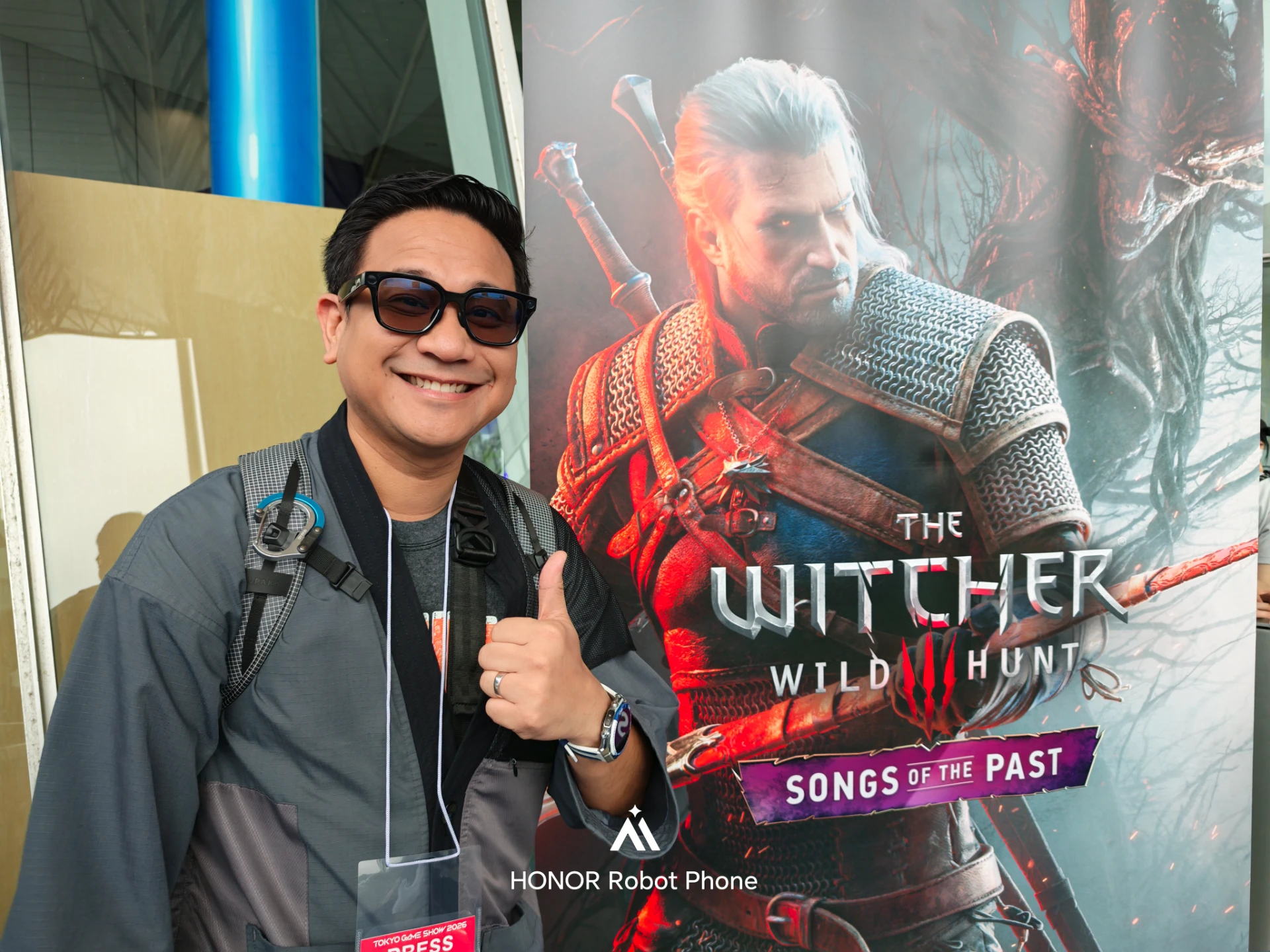
Songs of the Past is the third expansion for The Witcher 3: Wild Hunt, arriving in 2027, twelve years after the base game. The demo ran through Letten, the rural homeland of Dandelion, the bard who has narrated the series from the start. Returning to this game for one more expansion should have felt like a nostalgia act. Instead, it felt like the studio remembered exactly what made the 2015 original hold up.

Letten is the star of Songs of the Past
The demo opens at dawn on a hilltop, with Geralt waking up after a party, and the camera panning across a lake dotted with sailboats, rolling farmland, and mountains in the distance. It is a deliberate break from the war-torn marshes of the base game. Fool’s Theory built the region from English and Polish countryside, with a midsummer feel that shows up in the flowers and the way villages are laid out, and the team calls it a fully realized open world in its own right.
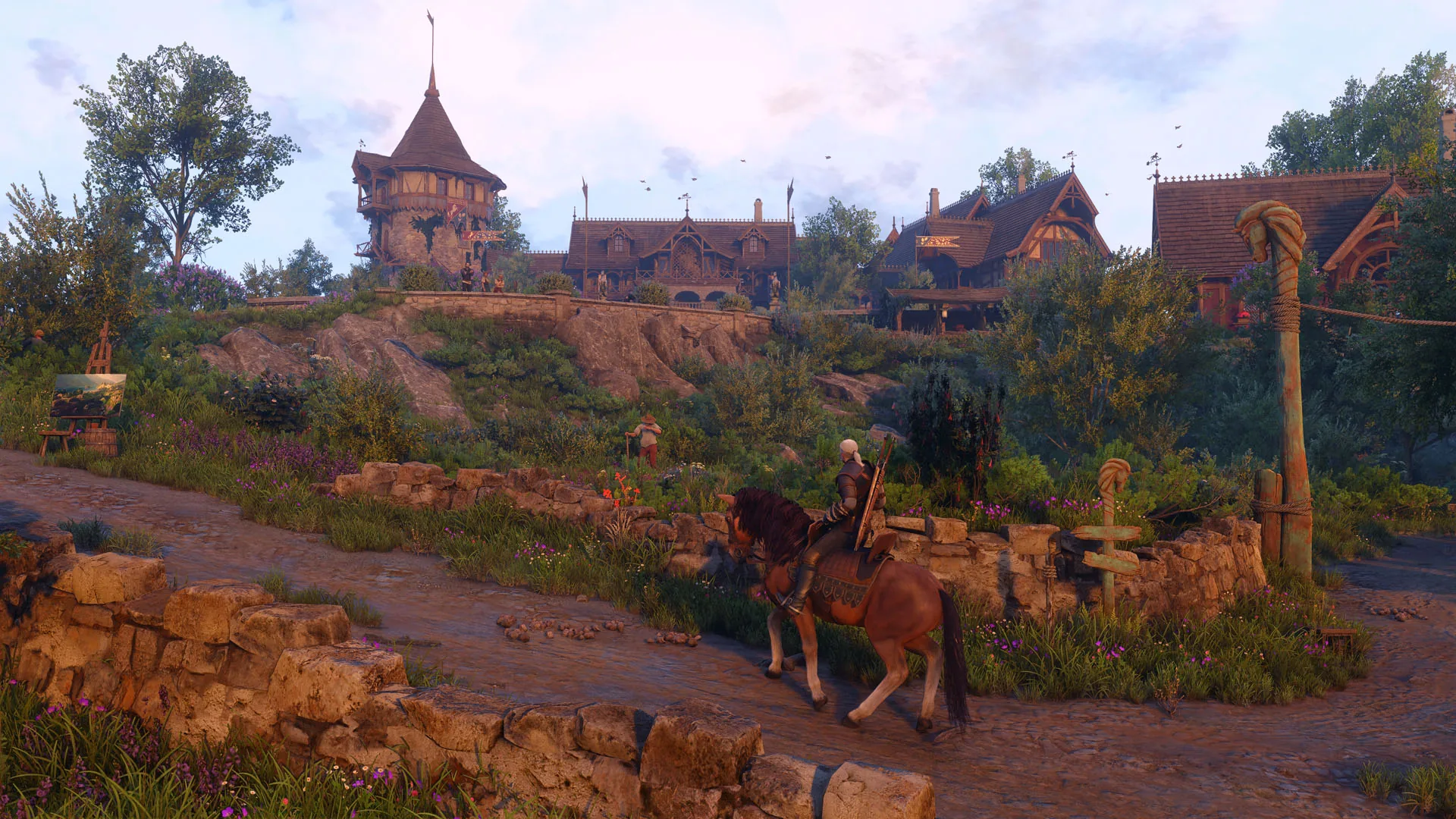
That brightness does not last. As Geralt and his companion travel toward a wall of thorns threading violets through human skulls, the trees knot together, the light drops, and Letten turns from a holiday postcard into a gothic hellscape.
Improved NPCs make the region feel lived in
Fool’s Theory also upgraded the NPC systems that run under the game. In Letten, villagers behave more believably around Geralt instead of standing in place, which gives the province the feel of a working, happy community before the story starts pulling it apart. It is a small change on paper and a big one in the frame: this is the first Witcher 3 region where the crowd is part of the atmosphere rather than wallpaper.
The hooked chain is a new weapon, not a reskin
Geralt now carries a hooked chain as a ranged weapon, and it changes the rhythm of fights. Firing it slows time so you can pick which part of an enemy to hook, then yanks that enemy out of a group and into melee range, where the follow up is faster and the new finishers land harder, including one that takes a foe’s head off with the chain. It handles closer to the crossbow than the sword, with the hook doing the work.
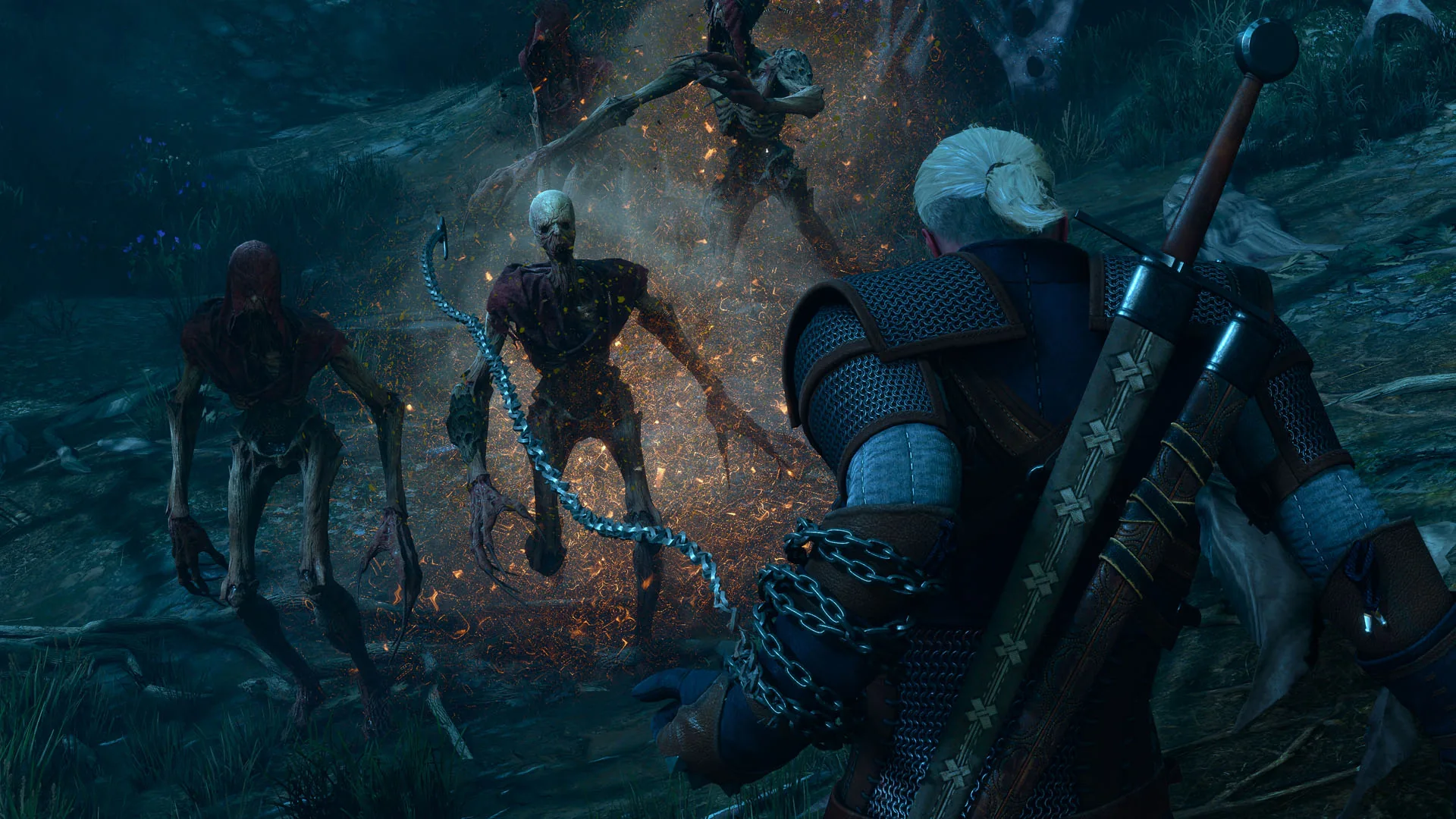
Fans of the books and the very first Witcher game will recognise it. The chain is Geralt’s original weapon from the opening cutscene of the 2007 game, taken from a short story in The Last Wish, and this is the first time the games let you use it.
New monsters, and a choice at the gate
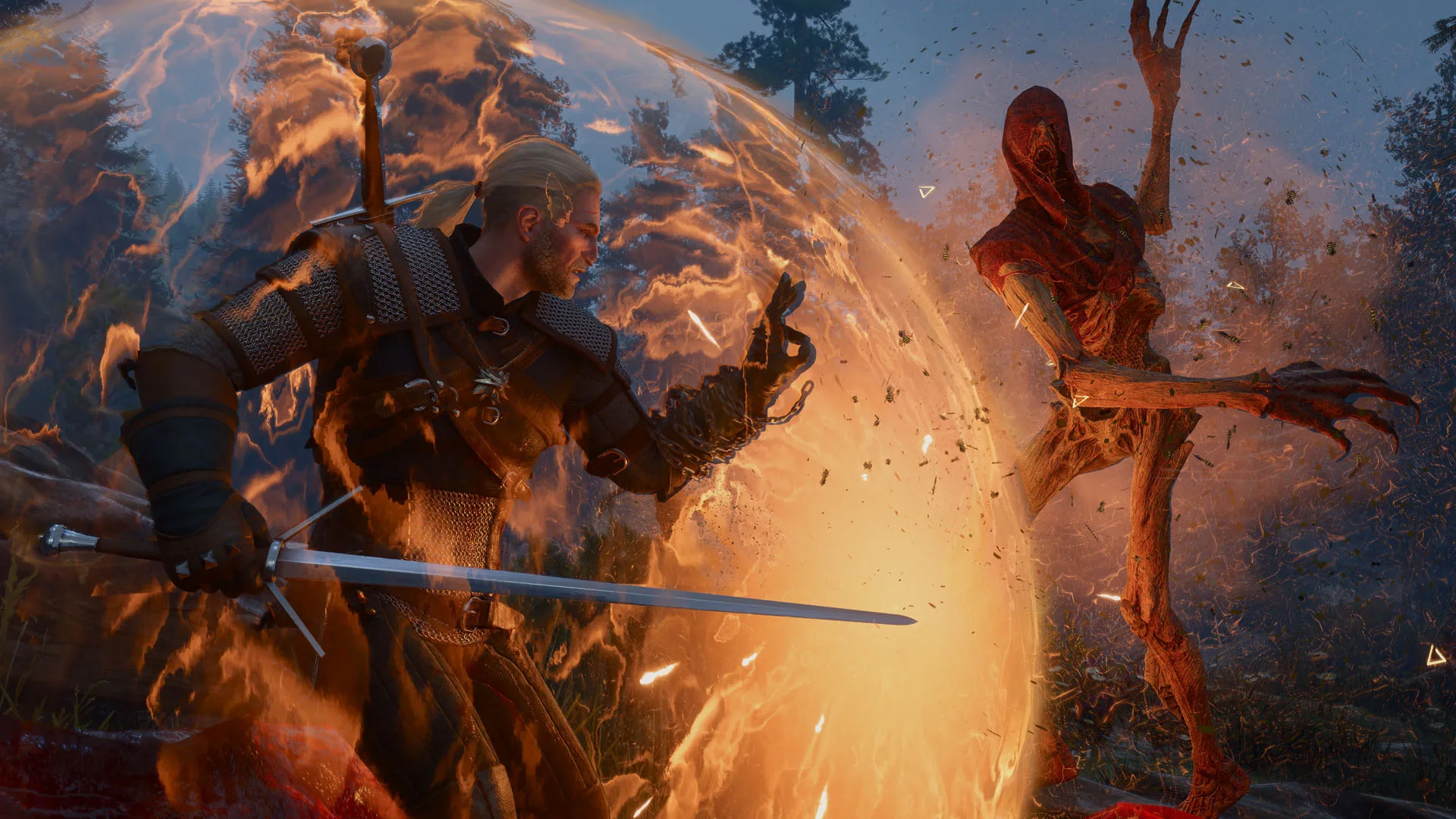
Two enemies stood out in the demo. The Thornbloom is a tall, vine-like plant that cannot move but makes up for it by growing fields of bulbs and detonating them, and by spitting acid from a distance. The Swarmion is a humanoid fighter wrapped in a shield of live hornets, which the chain can break, and it is the best argument for the new weapon.
The Garden of Thorns itself has more than one entrance. CD PROJEKT RED says the gate can be talked, sensed, or forced open, and each approach carries consequences, the kind of decision the series built its reputation on.
New characters, starting with Lilla
Dandelion’s own family drives the story of Songs of the Past. His cousin Lilla joins Geralt as a companion on the search for the missing bard, and the demo spends real time building her as a person with her own read on a family Geralt is only starting to understand. The previews out of gamescom also suggest she can be flirted with, putting her beside Yennefer and Triss as a possible third option.
Dandelion, meanwhile, is Julian Alfred Pankratz, Viscount de Lettenhove, and the demo visits the childhood estate where he grew up noble rather than musical. Nobody explains why he left.
Looting, progression and the rest of the quality of life work
Songs of the Past runs on the updated engine that ships with The Witcher 3: Wild Hunt Remastered, so it inherits a long list of quality of life work: a full looting rework, new quest tracking, improved menu navigation, enhanced combat with new finishing moves and skills, better traversal and vaulting, revamped mount handling, upgraded monster behavior, a revamped skill tree, transmogrification, an expanded photo mode, immersive meditation, refreshed animations, and new accessibility options.
The visual side gets a similar pass, with updated textures, reworked foliage shading, a new lighting and tone mapping model, HDR improvements, and ray tracing on consoles. On PC the game picks up path tracing plus the latest upscalers, including DLSS 4.5, FSR 4, and XeSS 2.0 support.
When Filipino players can get it
The Witcher 3: Wild Hunt Remastered lands on September 29, 2026 on PC, PlayStation 5, and Xbox Series X|S. It is free for anyone who already owns the game. A native Nintendo Switch 2 version and a Battle.net release arrive the same day, and every owner of The Witcher 3 can now play Hearts of Stone and Blood and Wine at no extra cost.
Songs of the Past is a paid expansion and launches in 2027 on PC, PlayStation 5, Xbox Series X|S, and Nintendo Switch 2. It can be wishlisted now. CD PROJEKT RED has not announced Philippine pricing for it yet, and the next game in the series, The Witcher 4, is targeted for 2028.
Sources: CD PROJEKT RED Press Center, Xbox Wire, IGN, and Polygon.

Giancarlo Viterbo
Giancarlo Viterbo is a Filipino Technology Journalist, blogger and Editor of gadgetpilipinas.net, He is also a Geek, Dad and a Husband. He knows a lot about washing the dishes, doing some errands and following instructions from his boss on his day job. Follow him on twitter: @gianviterbo and @gadgetpilipinas.
View all articles →