



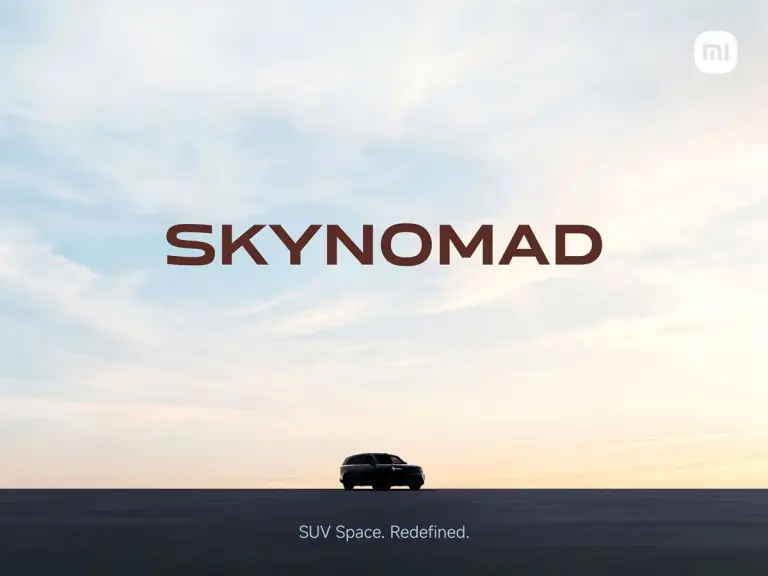
Xiaomi EV has debuted Xiaomi SkyNomad, also known as Xiaomi Pengcheng, as its second product series. It’s an intelligent, reconfigurable, large-space SUV series built around the people inside the vehicle rather than the driver alone.
What the Series Represents
Xiaomi’s SU7 and YU7 series are meant to be “the driver’s car,” while SkyNomad is designed to answer a different need. The new series focuses on the cabin as a living space that can adapt throughout the day, whether for commuting, resting, working, family travel, or camping.
Moreover, it shows Xiaomi EV’s broader expansion after more than five years of building cars. According to the company, SkyNomad marks another step in creating a lineup that serves distinct user needs instead of one narrow use case.
Why Xiaomi Built It
The launch centers around changing expectations in China’s auto market. Large six- and seven-seat layouts and feature-rich interiors are already common, so the real question for buyers is not just size or softness. Instead, the priority has shifted toward whether passengers feel genuinely comfortable inside the vehicle.
That idea came from observing how people actually use cars today, pointing to long commutes, resting in the driver’s seat, working from a parked car, family trips on weekends, and using a vehicle also as a second home during camping. In that context, the cabin is meant to function as an extension of living space on the move.
How The Cabin Works
SkyNomad is built on Xiaomi’s new Kunlun Architecture, which was developed from early 2023 specifically to support reconfigurable interior space. In an SUV body, the platform combines a flat floor and long-track seating system to create flexible room for passengers, luggage, and pets.
The cabin can switch between driving mode and parked modes. When parked, it can also transform into a workspace, a lounge, or a family activity space, delivering that flexibility required the integration of AI, its smart-device ecosystem, and smart manufacturing capabilities.
Lei Jun, Xiaomi’s Founder, Chairman, and CEO, described the project by saying the company’s answer was to let intelligence define the space and build a living interior that moves with the user.
Who It Is For
Xiaomi says SkyNomad is intended for buyers who need one vehicle to handle commuting, family travel, and occasional work-from-car use. It is not presented as a lifestyle statement, but as a practical tool that adapts across roles.
The company says the series is designed for professionals and parents alike, treating them as the same person across different hours of the day. SkyNomad Series will soon launch in the Chinese mainland, as a result of three and a half years of development.
For more information on Xiaomi and its products, click here.
Frequently Asked Questions (FAQ)
Q: What is Xiaomi SkyNomad?
A: It is Xiaomi EV’s second product series, positioned as an intelligent, reconfigurable, large-space SUV series.
Q: How is SkyNomad different from the SU7 and YU7 series?
A: Xiaomi says SU7 and YU7 are “the driver’s car,” while SkyNomad focuses on the people inside and the cabin experience.
Q: What platform does SkyNomad use?
A: It is built on Xiaomi’s new Kunlun Architecture.
Q: What can the cabin do?
A: The cabin can shift between driving mode and parked modes that become a workspace, lounge, or family activity space.
Q: When will it launch?
A: Xiaomi says the SkyNomad Series will soon launch in the Chinese mainland.

Emman Tortoza
Emman has been writing technical and feature articles since 2010. Prior to this, he became one of the instructors at Asia Pacific College in 2008, and eventually landed a job as Business Analyst and Technical Writer at Integrated Open Source Solutions for almost 3 years.
View all articles →Related News

 Kris Aquino is Back as Queen of All Shopee