








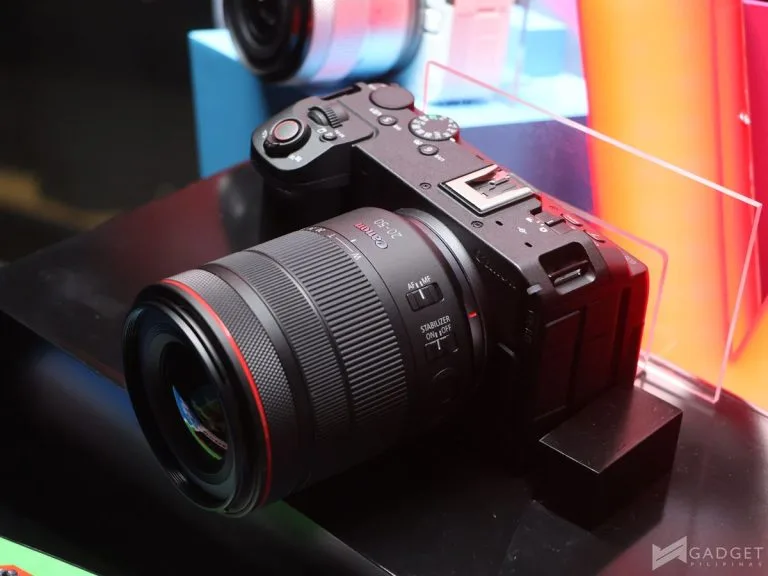
The Canon EOS R6 V was launched in the Philippines at the Canon Creator Experience Day, introducing a new full-frame camera designed with video content creation in mind. The brand also debuted the RF20-50mm f/4L IS USM PZ, its first-ever full-frame professional-grade L-series lens with a built-in power zoom.
Video-Focused Design

The Canon EOS R6 V carries the stills and video performance of the EOS R6 Mark III, but it is packaged in a body optimized for creators who prioritize video. Among its key additions are a built-in cooling fan and a vertical tripod socket that supports social media-friendly shooting.

The camera uses a full-frame CMOS sensor with up to 32.5 effective megapixels and supports 7K Open Gate recording, which gives creators access to the full field of view of ultra-wide-angle lenses.

This setup opens up more possibilities for storytelling and framing. The camera is built to handle one-take production styles, vertical content, and workflows that need flexibility when turning horizontal footage into vertical output.
One Take, Many Formats

The Canon EOS R6 V features 7K Open Gate RAW and MP4 shooting, which records video using the full sensor area. That allows creators to reframe footage more easily when adapting content for different platforms, without needing to reshoot the same scene. The built-in cooling fan allows 7K Open Gate MP4 recording for about three times longer than the EOS R6 Mark III.

The camera is also built natively for vertical shooting. Its dedicated vertical tripod socket provides stable mounting without requiring an extra bracket, while the user interface automatically reorients to match the shooting direction. The body’s linear design and minimal protrusions are intended to make it easier to use with rigs, attachments, and accessories.
Compact Lens for Creators

The RF20-50mm f/4L IS USM PZ is designed to pair with the Canon EOS R6 V as a compact and travel-friendly option. Its 20mm to 50mm zoom range covers wide environmental scenes as well as tighter conversational shots, while its built-in Power Zoom keeps transitions smooth and cinematic. The constant f/4 aperture also helps maintain consistent exposure while zooming.
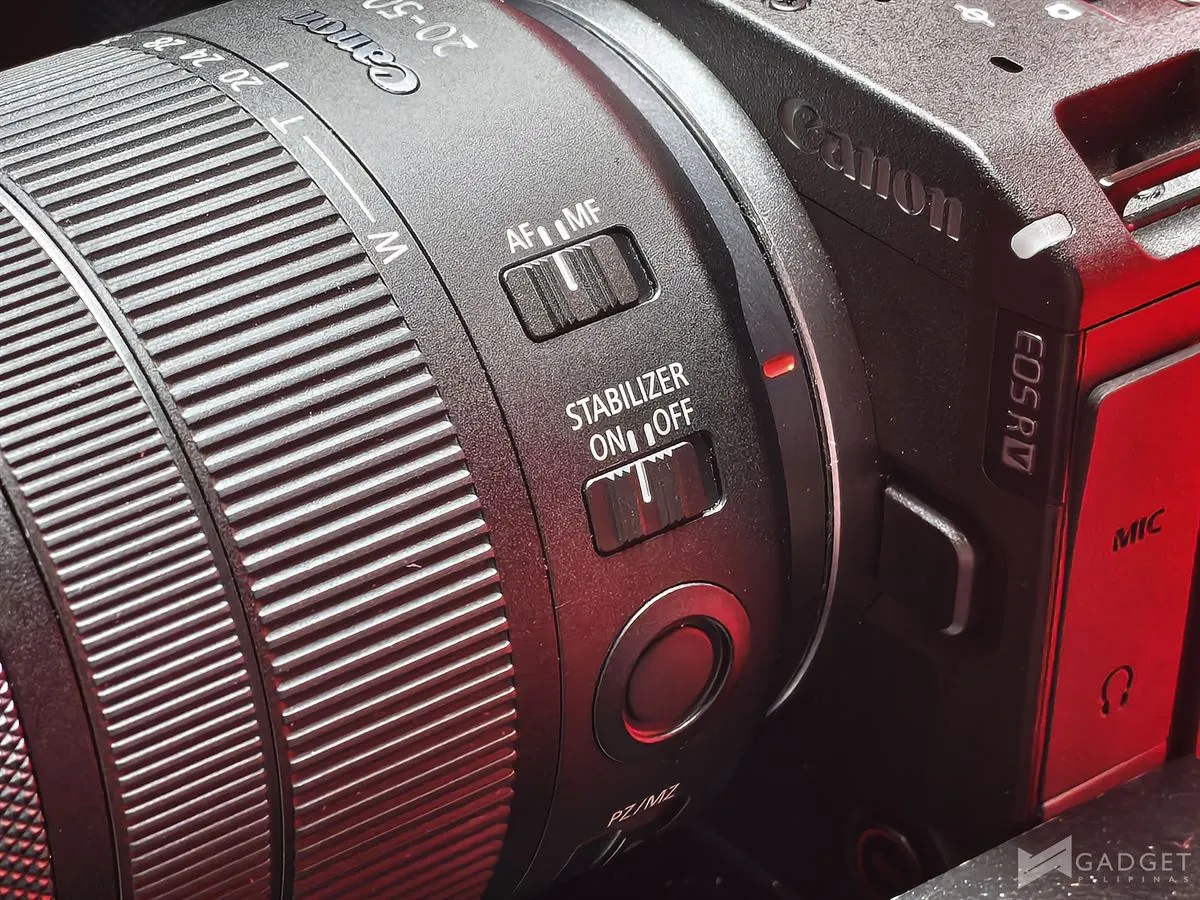
The 20mm wide end is ideal for perspective-rich establishing shots, including interior scenes. At the 50mm end, it offers a 0.24m minimum focusing distance for close-up shots with a natural look. Users can zoom with either the zoom ring or the camera’s zoom lever, and they can switch between two zoom speeds with up to 15 levels each. A zoom mode selector also lets users move between power zooming and conventional manual zooming.
Stabilization and Stills Performance
The stabilization systems in both products are important tools for run-and-gun production. The EOS R6 V uses five-axis sensor-shift In-Body IS and Digital Movie IS, while the lens adds Optical IS. Together, they are meant to help stabilize handheld footage, gimbal work, and rig-based shooting. The setup also supports Subject Tracking IS, which takes the subject’s position into account during stabilization.

In stills mode, the Canon EOS R6 V shares performance traits with the EOS R6 Mark III and EOS C50. Its 32.5 MP full-frame sensor delivers detailed images and strong dynamic range, with enough resolution for cropping or printing at 300 dpi in A3 size.

The electronic shutter supports up to 40 fps continuous shooting and pre-shooting. The camera’s in-body stabilization reaches up to 7.5 stops at the center and 7.0 stops at the edges.
Self-Shooting Tools
The Canon EOS R6 V includes a front recording button and a tally lamp that lights up while recording. On the lens, the zoom ring is positioned for easy front access. For remote operation, Canon offers control through the Camera Connect app or the Wireless Remote Control BR-E2.
The BR-E2 adds a dedicated movie button and assignable functions, giving users more control over both still and video shooting. The Tripod Grip HG-200TBR can function as a desktop tripod or a selfie stick.
Creator Workflow and Value

The Canon EOS R6 V and RF20-50mm f/4L IS USM PZ delivers a cost-efficient duo for advanced filmmaking workflows. The camera supports Canon Log 2/3, Custom Picture, custom LUTs, waveform monitor display, 4-channel audio recording, and a standard HDMI Type-A terminal. It also includes Color Filters and Slow & Fast Motion mode for more creative control.
The lens is compact and lightweight at approximately 98.4mm and 420g, while its dust- and drip-resistant build is meant to support demanding shoots. This combination offers lasting value for creators looking for a flexible setup that balances portability, image quality, and video-first features.
Pricing
In the Philippines, the Canon EOS R6 V is priced at PHP 148,998 (body only) and PHP 229,998 (with RF20-50mm f/4L IS USM PZ) and comes with a 128GB SD Card for a limited time. On the other hand, the RF20-50mm f/4L IS USM PZ lens retails for PHP 90,998.
For accessories, the Wireless Remote Control BR-E2 and Tripod Grip HG-200TBR are priced at PHP 3,900 and PHP 9,000, respectively. For more information, click here.
Frequently Asked Questions (FAQ)
Q: What did Canon launch in the Philippines?
A: Canon launched the EOS R6 V and the RF20-50mm f/4L IS USM PZ during its Creator Experience Day.
Q: What makes the Canon EOS R6 V different?
A: It is a full-frame camera optimized for video content creation, with a built-in cooling fan, vertical tripod socket, and 7K Open Gate recording.
Q: What is notable about the RF20-50mm f/4L IS USM PZ?
A: It is Canon’s first-ever full-frame professional-grade L-series lens with built-in power zoom.
Q: What video features does the Canon EOS R6 V support?
A: It supports 7K Open Gate RAW and MP4 recording, Canon Log 2/3, waveform monitor display, 4-channel audio, and HDMI Type-A output.
Q: What tools help with self-shooting?
A: The camera has a front recording button and tally lamp, while remote control is possible through the Camera Connect app or the Wireless Remote Control BR-E2.

Emman Tortoza
Emman has been writing technical and feature articles since 2010. Prior to this, he became one of the instructors at Asia Pacific College in 2008, and eventually landed a job as Business Analyst and Technical Writer at Integrated Open Source Solutions for almost 3 years.
View all articles →