


TP-Link has announced Archer 8, its first Wi-Fi 8 router platform, as the company begins its next phase of home networking hardware focused on ultra-high reliability. The router is scheduled to launch in October 2026 and is set to be a response to the growing number of connected devices and the demand for steadier, lower-latency performance in modern homes.
Archer 8 is built around the emerging IEEE 802.11bn specification and is intended to move the conversation beyond peak theoretical speed. Instead, TP-Link emphasizes how Wi-Fi should behave in real living spaces, where users deal with factors like congestion, interference, weak coverage in certain rooms, unstable mesh roaming, and latency spikes during activities such as gaming, video calls, and streaming.
Reliability Over Raw Speed
Archer 8 was engineered for the kind of conditions people actually face at home: many devices connected at once, interference from everyday wireless products, and obstacles such as walls and floors between the router and the user. According to PJ Li, President of Product at TP-Link Systems Inc., the goal is to deliver lower latency, stronger performance under interference, and consistent connectivity across the entire home.
Wi-Fi 8 is meant to solve practical frustrations rather than simply increase benchmark numbers. That shift is central to how TP-Link is presenting Archer 8, which is a platform for more stable real-world networking as homes become denser and more connected.
Lab Results Show Measured Gains
TP-Link conducted internal lab testing that compared early Wi-Fi 8 implementations against Wi-Fi 7 under simulated real-world home conditions and has presented the results as evidence that Wi-Fi 8 can improve actual user experience beyond theoretical throughput claims.
The initial testing reported several measurable improvements. Throughput increased by up to 33 percent through enhanced modulation and coding, while the unequal modulation technologies delivered up to 24 percent higher throughput when signal quality varied across spatial streams.
It also reported up to 15 percent throughput improvement between multiple access points in interference-heavy environments through enhanced spatial reuse coordination.
TP-Link’s tests found up to a 30 percent signal-performance improvement in multi-floor environments for single-device connections, and a 10 to 20 percent improvement with multi-device environments through advanced antenna architecture and AI-assisted optimization. There’s a 1 to 3 dB improvement in receive sensitivity on the 5 GHz and 6 GHz bands, which supports stronger and more reliable coverage across the home.
These gains are all intended to reduce major speed drops, improve multi-device stability, strengthen mesh performance, and preserve lower latency under challenging network conditions. The company added that the results were based on controlled internal testing and that real-world performance may vary depending on client devices, environmental conditions, interference, and network configuration.
Premium Design and Engineering
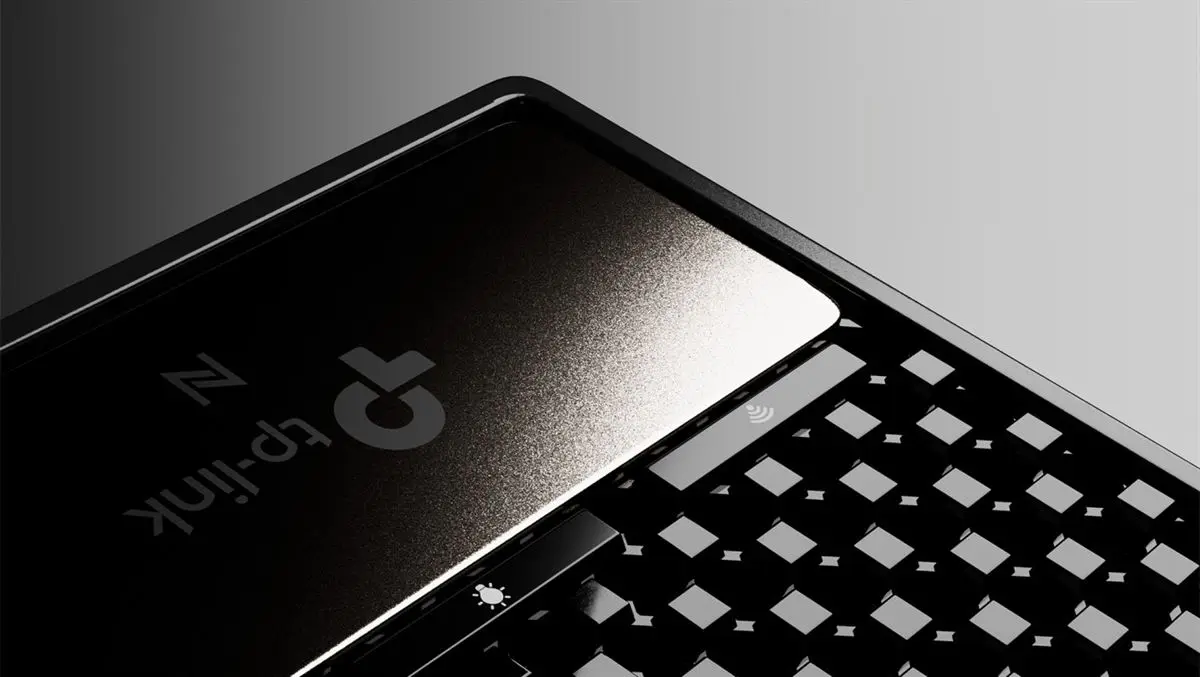
TP-Link is presenting Archer 8 as a premium hardware product. The router’s minimalist architectural design blends refined aesthetics with performance-focused engineering. Fine details like the micro ridge texturing, precision contours, and soft front-facing emissive light give the product a modern and sophisticated look.

Under the surface, Archer 8 combines advanced thermal engineering, antenna architecture, RF optimization, and AI-assisted network intelligence. TP-Link said these elements are designed to support more stable performance in increasingly demanding home environments, where reliability is as important as speed.
A Broader Wi-Fi 8 Roadmap
Archer 8 is only the first step in TP-Link’s wider Wi-Fi 8 portfolio. The company said it plans to expand the platform across multiple categories, including whole-home mesh systems, portable travel networking, and client connectivity products.
The roadmap includes Archer 8 as a Wi-Fi 8 router in October 2026, Deco 8 as a Wi-Fi 8 mesh system in Q1 2027, Roam 8 as a Wi-Fi 8 travel router in Q2 2027, and Wi-Fi 8 range extenders and adapters in Q2 2027. TP-Link said the broader rollout is meant to bring ultra-high reliability, lower latency, and more stable real-world performance across the connected home.
For more information about Wi-Fi 8, click here. You may also visit TP-Link Philippines’ official website.
Frequently Asked Questions (FAQ)
Q: What is Archer 8?
A: Archer 8 is TP-Link’s first Wi-Fi 8 router platform, built around the emerging IEEE 802.11bn specification.
Q: When will Archer 8 launch?
A: TP-Link said Archer 8 is scheduled to launch in October 2026.
Q: What problems is Archer 8 designed to address?
A: It is designed to improve reliability in real homes by reducing congestion, inconsistent speeds, unstable mesh roaming, and latency spikes.
Q: What did TP-Link’s lab tests show?
A: TP-Link reported improvements in throughput, signal performance, receive sensitivity, and multi-device stability in controlled internal testing.
Q: What other Wi-Fi 8 products are planned?
A: TP-Link said it plans Deco 8, Roam 8, and Wi-Fi 8 range extenders and adapters in later phases of its roadmap.

Emman Tortoza
Emman has been writing technical and feature articles since 2010. Prior to this, he became one of the instructors at Asia Pacific College in 2008, and eventually landed a job as Business Analyst and Technical Writer at Integrated Open Source Solutions for almost 3 years.
View all articles →Related News
 Ayaneo Launches Konkr Pocket Block Retro Handheld