




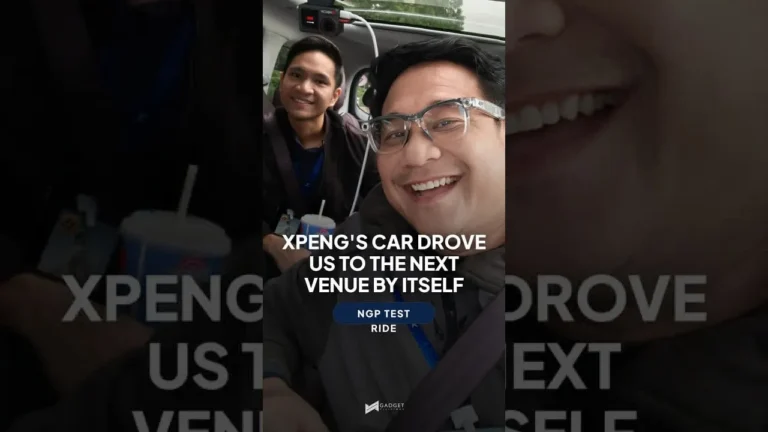
The XPENG GX EV 665 Ultra SE went through Guangzhou with NGP switched on, and the Gadget Pilipinas team rode along for the whole run. The setup is the interesting part: the car relied on cameras only, with no LiDAR and no HD map. That is a different approach from the sensor-heavy stacks that usually get the headlines, and it is the detail that makes this ride worth a closer look.
XPENG rates the system as Level 2+, which means the driver stays responsible at all times. Hands stay on the wheel. The video shows what that balance feels like on real city roads, where traffic, junctions, and the usual surprises do the actual testing.
What the video covers
- The GX EV 665 Ultra SE on a ride through Guangzhou
- NGP running on a camera-only setup
- No LiDAR and no HD map in the stack
- Level 2+ operation with hands on the wheel
Why the camera-only approach stands out
Most advanced driver assistance systems lean on a mix of cameras, radar, and LiDAR, with high-definition mapping filling in the rest. Stripping LiDAR and HD maps out of the equation puts more weight on vision and on the software that interprets it. It also changes the cost structure and the rollout story, since the car does not depend on a mapped corridor to work.
The trade-off is that vision-only systems have to be sharper about the edge cases. The ride footage is where that shows up, and Guangzhou traffic gives the system plenty to work with.
The GX EV 665 Ultra SE is the vehicle carrying the demo here. Combined with the company’s AI Day 2026 push in Guangzhou, the ride fits into a broader story about how XPENG is bringing this technology to the Philippine market.
A full written story is coming to gadgetpilipinas.net.
Watch the video above for the full look.

Gianfranco Viterbo
Gianfranco is the co-founder of gadgetpilipinas.net. He graduated from Far Eastern University. A Psychology student turned tech-savvy. He's currently the HR Supervisor of Blip Media and one of the content producers of Gadget Pilipinas. He enjoys playing competitive video games and binge-watch American TV series.
View all articles →Related Articles
 XPENG GX and L05 Test Drive Experience
 100 Days with the ASUS ExpertBook Ultra
 XPENG AI Day 2026 in Guangzhou
 Ray-Ban Meta Wayfarer Gen 3 video test 😉
 We finally tried Path of Exile 2 1.0!