


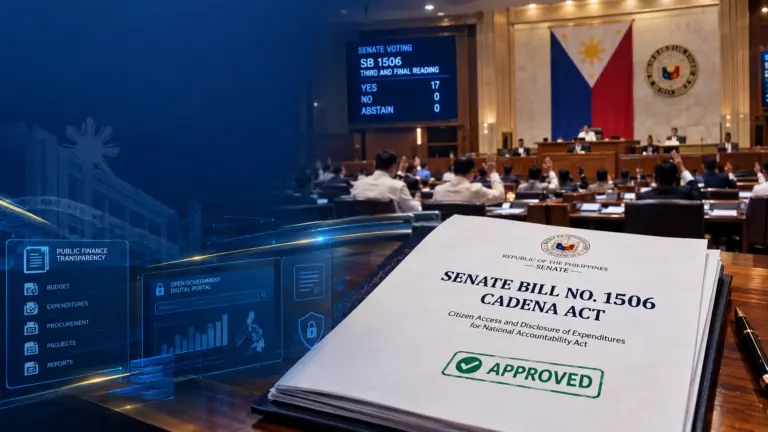
A coalition of civic, professional and technology organizations has formally asked the House of Representatives to take up the CADENA Act, the budget transparency measure the Senate passed unanimously in December and which has not moved in the lower chamber since.
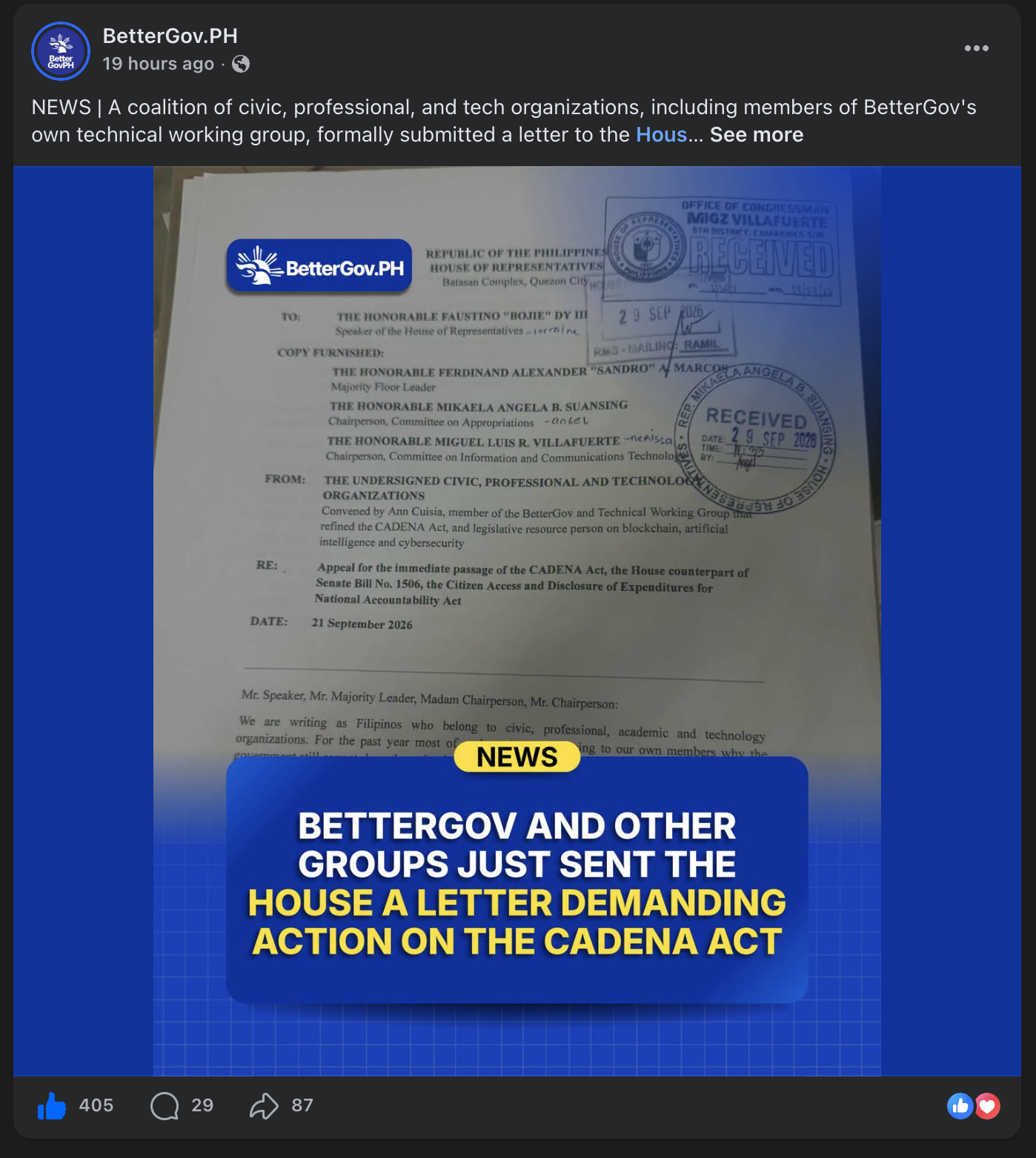
BetterGov.PH said in a post this week that the letter had been received by the offices of the Speaker, the Majority Floor Leader, and the chairs of the Appropriations and ICT committees. It notes that the bill is written and already passed by one chamber, and that the House has not acted on it in nine months.
What the CADENA Act would do
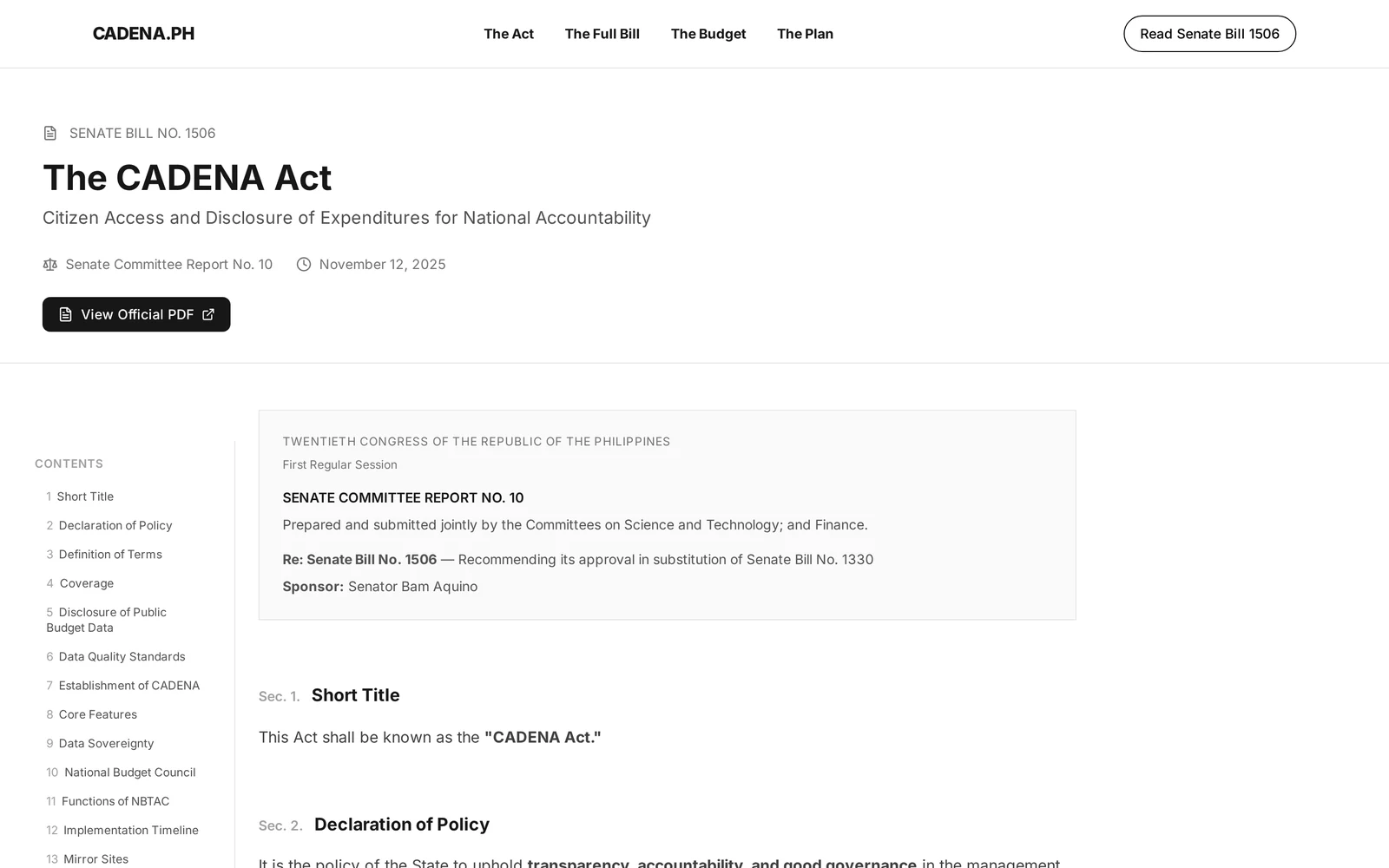
Officially the Citizen Access and Disclosure of Expenditures for National Accountability Act, the measure would create a digital budget portal publishing the whole budget cycle: preparation, appropriations, procurement, fund releases, disbursements and audit records. The text requires that publication be timely, accurate, tamper-resistant, interoperable and traceable.
In practice that means a citizen could follow an appropriation from the line item that created it through to the contractor who received it. The bill also carries penalties for violations and sits budget data under Philippine ownership regardless of where it is stored.
How the CADENA Act stalled after the Senate
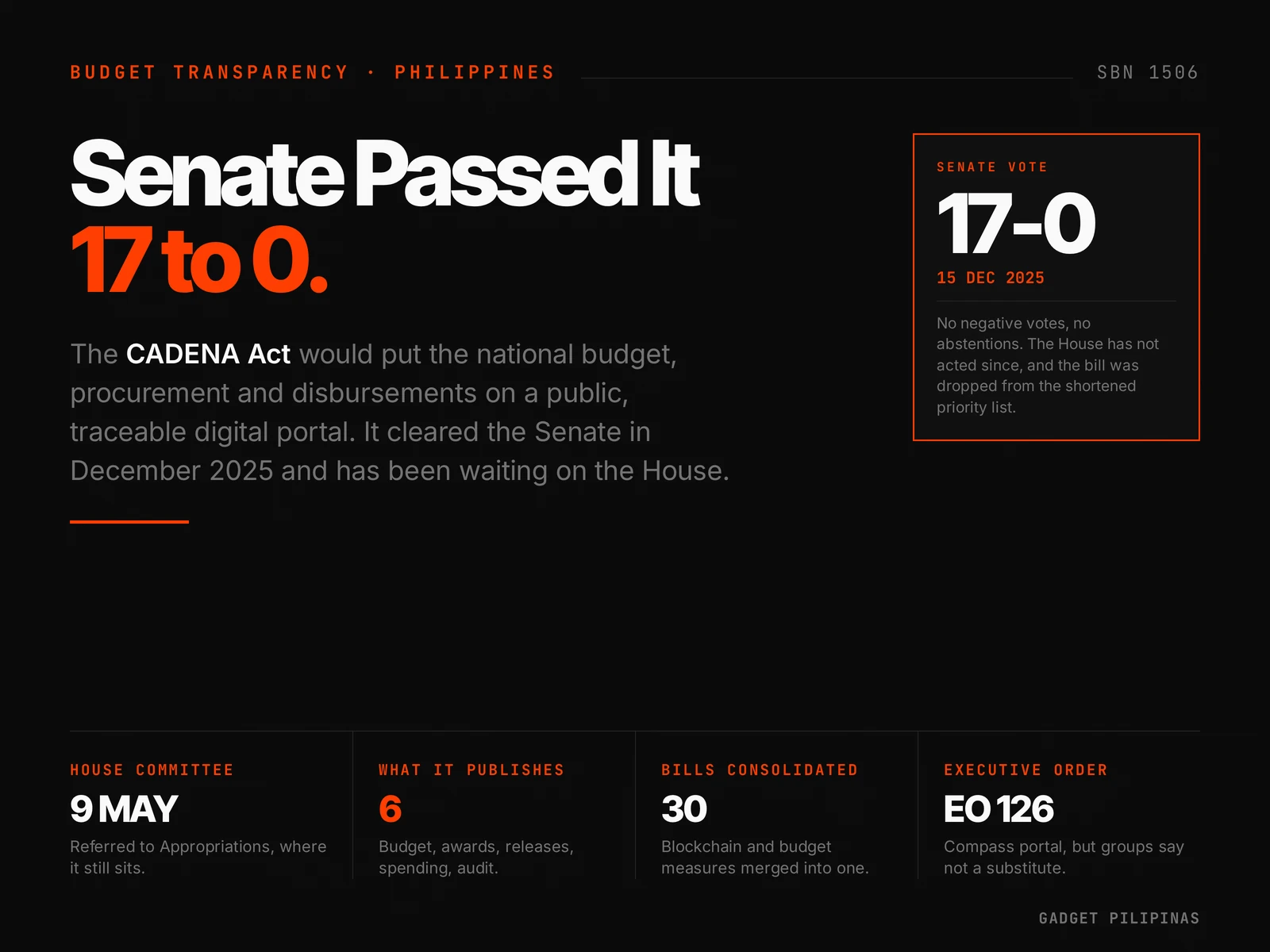
The Senate approved Senate Bill No. 1506 on third and final reading on 15 December 2025, with 17 senators voting in favour and no negative votes or abstentions. Reporting at the time attributed the speed to public anger over the flood control scandal, with principal author Sen. Bam Aquino saying the measure had little chance without the investigations then underway.
In the House, the measure has moved in stages rather than not at all. The ICT committee consolidated 30 related blockchain and budget transparency bills into a substitute measure, and the bill cleared the House Committee on Science and Technology. Aquino said in a Senate hearing in late August that it was awaiting only the Committee on Appropriations before it could be finalised, and that the delay was “very bothersome”.
The coalition has been asking since at least July, when a letter went to Appropriations chairperson Rep. Mikaela Angela Suansing seeking an update, any unresolved budgetary issues, and a timetable. That letter noted the House version had been referred to the committee on 9 May 2026.
The bigger obstacle for the CADENA Act
The stalled committee is only part of it. In August, Aquino questioned the measure’s removal from the government’s shortened list of priority bills for the next 12 months. Economic Planning Secretary Arsenio Balisacan replied that it remains on the longer LEDAC list and was only dropped when leaders shortened the shortlist to focus on critical measures.
Aquino’s counterargument is procedural: some bills retained on that shorter list were at earlier stages, while CADENA had already cleared the Senate. LEDAC publishes a common legislative agenda that is a separate document from the shortened list, which makes the measure’s exact status easy to misread from the outside.
Why the timing is contested
In September, President Marcos signed Executive Order No. 126, which institutionalised the Department of Budget and Management’s spending monitoring platform as the government’s unified public platform for budget, procurement and programme performance data, and authorised it to use blockchain and related technology.
Transparency groups welcomed it without treating it as a substitute. “The EO could not be a substitute for a statutory framework that is CADENA,” Patrick Acupan of the FOI Youth Initiative told the Inquirer, calling the order a possible temporary administrative measure rather than a replacement for legislation. That distinction is the core of the coalition’s argument: an executive order can be revised or withdrawn by the next administration, while a statute sets the obligation in law.
Advocacy has continued regardless. QADENA Foundation and the Cadena Movement signed an agreement on 30 September launching a nationwide public education campaign, and youth and educator groups have publicly backed the push.
What happens next
The letter asks the House to move. Whether the chamber treats the CADENA Act the way the Senate did, or lets it sit longer, will show how much appetite exists for the public watching where public money goes. The House ICT panel has said it is crafting its bill, and the Appropriations committee has not published a timetable.
We have followed BetterGov.PH through a busy stretch. It shipped the child safety portal this week and built the political dynasty tracker before it, and it is holding its Summit 2026 on 17 October. This is the first of those where the group presses a specific legislative outcome rather than shipping a tool of its own.

Giancarlo Viterbo
Giancarlo Viterbo is a Filipino Technology Journalist, blogger and Editor of gadgetpilipinas.net, He is also a Geek, Dad and a Husband. He knows a lot about washing the dishes, doing some errands and following instructions from his boss on his day job. Follow him on twitter: @gianviterbo and @gadgetpilipinas.
View all articles →Related News
 POCO C95 Pro Launched with Massive 7500mAh Battery