

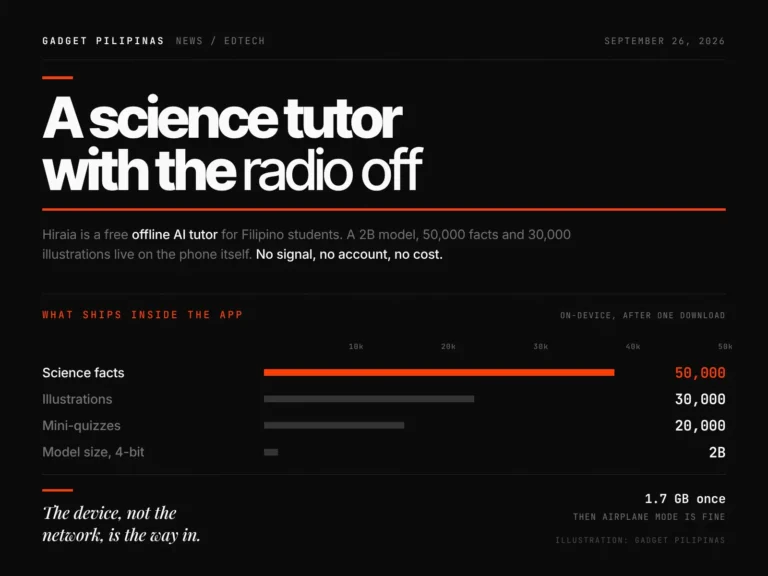
A Filipino developer has built an offline AI tutor for the budget Android phones most households here already own. Hiraia, from tech veteran Luis Buenaventura, is a free science tutor for grades 3 to 10 needing no connection, no account and no payment.
Why offline was the only option
Hiraia targets a specific gap. In the 2025 PISA cycle the Philippines climbed out of the bottom ten for the first time, but the OECD still placed Filipino science learners at 373 points against an average of 482. Buenaventura says World Bank learning-poverty research started the project, and local STEM efforts such as Samsung’s Solve for Tomorrow chase the same goal.
What the offline AI tutor puts on the phone
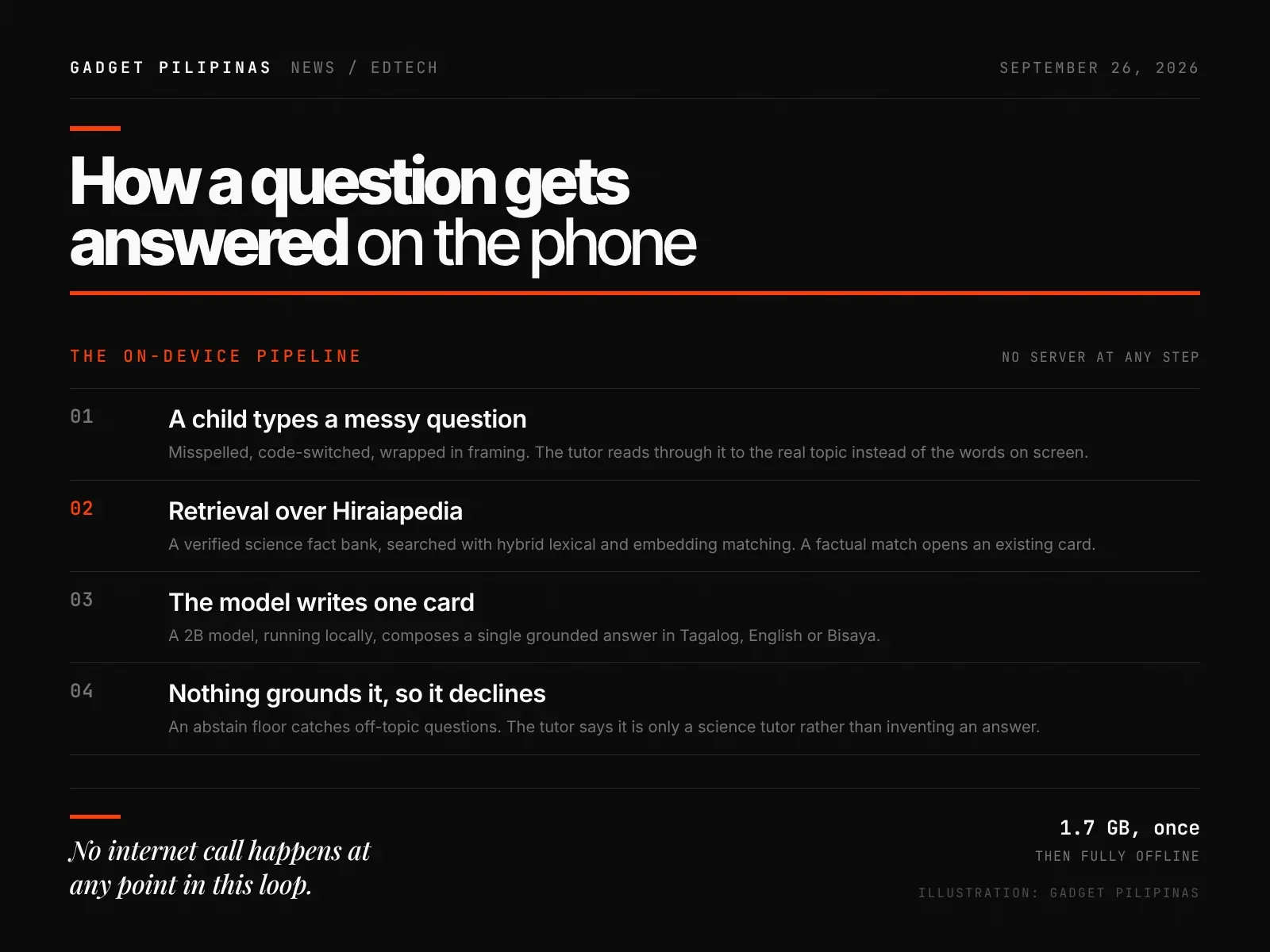
First launch pulls about 1.7 GB, and after that the app runs in airplane mode. The site rounds the library to 50,000 science facts, 30,000 illustrations and 20,000 mini-quizzes, pregenerated from the Department of Education’s MATATAG science competencies. Cards come in Tagalog, English and Bisaya, each readable aloud on-device.
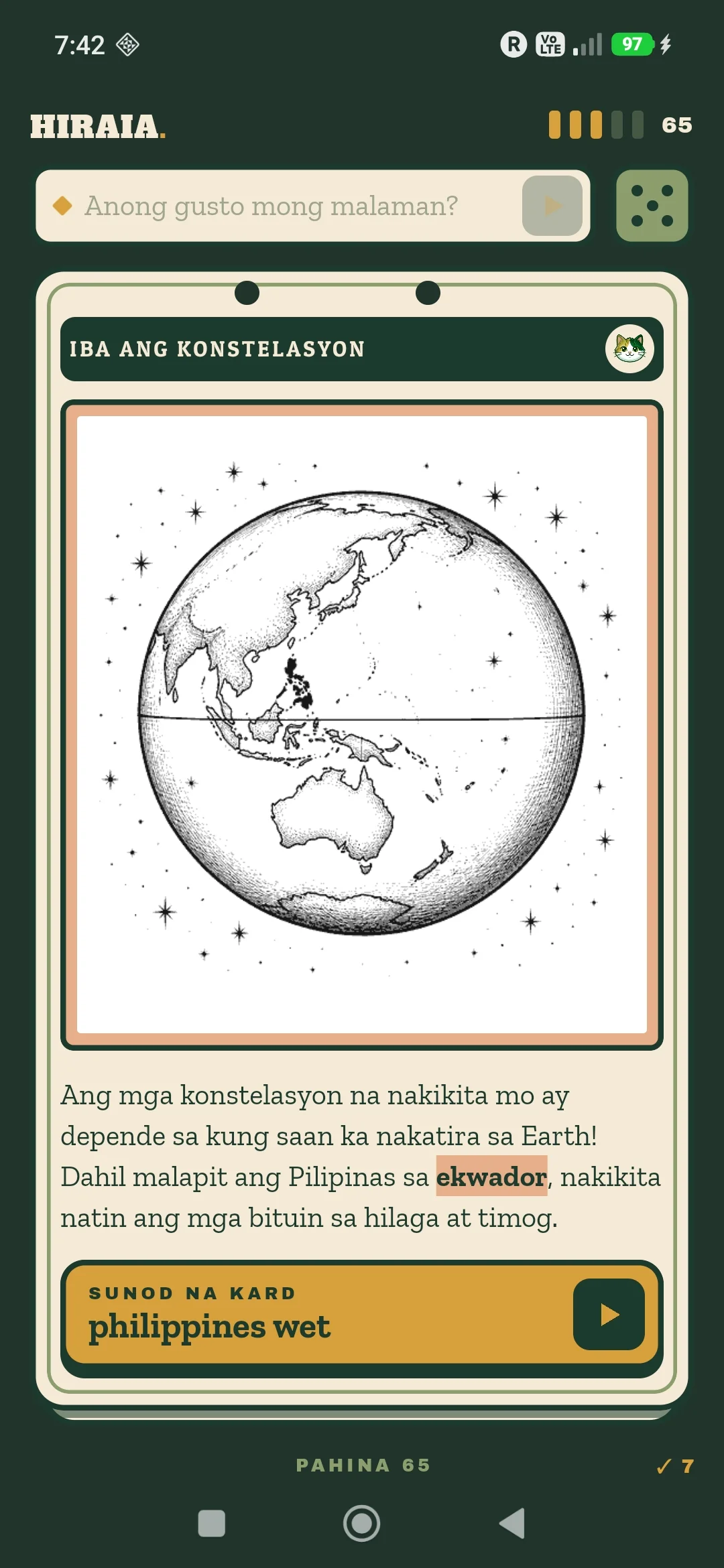
The format is not a chatbot. A card carries one fact and one illustration, a quiz checks memory, and a recap card gathers what was read. A typed question first searches the local deck; if it misses, a fact bank indexed with LaBSE embeddings retrieves grounding and prints a new card. Where nothing grounds it, the tutor declines rather than improvises.
A model retrained for Filipino
Hiraia-2B is the only model the app ships with. The whitepaper credits it to a continued-pretraining fork of Qwen 3.5-2B, trained on a corpus from open web collections, Tagalog Wikipedia and a crawl of roughly 26,000 DepEd learning resources. It runs through the QVAC SDK from Tether, and skips GPU acceleration because graphics drivers on entry-level handsets are unstable.
The pilots, and the telemetry
The first cohorts target about 150 students across participating schools. At Calapacuan Elementary in Zambales the pilot class ran 35 pupils, and more classes have shown interest, since named sessions let students share one device.
Those pilots also run with telemetry on. He says he changed the architecture to read what each device and session emits, and told the schools so, because the trial exists to learn whether the tutor is useful. Switching it off is the goal after.
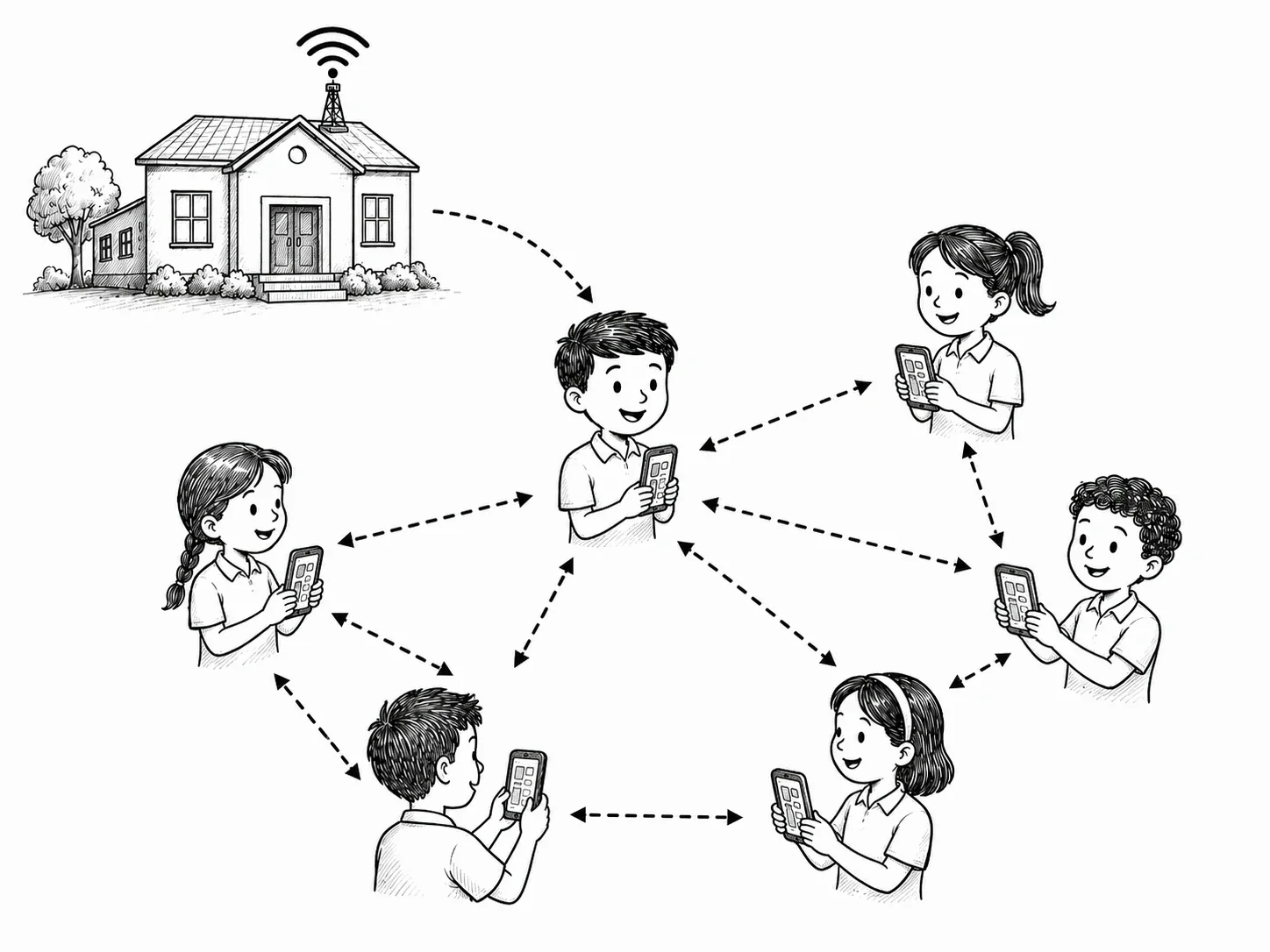
A separate app, Tala, gives teachers a classroom view: the teacher shows a class QR code, then collects card views and quiz activity over Google Nearby Connections, which uses Bluetooth and Wi-Fi radios in the room, not the internet. The project is also building Pears, a peer-to-peer route so one copy of the model on a school’s Wi-Fi can reach the class. Budget gear such as the Infinix XPAD 30E already pushes AI study tools onto cheaper devices.
What it does not do
Hiraia is early alpha. It is sideloaded rather than on the Play Store, needs Android 10 or newer, and wants 4 GB of memory for generated cards. It covers science only, will not write homework, and is not affiliated with the Department of Education.
Cebuano is far from finished. He calls it the hardest of the three languages, because high-quality public-domain Cebuano material is scarce online, so initial cohorts concentrate on Tagalog and English.
On reuse, Buenaventura expects the licence to settle at CC BY-NC 4.0: usable, but not commercial. The repository has no licence file yet.
Sources: Hiraia · whitepaper · FAQ · QVAC / Tether · GitHub

Giancarlo Viterbo
Giancarlo Viterbo is a Filipino Technology Journalist, blogger and Editor of gadgetpilipinas.net, He is also a Geek, Dad and a Husband. He knows a lot about washing the dishes, doing some errands and following instructions from his boss on his day job. Follow him on twitter: @gianviterbo and @gadgetpilipinas.
View all articles →Related News
 JBL Brings New Audio Lineup to Philippine Market