



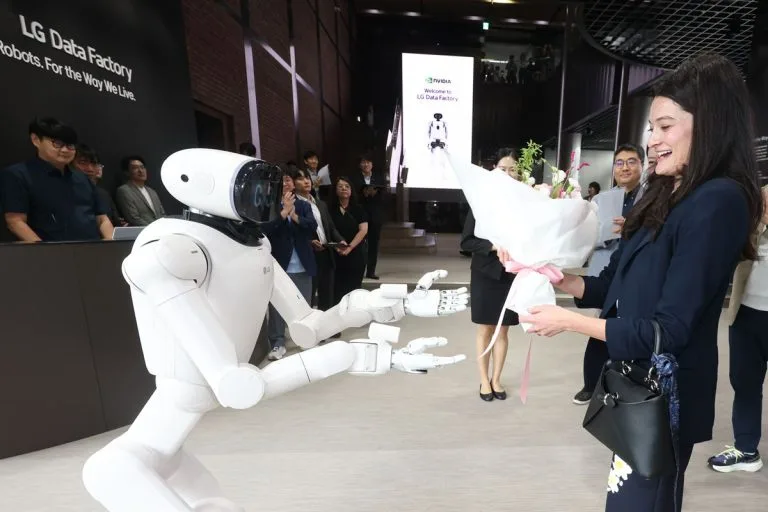
LG is deepening its robotics strategy with a new Data Factory in Seoul, where robots will learn to clean homes, move parts and assemble components. The facility combines LG’s manufacturing and logistics expertise with NVIDIA’s physical AI technologies to accelerate robot training and development.
A Large-Scale Training Facility
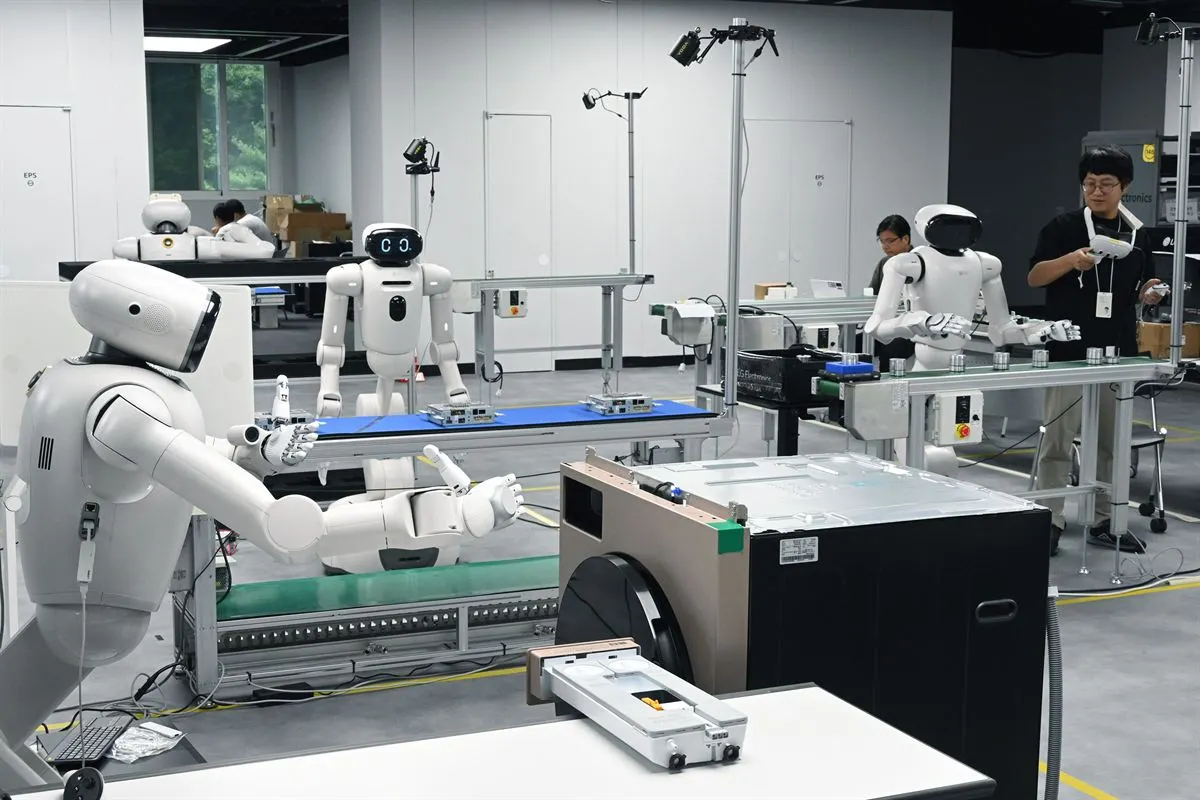
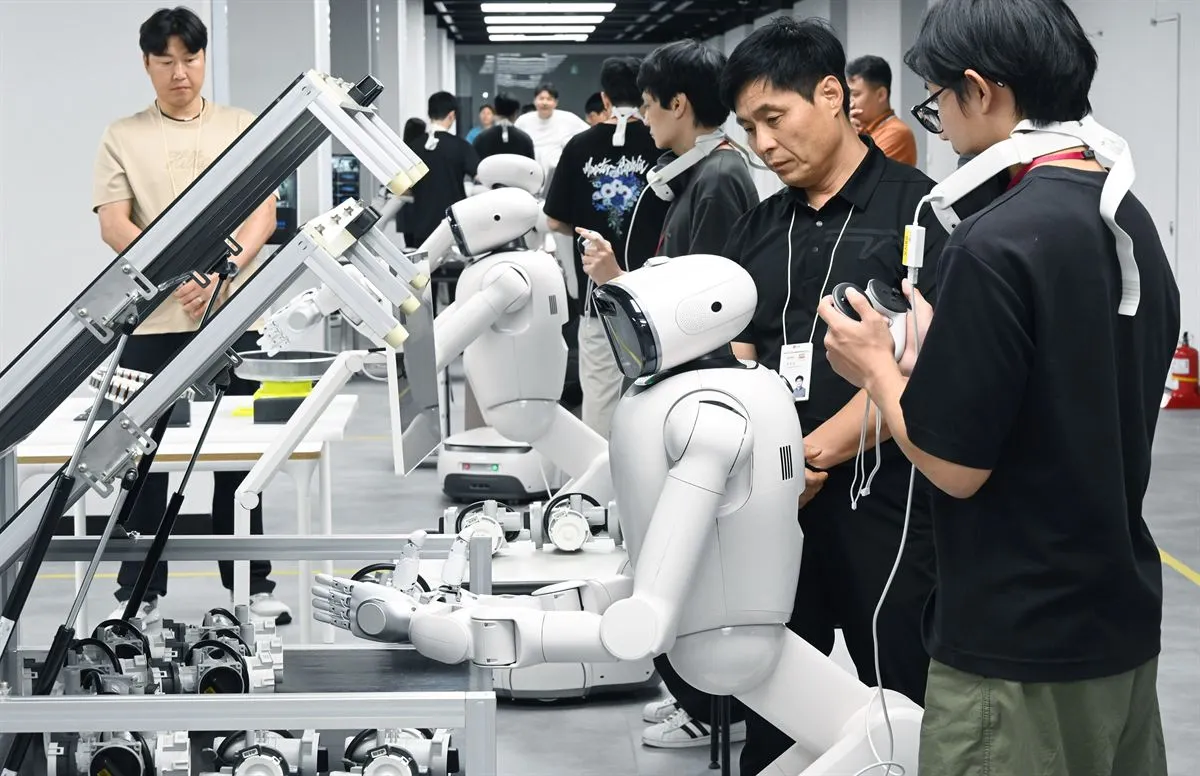
Currently under construction at LG’s Yangjae R&D Campus, the Data Factory is scheduled to become fully operational by the end of 2026. The four-floor facility, consisting of one basement level and three above-ground floors, will span 10,000 square meters and is expected to house several hundred robots by year-end.
LG has already deployed its self-developed LG CLOiD home robots at scale. These will generate, collect and learn from data by repeatedly performing tasks in controlled environments.
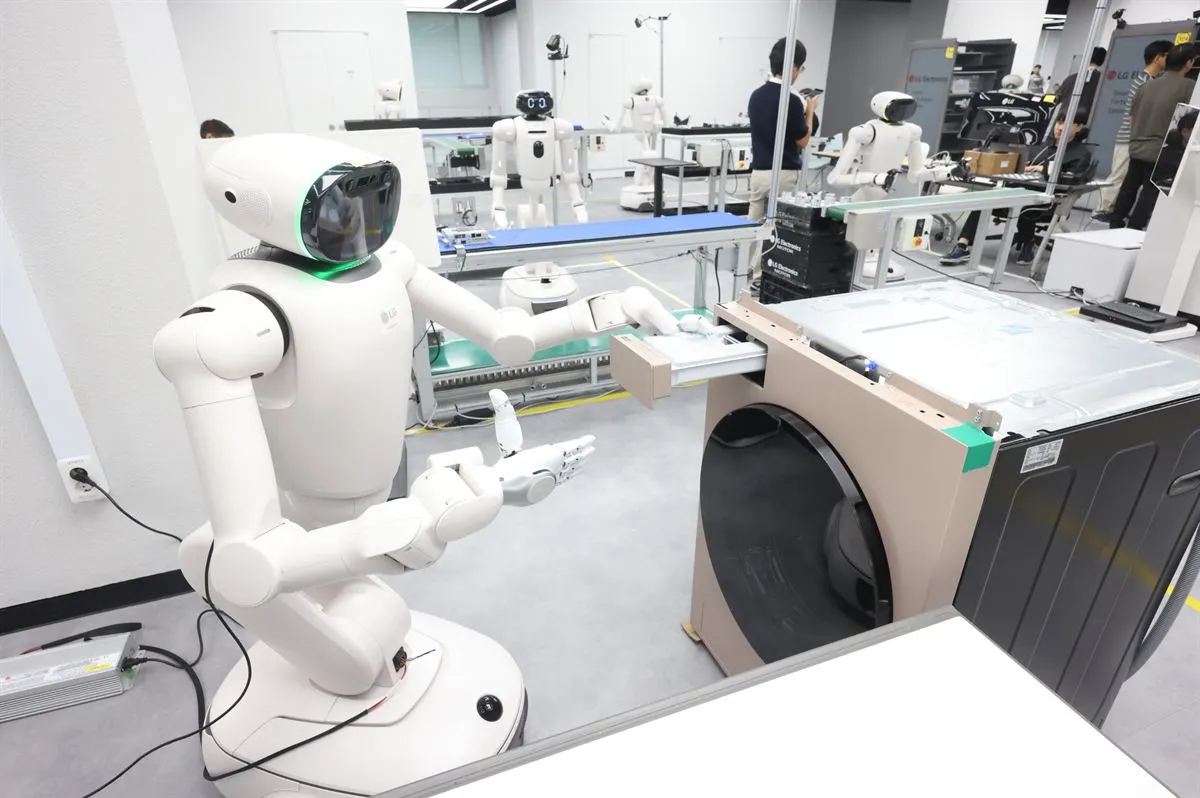
The facility includes a replicated home where LG CLOiD robots practice cleaning. Another area is modeled on LG’s washing machine plant in Tennessee, allowing robots to rehearse moving, stacking and assembling different parts. Robots are also being used in LG CNS logistics automation solutions, while LG Innotek is training robotic hands in a separate space.
Building a Data Flywheel
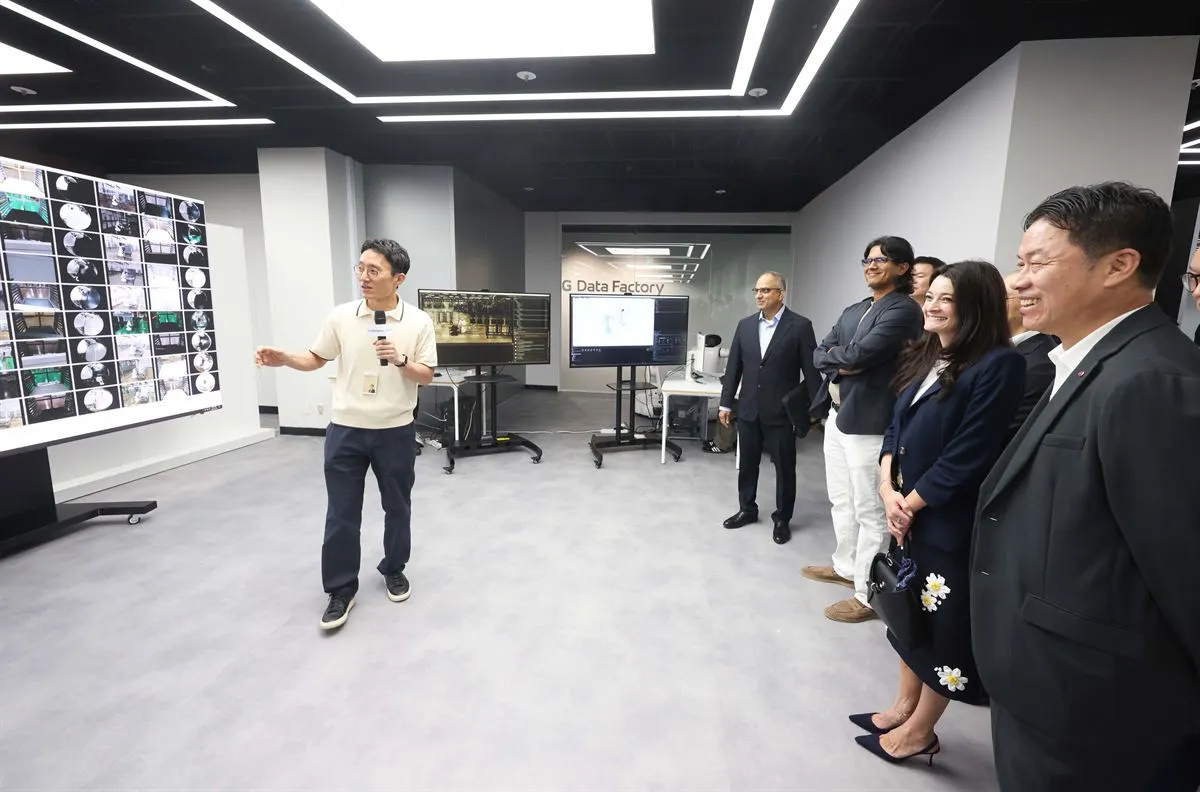
LG describes the process as a “data flywheel.” The high-quality data gathered from repeated robotic tasks is validated, refined and used to train robots, enabling continuous improvement.
The Data Factory will combine information collected on-site with data accumulated over decades from LG’s manufacturing and logistics operations. It will also help expand, synthesize and amplify robot-learning data from LG facilities, logistics sites and home appliances worldwide.
NVIDIA’s robotics technologies will also support the process as the facility incorporates NVIDIA Omniverse libraries, NVIDIA Cosmos open world models and the open NVIDIA Isaac robotics development platform, which covers stages from data generation to deployment.
LG expects directly collected, synthetically generated and augmented training data to reach 100,000 hours by the end of 2026. The company equates that volume to approximately 12 years of data. LG plans to use the information to advance its Robot Foundation Model, which supports the performance of humanoid robots.
A Broader Robotics Business
The initiative stems from the memorandum of understanding signed by LG Group and NVIDIA at NVIDIA’s headquarters in Santa Clara, California, on August 13 local time. Four days later, senior executives from LG Electronics and other LG affiliates met with NVIDIA officials at the Data Factory to review the collaboration and explore additional synergies.
LG has set 2026 as the starting point of its robotics business push. The company also recently established a dedicated Robotics Business Center reporting directly to the CEO. The center oversees LG’s companywide robotics operations and is intended to improve execution and efficiency.
LG already operates in industrial and commercial robotics and has plans to venture into home robotics. With manufacturing experience, robotic components such as actuators, and large-scale training data, the brand aims to become a comprehensive robotics solutions provider spanning hardware and software.
“Through the synergy built on ‘One LG’ – bringing together core capabilities across the Group – and strategic collaboration with global partners, we will secure our competitiveness in physical AI and become a comprehensive robotics solutions provider.”
– Lyu Jae-cheol, CEO of LG Electronics
For more information, click here.
Frequently Asked Questions (FAQ)
Q: Where is LG’s Data Factory located?
A: It is a 10,000-square-meter robotics training facility under construction at LG’s Yangjae R&D Campus in Seoul.
Q: What tasks will the robots practice?
A: They will practice cleaning, moving, stacking and assembling parts, logistics operations and robotic hand functions.
Q: How much training data does LG expect to generate?
A: LG expects the total to reach 100,000 hours by the end of 2026.
Q: Which NVIDIA technologies are involved?
A: The collaboration uses NVIDIA Omniverse libraries, NVIDIA Cosmos open world models and the NVIDIA Isaac robotics platform.
Q: What is LG’s broader goal?
A: LG aims to expand from industrial and commercial robotics into home robotics and become a comprehensive provider of robotics hardware and software solutions.

Emman Tortoza
Emman has been writing technical and feature articles since 2010. Prior to this, he became one of the instructors at Asia Pacific College in 2008, and eventually landed a job as Business Analyst and Technical Writer at Integrated Open Source Solutions for almost 3 years.
View all articles →Related News



 Customer Pre-Orders 120 HONOR 600S Units