











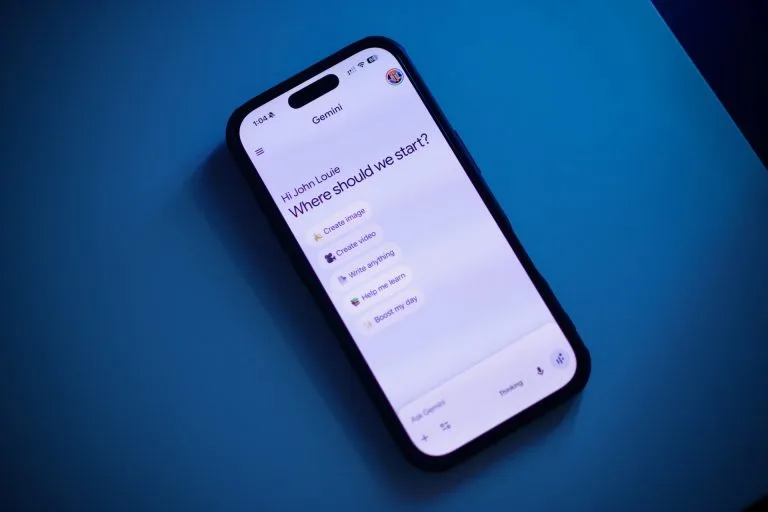
Apple spent decades building its empire on the premise that it controls everything, from the chips, to the operating system, down to the tiny screws holding the case together. But on January 12, 2026, that philosophy made an exception when Apple and Google announced in a joint press release that future Apple Intelligence features will run on Google’s Gemini models.
Looking past the corporate language, what this means is that Apple has evaluated its options and concluded that it couldn’t build AI capable enough on its own. Or at least not fast enough. Apple Intelligence, including significant improvements to Siri, was announced in 2024. It’s now 2026 and it still continues to be a punchline, looking inferior to the likes of Alexa and Google Assistant. I’ve been an iPhone user for years yet I can’t remember the last time I used Siri. I think I’ve been using ChatGPT more considering that it allows you to use it as an Apple Intelligence extension inside the iPhone’s settings.
While Apple is trying to make it work, AI has shifted from novelty to necessity. Consumers now expect their devices to understand context, anticipate needs, and handle complex requests conversationally. Apple’s homegrown models simply haven’t kept the pace. And it becomes more evident when you compare the iPhone’s AI features to its Android counterparts.
The partnership shows that even if your company is worth $3.83 trillion and spent $30 billion in R&D in 2025, computational resources, training data, and specialized expertise is not something you can easily conjure. Google, on the other hand, has spent over a decade building AI infrastructure and training Gemini on data at a scale Apple can’t match. So, rather than burn years trying to catch up while competitors sprint ahead, Apple decided that it’s more sensible to just license the best foundation available.
The move is also a reflection of Apple’s business calculus. Apple’s Services business which includes the iCloud, App Store, Apple Music, and Apple TV+ generate massive margins, but they also know that it depends on keeping users locked into the ecosystem. Because, you know, things “just work” in this walled garden. But if Siri remains incompetent while Samsung phones powered by Google AI become genuinely useful, iPhone owners might start reconsidering their loyalty. Apple needs AI that works now, not in 2027.
But what makes this news all the more interesting is Apple’s choice of partner. Google and Apple are long-time competitors, competing fiercely in phones, maps, browsers, and cloud services. Apple choosing Google over Microsoft (which supports OpenAI) or Anthropic, shows how strongly they believe that Google’s technology leads the field. Or at least, for Siri.
The privacy promises in the announcement deserve scrutiny. Apple has always promised that what happens on your iPhone stays on your iPhone. This time, however, the AI that powers Siri comes from Google, a company that makes its money by analyzing user data to sell ads. Apple insists your information will stay private, processed on your device or Apple’s own servers. But the core technology, the actual brain behind Siri, was built by a company with completely different priorities about data and privacy.
But for us ordinary consumers, this could mean we’ll finally have a useful Siri. Apple wouldn’t risk its reputation on Google’s technology if it didn’t believe that Gemini could deliver. I don’t think iPhone users would reject the idea as long as it works. I am one of those who have already Google-fied their iPhones, using Google’s apps instead of Apple’s own.
The final takeaway is that in AI development, there are no permanent competitors. Even if you have vast resources and world-class talent, if you can’t build competitive AI independently, you’ll fall behind. Apple knows this. Maybe they’ll need Google in the meantime until they successfully develop their own. Just like their partnership with Intel. But for now, this partnership is an admission that in AI, even Apple can’t afford to go it alone.