



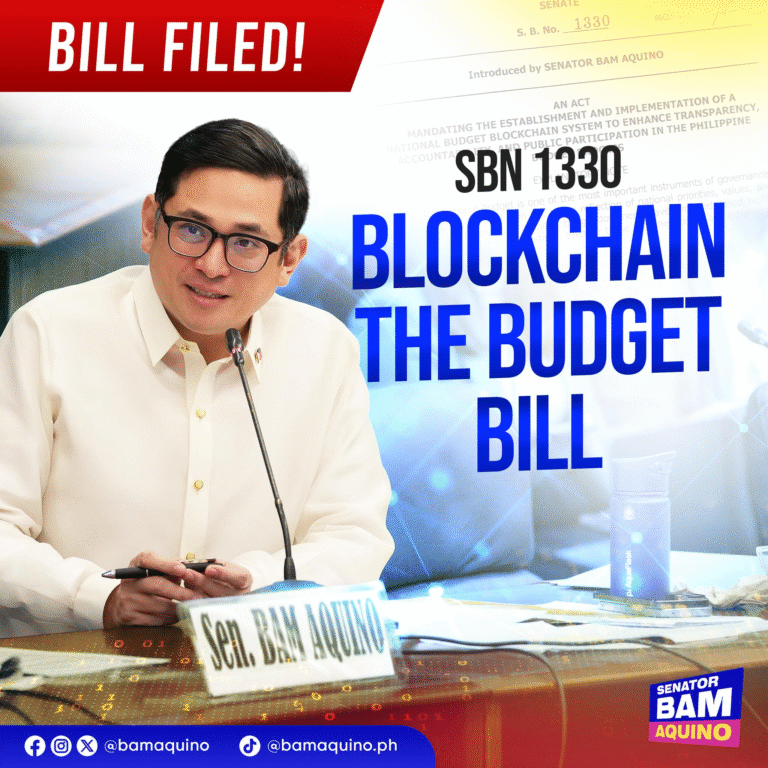
Blockchain Budget Bill
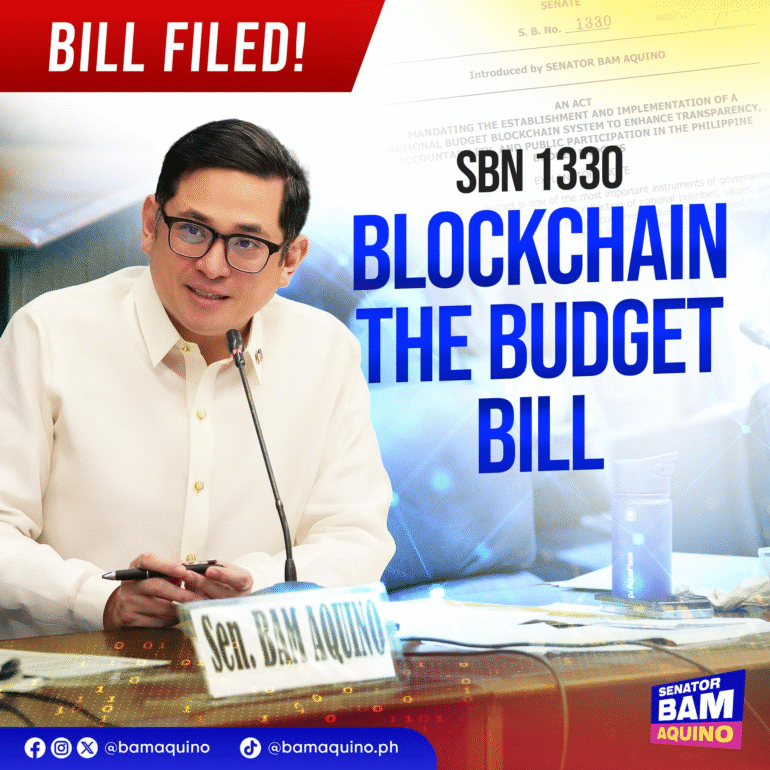
In a groundbreaking move that could position the Philippines as a global pioneer in blockchain governance, Senator Paolo Benigno “Bam” Aquino IV officially filed Senate Bill No. 1330, known as the “Blockchain the Budget Bill,” on September 2, 2025. This landmark legislation aims to revolutionize government transparency by placing the entire Philippine national budget on blockchain technology, making every peso of public spending traceable, transparent, and auditable by citizens in real-time.

The Bill’s Core Features and Objectives
The Blockchain the Budget Bill proposes the establishment of a National Budget Blockchain System that would transform how the Philippines manages and monitors public funds. Under this system, all records of the national budget would be stored as Digital Public Assets (DPAs) on a blockchain platform, ensuring immutability and transparency.
Key features of the proposed legislation include:
- Real-time transparency: Citizens would have direct access to track government expenditures through a public portal, enabling them to monitor where every peso is allocated and spent
- Tamper-proof records: The blockchain’s immutable nature ensures that budget data cannot be altered without a transparent audit trail
- Enhanced accountability: The system would eliminate the possibility of hidden projects or untraceable transactions that have historically plagued government budgeting
- Multi-agency collaboration: The Department of Information and Communications Technology (DICT), Department of Budget and Management (DBM), and Commission on Audit (COA) would jointly develop and manage the blockchain-based budget system
Senator Aquino emphasized the revolutionary nature of this approach, stating: “No one is crazy enough to put their transactions on blockchain, where every single step of the way will be logged and transparent to every single citizen. But we want to start”. If implemented, the Philippines would become the first nation globally to place its entire national budget on blockchain.
Government and Industry Support
The bill has garnered significant support from key government officials and industry leaders. DICT Secretary Henry Aguda has expressed strong backing for the initiative, highlighting that blockchain technology has already been successfully integrated across various sectors in the Philippines, including banks, insurance companies, and real estate firms.

“We’ve already seen how blockchain is being used effectively in other sectors, and it’s a great move for the government as well,” Secretary Aguda noted, emphasizing that blockchain-based solutions could significantly improve the country’s public financial management.
The FinTech Alliance Philippines, the country’s largest network of fintech and digital innovators, has thrown its full support behind the bill and is urging President Ferdinand Marcos Jr. to certify it as urgent. Lito Villanueva, founding chairman of FinTech Alliance PH, stated: “Transparency is the bedrock of good governance. By leveraging blockchain, we can finally give every Filipino the power to see exactly how their hard-earned money is spent”.
Building on Existing Infrastructure
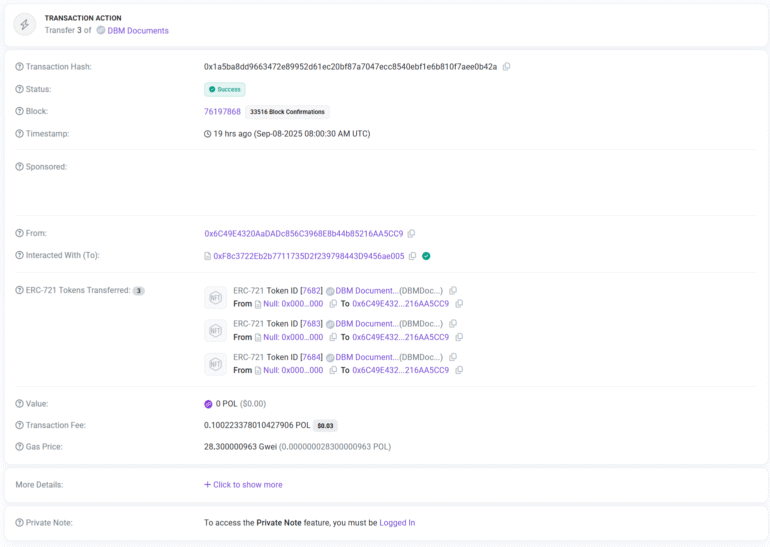
The Philippines already has foundational blockchain infrastructure in place that supports this ambitious vision. The Department of Budget and Management launched a blockchain platform in July 2025, developed with BayaniChain and built on the Polygon network, which publishes key budget documents including Special Allotment Release Orders (SAROs) and Notices of Cash Allocation (NCAs). This existing system, accessible at blockchain.dbm.gov.ph, makes financial records publicly verifiable and immutable.

Additionally, the DICT has introduced eGOVchain, a blockchain-based system designed to improve transparency, security, and efficiency in government transactions. These initiatives demonstrate that the Philippines is already moving toward blockchain adoption in public administration.
Impact on the Philippine Tech Consumer Industry
The implementation of Aquino’s blockchain budget bill would have profound implications for the Philippine tech consumer industry, creating ripple effects across multiple sectors and driving significant market growth.
Market Growth and Investment Opportunities
The Philippine blockchain market is experiencing explosive growth, projected to expand from USD 8.45 billion in 2025 to USD 38.92 billion by 2031, representing a compound annual growth rate (CAGR) of 28.6%. This growth trajectory would be significantly accelerated by government adoption of blockchain technology for budget transparency.
The cryptocurrency market in the Philippines is equally robust, reaching USD 49.85 billion in 2024 and projected to reach USD 114.7 billion by 2033 with a CAGR of 9.68%. Government endorsement through the blockchain budget bill would likely boost consumer confidence and adoption rates significantly.
Enhanced Consumer Trust and Digital Adoption
Currently, 70% of Filipinos remain unfamiliar with blockchain technology, while 74% express confidence in its security. The government’s high-profile implementation of blockchain for budget transparency would serve as a powerful educational tool, increasing public awareness and understanding of the technology’s benefits.
With 90.6% of individuals aged 10 and above in Metro Manila owning smartphones and 87.64% of all web traffic originating from mobile devices, the infrastructure for blockchain-based consumer applications is already in place. Government adoption would accelerate consumer acceptance of blockchain-enabled financial services, digital identity solutions, and e-commerce platforms.
Fintech Sector Expansion
The Philippine fintech sector, which attracted the largest share of venture capital deals in 2024, would benefit tremendously from increased blockchain legitimacy. The country’s $523.20 million venture capital market would likely see increased investment in blockchain startups and fintech companies developing complementary technologies.
Key areas of growth would include:
- Digital remittances: With $38.34 billion in remittances in 2024, blockchain-based remittance services would become more attractive to overseas Filipino workers seeking faster, cheaper cross-border transactions.
- Financial inclusion: Blockchain technology could provide alternatives to traditional banking for the Philippines’ large unbanked population
- Supply chain transparency: Following government adoption, private sector companies would likely implement blockchain for supply chain management, particularly in agriculture and manufacturing
Job Creation and Skills Development
The blockchain budget initiative would drive significant employment growth in the tech sector. Current job postings show increasing demand for blockchain developers, Web3 community managers, and cryptocurrency specialists. The government’s endorsement would accelerate this trend, creating opportunities for.
- Blockchain developers and engineers
- Smart contract specialists
- Digital identity and security professionals
- Data analytics and monitoring experts
The DICT’s partnership with YGG Pilipinas for Metaverse Filipino Worker (MFW) Caravan workshops demonstrates existing efforts to build blockchain literacy. Government adoption would expand these educational initiatives nationwide.
Consumer Electronics and Digital Infrastructure
The blockchain budget system would drive demand for consumer electronics and digital infrastructure. With the consumer electronics market projected to reach USD 17.48 billion by 2033 with a CAGR of 6.14%, blockchain adoption would accelerate smartphone and device upgrades as citizens seek to access government transparency tools.
The 142 million cellular mobile connections representing 122% penetration would support widespread access to blockchain-based government services, driving further digital transformation across consumer segments.
Competitive Advantages and Regional Leadership
Implementation of the blockchain budget bill would position the Philippines as the “Blockchain Capital of Asia,” attracting international investment and talent. This leadership position would create competitive advantages for Philippine tech companies seeking to expand regionally and globally.
The Philippine Blockchain Week and initiatives by the Blockchain Council of the Philippines would gain international recognition, potentially attracting major blockchain conferences, investment funds, and technology partnerships to the country.
Challenges and Considerations
Despite the significant opportunities, several challenges must be addressed for successful implementation:
Technical Infrastructure
While smartphone penetration is high, ensuring reliable internet connectivity nationwide remains a challenge. The National Fiber Backbone and Free Wi-Fi for All program will be crucial for enabling universal access to blockchain-based government services.
Digital Literacy and Education
With 85% of respondents having no direct connection to blockchain in daily life, comprehensive public education programs will be essential. The government must invest in digital literacy initiatives to ensure citizens can effectively utilize the new transparency tools.
Regulatory Framework
The success of blockchain adoption requires clear regulatory frameworks. The Bangko Sentral ng Pilipinas (BSP) has established initial guidelines for Virtual Asset Service Providers, but comprehensive blockchain governance regulations will be needed.
Future Implications and Global Impact
If successfully implemented, the Philippines’ blockchain budget system could serve as a global model for government transparency and accountability. Other nations facing corruption challenges or seeking to modernize their public financial management systems would likely study and potentially adopt similar approaches.
The initiative aligns with global trends toward blockchain-driven governance, with countries like the United States also exploring blockchain applications for publishing government data. The Philippines’ early adoption could establish it as a thought leader in GovTech innovation.
Senator Aquino’s blockchain budget bill represents more than just a technological upgrade. It’s a fundamental reimagining of the relationship between government and citizens through transparency and accountability. For the Philippine tech consumer industry, it promises to unlock unprecedented growth opportunities while building the digital infrastructure and consumer confidence necessary for the country to emerge as a regional blockchain leader.
The success of this initiative will depend on effective implementation, comprehensive public education, and continued support from both government and industry stakeholders. If executed successfully, it could transform not only government operations but also accelerate the Philippines’ journey toward becoming a fully digital economy powered by blockchain innovation.

Giancarlo Viterbo
Giancarlo Viterbo is a Filipino Technology Journalist, blogger and Editor of gadgetpilipinas.net, He is also a Geek, Dad and a Husband. He knows a lot about washing the dishes, doing some errands and following instructions from his boss on his day job. Follow him on twitter: @gianviterbo and @gadgetpilipinas.
View all articles →Related Articles

 NBA 2K27 Review: A Better Game Than DLSS 5 Suggests



 iPhone Duo: What We Know So Far