



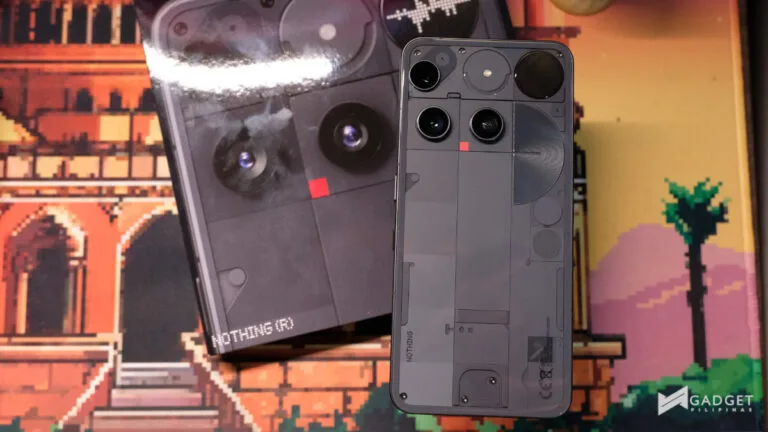
Nothing has just introduced its first flagship device, the Nothing Phone (3). It features a very polarizing design, an unusual chipset for a flagship, and the new Glyph Matrix.
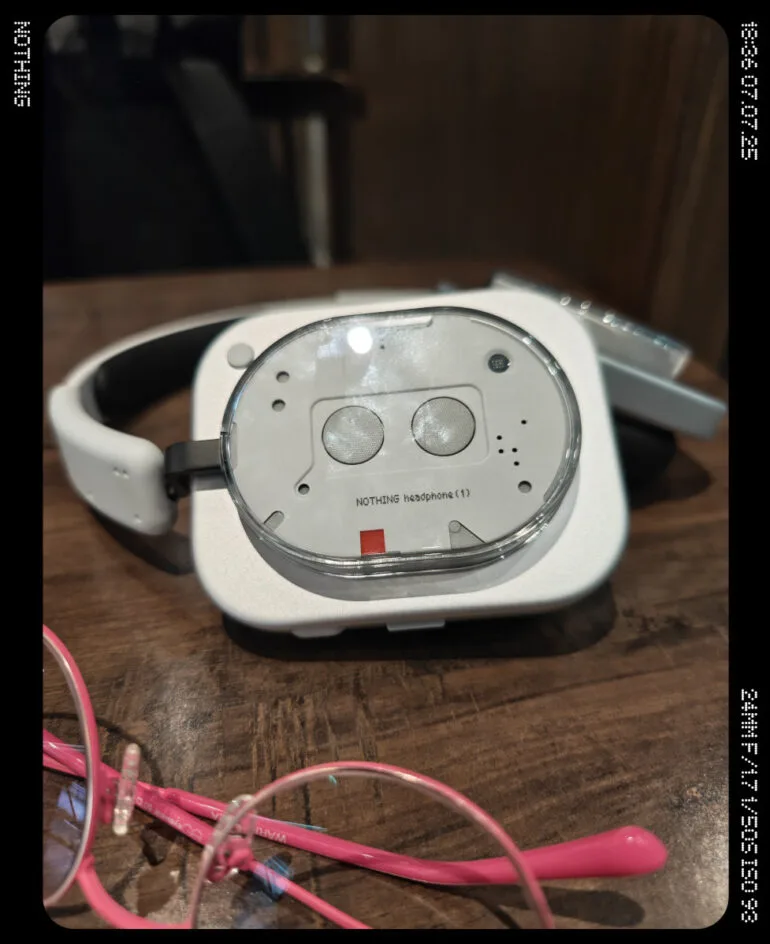
It debuted alongside the Nothing Headphone (1), the first over-ear headphones in the market. We’ve shared our First Impressions on the headphones and you can read it here.
The Nothing Phone (3) is nothing short of inciting discussions with things like its design, its strange chipset option, and the price-to-specs ratio. But how does it fare in the real world? Well, I’ve got you, and I’ll start with my First Impressions of the first Nothing flagship.
Nothing Phone (3) First Impressions
Full Specifications
| Display | 6.67-inch 1.5K AMOLED 120Hz refresh rate |
| Processor | Snapdragon 8s Gen 4 |
| GPU | Adreno 825 |
| RAM | 12/16GB LPDDR5X |
| Storage | 256/512GB UFS 4.0 |
| Rear Camera | 50MP main (f/1.68) 50MP periscope telephoto 50MP ultrawide |
| Front Camera | 50MP |
| Battery | 5150mAh 65W wired fast charging 15W wireless charging |
| OS | NothingOS 3.5 (Android 15) |
| Colors | Black White |
Unboxing Experience
While unboxing the Nothing Phone (3) was pretty standard as far as Nothing Phones are concerned, it was the inner box that stood out. Unlike the previous Phones like the Phone (3a) and (3a) Pro and even the Headphone (1), the inner box of the Phone (3) wasn’t embossed with the same design as the outer box.
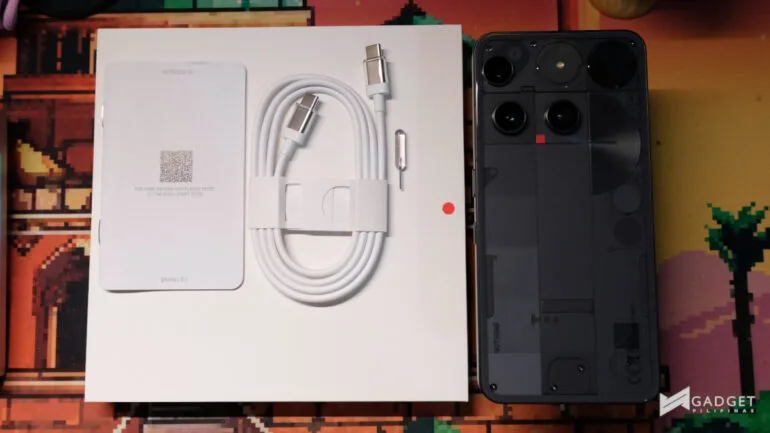
While this may seem like a minor detail, it’s strange for Nothing to remove this from its flagship device. The embossed design made the inner box a bit more premium, and the plain white inner box of the Phone (3) felt like a downgrade.
Hands-on Experience
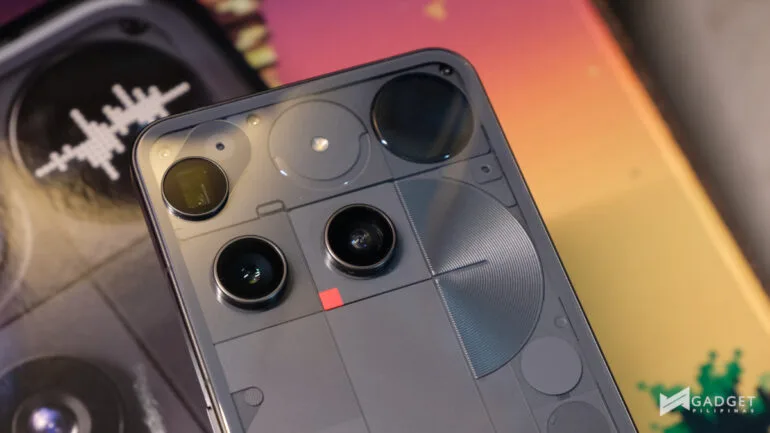
The Nothing Phone (3) stands out with its back panel, with a transparent design that has become a staple of a Nothing device. However, this time around, it stirs the pot that is the smartphone market with a unique camera module design.

While the triple rear camera still occupies the upper right corner of the back panel of the Phone (3), the lenses are separated, with the 3x periscope telephoto camera off-centered. It is the seemingly asymmetrical camera setup that has made the design quite polarizing.
I like the design despite the asymmetrical camera setup because the company divided the back into little segments, and the telephoto sits in its own segment.
On the front is a 6.67-inch FHD+ 120Hz AMOLED panel with slim bezels and a punch hole for the 50MP front snapper.

Under the hood is the strange Snapdragon 8s Gen 4. I say strange because the chipset is known to be a flagship killer rather than a true flagship chipset. The true flagship honor is solely for the Snapdragon 8 Elite.
That said, though, the Snapdragon 8s Gen 4 performs very smoothly with my initial testing of the device and chipset. The version we received is equipped with 16GB RAM and 512GB storage. However, I have yet to push the Nothing Phone (3) and the chipset to their limits with gaming and our usual benchmarking apps.
Camera
The Phone (3) is equipped with a triple 50MP rear camera, and yes, I’m talking about three 50MP cameras comprised of a main, ultrawide, and a 3x periscope telephoto lens. This is an upgrade from the main and ultrawide duo of the Phone (2).
The shots from these cameras, and the front camera, are pretty good. The ultrawide, in particular, doesn’t seem to wash out the colors as badly when compared to its other cameras.
Here are some early samples:









Glyph Matrix and Essential Key
The Nothing Phone (3) features the Glyph Matrix and the Essential Key. The former is the evolution of the iconic Glyph Interface from the previous devices, while the latter debuted with the Phone (3a) and (3a) Pro.
The Glyph Matrix is more subtle than the Glyph Interface, with the new feature occupying the top right corner, compared to the Glyph Interface, which was spread out around the camera and the center of the device.
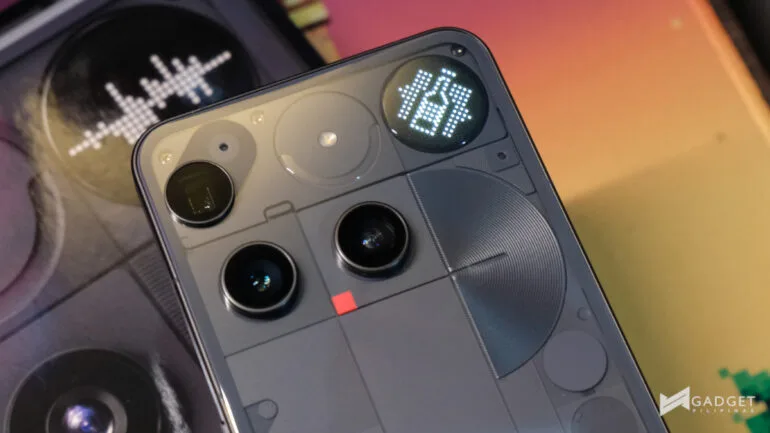
In theory, the Glyph Matrix could be more useful than the Glyph Interface, but as it is right now, it seems pretty undercooked still. There are more uses like a Magic 8 Ball, Spin the Bottle, show the clock, and more, but I think there could’ve been more to it, given that it’s a display rather than LED strips.
That said, I only had a couple of days with the Nothing Phone (3), and I haven’t really had the time to fully play around with it. Of course, I’ll detail more in my full review.
The same can be said of the Essential Key, which I’m experiencing for the first time. I haven’t really used it much, but things could change in the following days.
Initial Verdict
The Nothing Phone (3) is an intriguing device for me. I like its design, and the experience with it has been impressive. It’s quite an upgrade from the Nothing Phone (2), which I’ve used since its launch.

However, I’ll need more time with it to play around with its other unique features and maximize its hardware. I can’t say yet if it is worth its price hike from the Phone (2). I’ll get to that in my full review.
The Nothing Phone (3) is priced at PHP 44,999 for 12GB RAM and 256GB storage, and PHP 50,999 for the 16GB+512GB configuration. It is now available for pre-order via Digital Walker until July 23, 2025 and comes with:
- Nothing Ear
- Nothing Lanyard
- Nothing Sticker pack
- Nothing Badges
- CMF Power 65W GaN Charger
Stay tuned for the full review soon.

Ram Ronquillo
Ram found his love and appreciation for writing in 2015 having started in the gaming and esports sphere for GG Network. He would then transition to focus more on the world of tech which has also began his journey into learning more about this world. That said though, he still has the mentality of "as long as it works" for his personal gadgets.
View all articles →Related Reviews
 ANKER soundcore Liberty 5 Pro: Great ANC for calls and music
 REDMI Note 17 Pro Max Review: Titan Power That Goes the Distance
 realme 16T 5G Review: An 8000mAh Battery With a Price
 OPPO Find X9 Ultra Review: The Camera Phone to Beat in the Philippines
 HP Smart Tank 580 Review: Affordable Everyday Printing Without the Cartridge Cycle
 DJI Osmo 360 II Review: A Small Price Bump for a Big Step Forward