


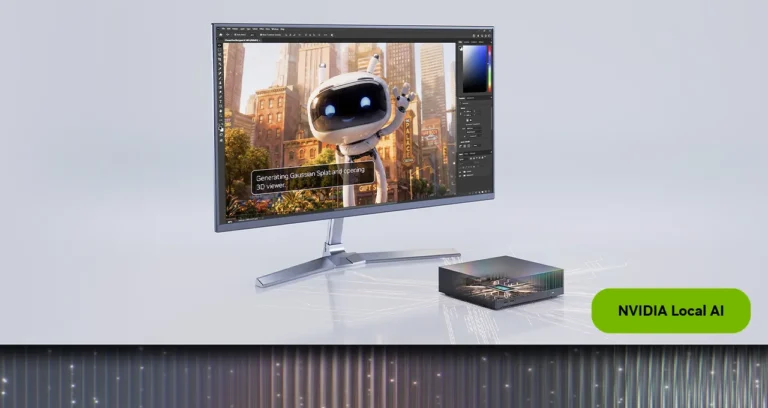
NVIDIA RTX Spark compact desktops are now on sale from ASUS, Dell and MSI, bringing up to 128GB of unified memory and 1 petaflop of AI performance to a Windows PC that stays on a desk. The announcement is detailed on NVIDIA’s local AI blog. The NVIDIA RTX Spark systems pair a 20-core NVIDIA Grace CPU with a Blackwell RTX GPU carrying 6,144 CUDA cores, the same superchip that has powered RTX Spark laptops since NVIDIA opened that line in October.
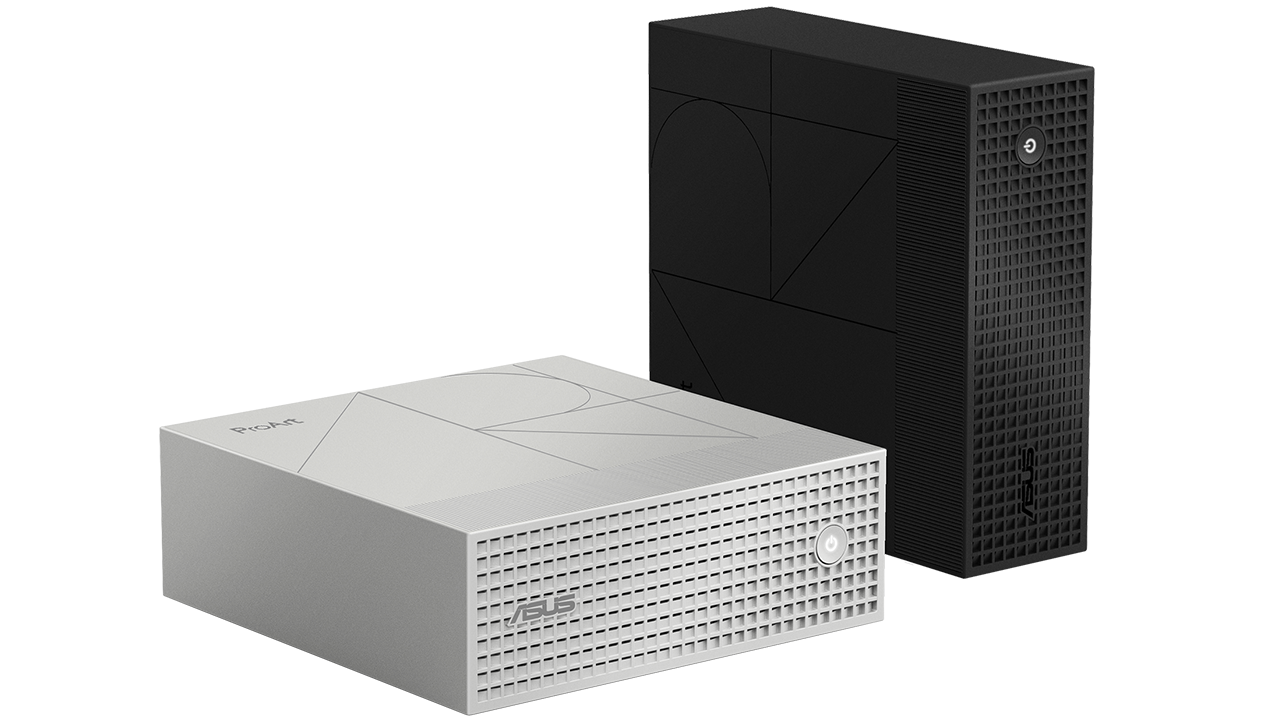
NVIDIA frames the RTX Spark desktop as the machine that keeps running while a laptop travels, with agents, scheduled jobs and long renders continuing after an editing session ends. Ten-gigabit Ethernet ships on the platform, which matters when model weights and footage arrive from networked storage instead of a local drive.

The capability NVIDIA lists at this tier includes running 120-billion-parameter language models, rendering 90GB+ 3D scenes in real time and editing 4:2:2 video without proxies. The pitch rests on cost and privacy as much as speed, since work done on the desktop avoids per-token cloud API charges and keeps source files on hardware the buyer controls.
NVIDIA RTX Spark compact desktops run the same stack as the laptops
Software support widened alongside the launch, and it covers laptops and desktops on the same platform rather than the new machines alone. Adobe now ships native Windows on Arm versions of Illustrator and InDesign, and Premiere accelerates Enhance Speech, Object Mask, Scene Edit Detection and Auto Reframe through TensorRT-RTX.
Photoshop adds TensorRT-RTX acceleration for the Remove Tool and native Camera Raw support, while Substance 3D Painter 12.2 runs on Arm in public beta for the first time. Blender 5.3 adds DLSS 4.5 Ray Reconstruction to the Cycles viewport, giving artists a near-final ray-traced preview while they work instead of a noisy resolving image. ComfyUI workflows now carry frame interpolation and HDR conversion in the same graph, and NVIDIA demonstrated the sketch-to-render pipeline at Adobe MAX.
NVIDIA DGX Spark HPC Developer Kit debuts at SC26
At Supercomputing 26 in Chicago, NVIDIA introduced the DGX Spark HPC Developer Kit, a four-node cluster of DGX Spark systems built to put multi-node scientific computing on a researcher’s desk. Each node connects to its two neighbors in a ring over ConnectX-7 networking, so a laboratory sets up the cluster without buying or configuring a switch. Four nodes supply 512GB of combined memory, and with NVFP4 they can run models as large as 700 billion parameters locally, with DeepSeek V4.1 as the example NVIDIA gives.
An HPC SDK playbook is coming soon, and it will bring GPU-accelerated C, C++ and Fortran compilers, libraries and message passing interface tools to the desk-sized cluster. Demonstrated workloads include LAMMPS with Kokkos for materials simulation and NAMD for molecular dynamics, while the wider DGX Spark community has validated GROMACS, OpenFOAM, WRF and NIM microservices such as OpenFold3 and Boltz-2.
Queue avoidance, not peak throughput
NVIDIA cites Kvantify running tensor-network simulations of quantum-chemistry circuits with up to 70 qubits and 975 gates on a single DGX Spark. The Hartwig Group at UC Berkeley reports fitting a 120B-class model on one device with NVFP4 quantization after bypassing multi-day cluster queues, which let the lab run eight- to 24-hour training fits back to back. NVIDIA has spent the second half of 2026 building this local stack out, with DGX Station and cluster tools arriving at GTC Berlin in October before the compact desktop line reached shelves.
Philippine pricing is still unannounced
Neither the RTX Spark compact desktops nor the DGX Spark HPC Developer Kit carries a Philippine price or a local ship date, and NVIDIA has not named retail partners for either. ASUS brought the ProArt P14 and ProArt P16 RTX Spark laptops to the country in October starting at PhP224,995, and that remains the platform’s only published local pricing.
Mini PCs from Acer, GIGABYTE and HP are coming soon, along with the Microsoft Surface RTX Spark Dev Box, so the RTX Spark compact desktops will widen into a full roster before any of it reaches Philippine shelves.

Grant Soriano
Grant is a Financial Management graduate from UST. His passion for gadgets and tech crossed him over in the industry where he could apply his knowledge as an enthusiast and in-depth analytic skills as a Finance Major. His passion allows him to earn at the same time help Gadget Pilipinas' readers in making smart, value-based decisions and purchases with his reviews and guides.
View all articles →Related News
 UGREEN MagFlow 2-in-1 Foldable Magnetic Wireless Charger Review