


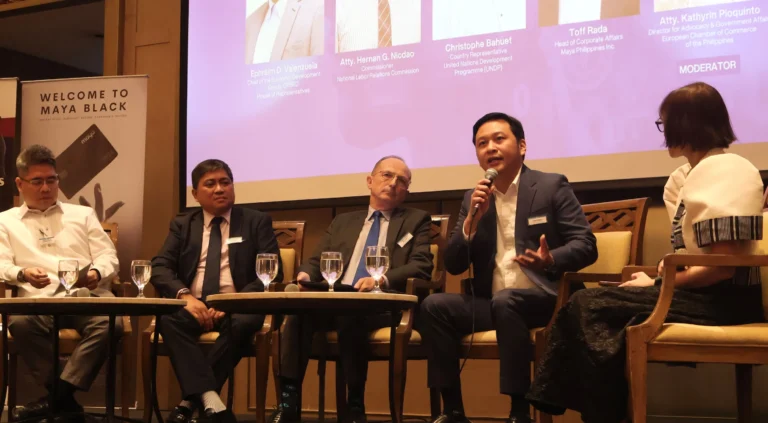
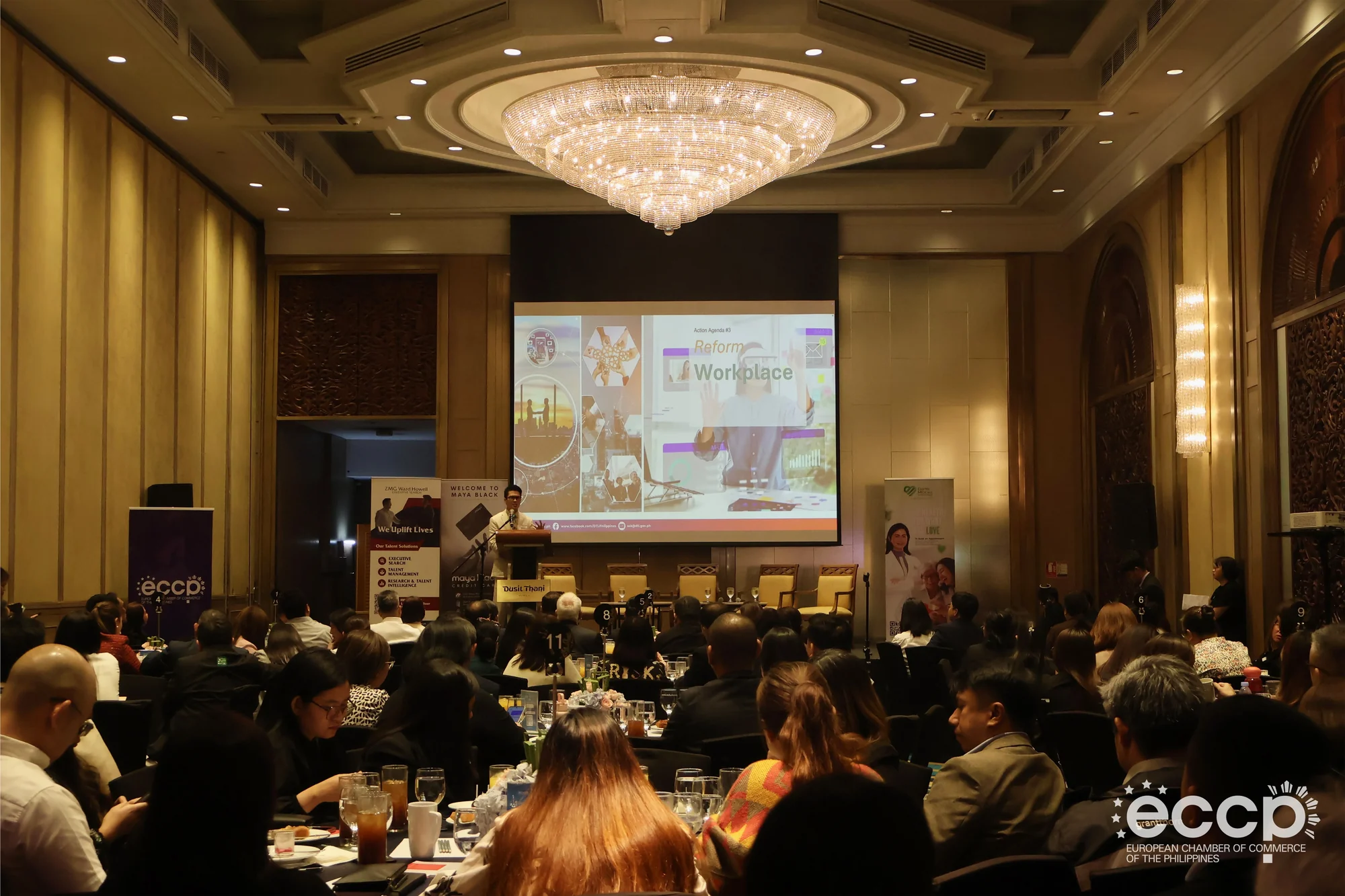
Maya is calling for wider adoption of digital payroll and Open Finance to give Filipino employees more control over where they receive their salaries and how their financial data works for them. The fintech platform raised the point at the European Chamber of Commerce of the Philippines (ECCP) 2026 Future of Work Forum.
Kristoffer Rada, Head of Corporate Affairs at Maya, said digital payroll can serve as an entry point to broader financial health as Open Finance, artificial intelligence, and interoperable payment infrastructure continue to develop in the Philippines.
“The future of work should also mean better financial tools for workers. Reliable digital salary disbursement is the starting point,” Rada said. “When payroll connects people to saving, payments and responsible credit, it can support financial health well beyond payday.”
Modernizing Payroll Through Maya Business
Maya is working with BPO companies and the IT and Business Process Association of the Philippines (IBPAP) to expand financial access for nearly 1.9 million digital Filipino workers. The partnership also looks at ways to modernize payroll, disbursement, and reimbursement workflows across the industry.
Through Maya Business, employers can send salaries and other employee payouts at scale using secure digital payroll and disbursement tools. This cuts down on manual processes and administrative work, especially for large employers running multiple sites around the clock.
Maya Business and the Maya app connect both sides of the transaction. Employers disburse salaries digitally, while workers receive and manage their money within the same ecosystem, using it for everyday transactions, setting funds aside in savings, and building a financial footprint over time.
As that footprint grows, data and AI can help financial institutions better understand customer needs and make more informed credit decisions, including for workers with limited traditional credit histories. Maya’s work with IBPAP also aims to expand access to savings and responsibly underwritten credit cards for qualified digital workers.
“Payroll should not end with the disbursement of a salary,” Rada said. “Done well, it can connect workers to financial tools that help them manage everyday needs, prepare for emergencies and build toward longer-term goals.”
Payroll Portability and Open Finance
Maya also supports giving employees more say over where their salaries are deposited. Through its backing of the Digital Bank Association of the Philippines (DiBA PH), the company has pushed for payroll portability, which would require bank-agnostic disbursement through interoperable payment infrastructure.
Open Finance could complement this by letting workers, with their consent, securely share their financial information to access services better suited to their needs.
“Digital payroll is the starting point. Payroll portability can eventually give workers more choice over where their salaries go, while Open Finance can help them use their own data to access more relevant services,” Rada said.
Building Trust Around AI
Rada said the conversation around AI and the future of work should move past whether the technology will automate specific tasks. Businesses, he said, should focus instead on using AI to improve productivity and competitiveness without losing customer trust.
“AI is going to change how work gets done, but the bigger question for businesses is how to capture that value responsibly,” Rada said. “That means knowing where AI creates real value, where people still need to make the call and keeping clear accountability for the outcome.”
Wider AI adoption, Rada added, will take more than better technology. Businesses need people across functions who understand how to apply AI responsibly, while government and industry need to keep investing in digital infrastructure, workforce capability, and responsible AI adoption.
AI is already used at Maya across digital onboarding, credit assessment, fraud detection, personalization, customer service and operations. It began a formal AI governance framework in 2024, followed by a Board-approved policy covering risk classification, testing, monitoring, security and human accountability. Maya has previously described how that approach shapes its own workforce.
“The opportunity is bigger than adopting new technology,” Rada said. “It is about giving workers more choice, giving businesses better tools and building the infrastructure and trust that allow both to participate more fully in a digital economy.”
For more information, follow Maya on Facebook, Instagram, YouTube, and TikTok at @makeyourmoneymaya, and on X at @mayaofficialph. Visit maya.ph and mayabank.ph to learn more.
Frequently Asked Questions (FAQ)
Maya is pushing for wider adoption of digital payroll and Open Finance so Filipino workers get more control over where their salaries land and how their financial data is used.
Kristoffer Rada, Maya’s Head of Corporate Affairs, discussed the issue at the ECCP 2026 Future of Work Forum.
Maya Business lets employers send salaries and other payouts digitally at scale, while the Maya app lets employees receive, manage, and save that money in one ecosystem.
It’s a proposal, backed by Maya through DiBA PH, that would let workers choose where their salaries are deposited through bank-agnostic, interoperable payment infrastructure.
Maya’s partnership with IBPAP targets financial access for nearly 1.9 million digital Filipino workers, alongside a Board-approved AI governance framework it built starting in 2024.

Emman Tortoza
Emman has been writing technical and feature articles since 2010. Prior to this, he became one of the instructors at Asia Pacific College in 2008, and eventually landed a job as Business Analyst and Technical Writer at Integrated Open Source Solutions for almost 3 years.
View all articles →