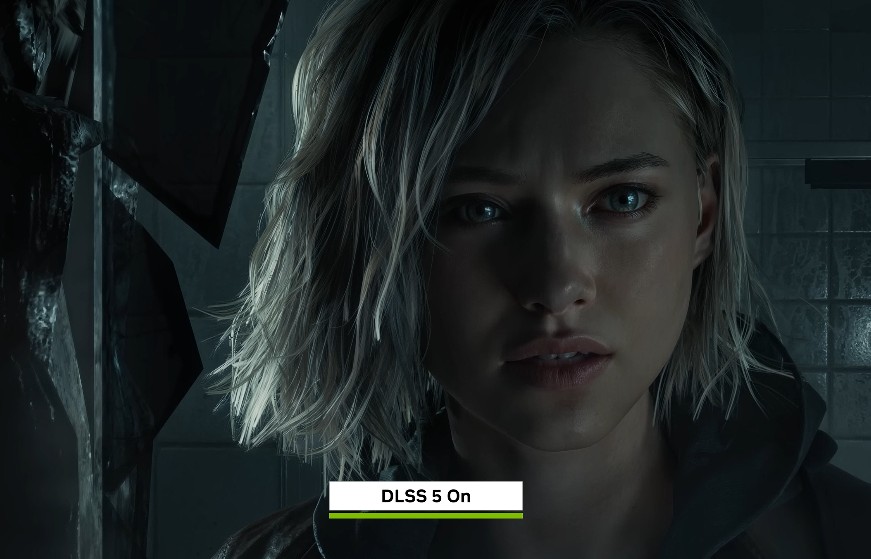


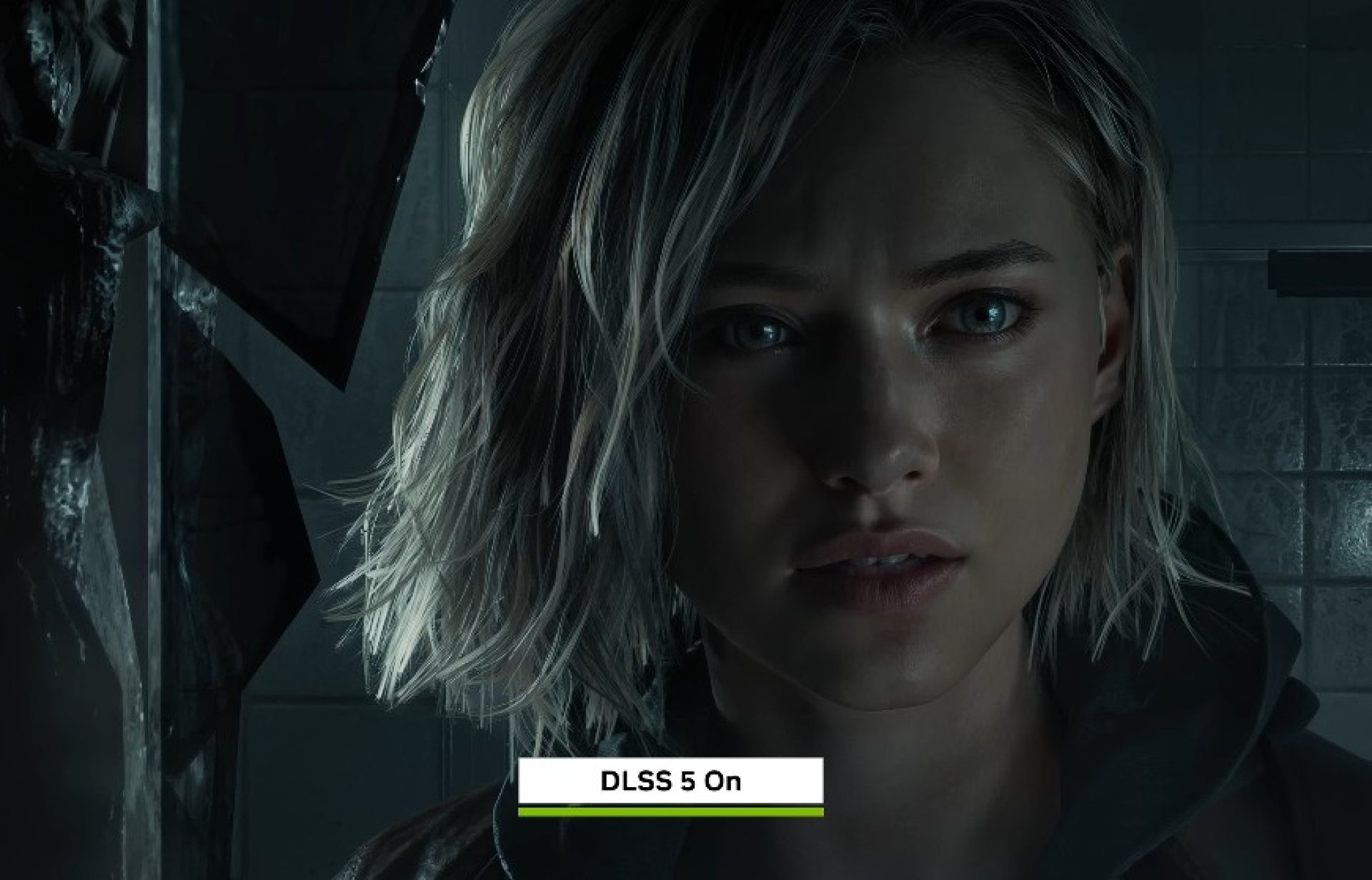
NVIDIA has unveiled DLSS 5, the company’s most significant advancement in computer graphics since real-time ray tracing launched in 2018. This new technology introduces a real-time neural rendering model that adds photorealistic lighting and materials to pixels and closes the gap between interactive game rendering and the photorealistic visuals typically seen only in Hollywood visual effects productions.
Historical Context
For 25 years, since inventing the programmable shader, NVIDIA has pushed graphics boundaries. Beginning with GeForce 3 in 2001, the company debuted programmable shaders, followed by CUDA on GeForce 8800 GTX in 2006. Real-time ray tracing arrived with GeForce RTX 2080 Ti in 2018, and path tracing plus neural shaders came with GeForce RTX 5090 in 2025.
These advancements delivered a staggering 375,000x increase in compute power, allowing developers to craft worlds where lighting, reflections, and shadows follow natural laws. Yet, a 16-millisecond game frame offers far less power than a Hollywood VFX frame, which can take minutes or hours. Brute force alone cannot achieve photorealism in real time.
Evolution of DLSS Technology
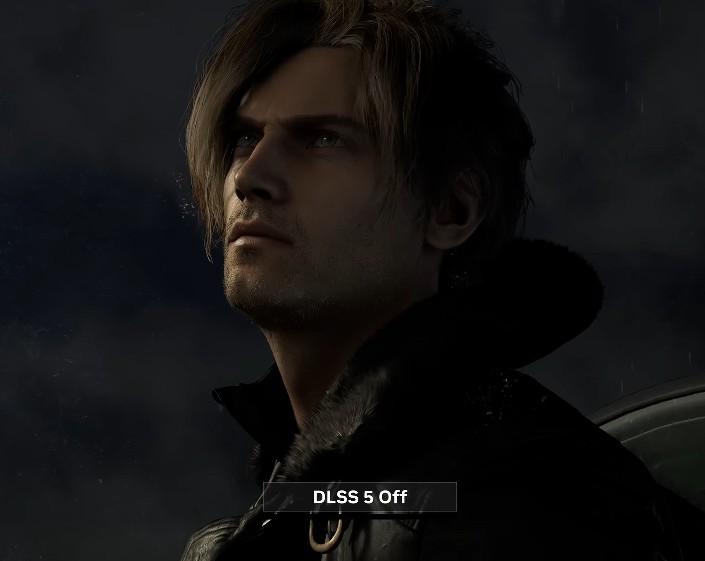
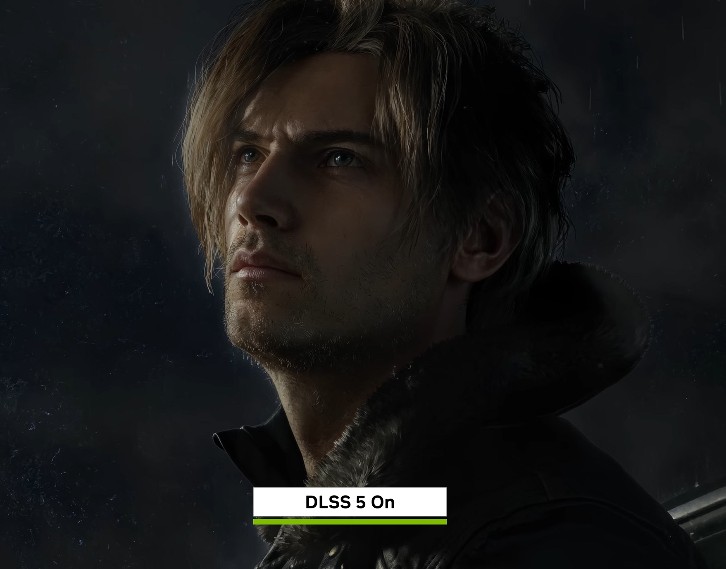
DLSS was introduced in 2018 as an AI tool to enhance performance, initially through resolution upscaling and later by generating full frames. Now featured in over 750 games, it has become an industry standard. DLSS 4.5, launched at CES this year, employs AI to render 23 out of every 24 pixels on screen. DLSS 5 shifts focus from pure performance to elevating visual fidelity.
Unlike offline video AI models that lack control and predictability, DLSS 5 ensures deterministic, real-time pixels grounded in the game’s 3D world and artistic vision.
Jensen Huang, NVIDIA’s founder and CEO, described it as the GPT moment for graphics, merging hand-crafted rendering with generative AI for unprecedented realism while retaining artist control.
Technical Breakthroughs
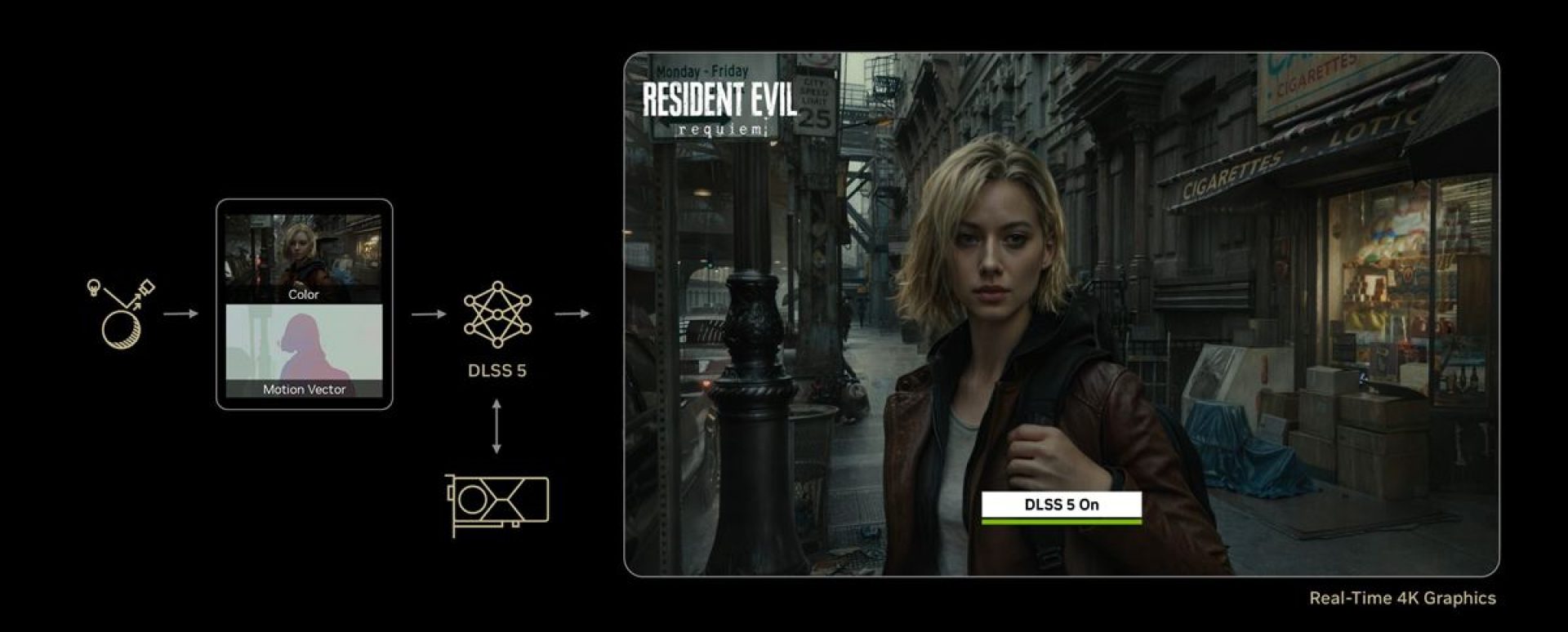
DLSS 5 processes a game’s color and motion vectors per frame, utilizing an AI model to infuse scenes with photorealistic lighting and materials. The output stay anchored to the 3D source content, ensuring frame-to-frame consistency. It operates in real time at up to 4K resolution, supporting smooth gameplay.
The end-to-end trained AI comprehends scene semantics like characters, hair, fabric, and translucent skin, plus lighting scenarios such as front-lit, back-lit, or overcast, all from a single frame. It excels at subsurface scattering on skin, fabric sheen, and hair-light interactions, preserving the original scene’s structure.
Developers have precise controls over intensity, color grading, and masking, allowing tailored application to fit each game’s aesthetic. The NVIDIA Streamline framework makes integration straightforward, shared with prior DLSS and NVIDIA Reflex technologies.
Industry Support
Major publishers including Bethesda, CAPCOM, Hotta Studio, NetEase, NCSOFT, S-GAME, Tencent, Ubisoft, and Warner Bros. Games back DLSS 5. Todd Howard of Bethesda Game Studios noted their graphics history with NVIDIA dates to Morrowind, praising DLSS 5 in Starfield for bringing it to life.
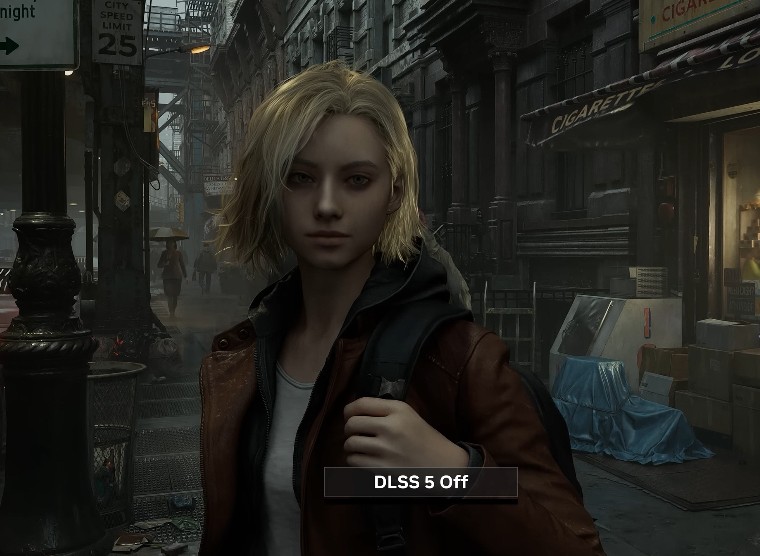
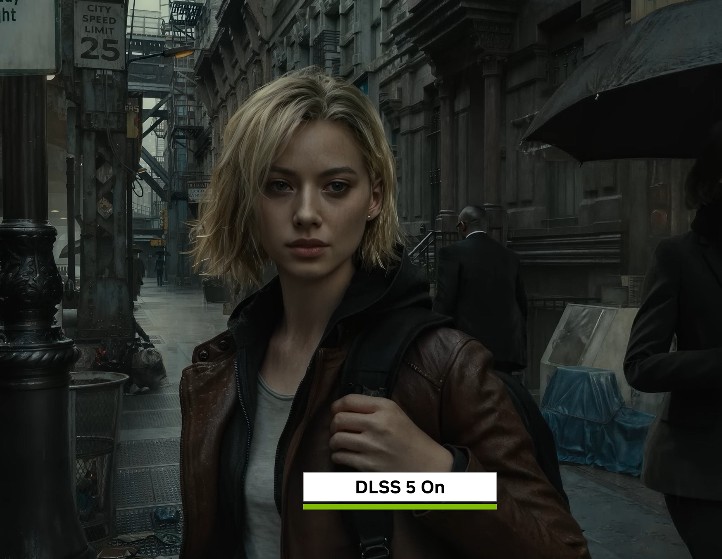
Jun Takeuchi of CAPCOM highlighted its role in cinematic immersion for Resident Evil, enhancing shadows, textures, and light. Charlie Guillemot of Vantage Studios said it advances real-world feel in Assassin’s Creed Shadows, redefining player promises through superior lighting, materials, and characters.
Upcoming Games and Availability
DLSS 5 will deliver enhancements to titles like AION 2, Assassin’s Creed Shadows, Black State, CINDER CITY, Delta Force, Hogwarts Legacy, Justice, NARAKA: BLADEPOINT, NTE: Neverness to Everness, Phantom Blade Zero, Resident Evil Requiem, Sea of Remnants, Starfield, The Elder Scrolls IV: Oblivion Remastered, Where Winds Meet, and others. Full rollout arrives this fall, with first looks at GTC this week.
Frequently Asked Questions (FAQ)
Q: What is the main innovation in DLSS 5?
A: DLSS 5 introduces a real-time neural rendering model that adds photorealistic lighting and materials to pixels, bridging game rendering and Hollywood VFX quality.
Q: How does DLSS 5 differ from previous versions?
A: It evolves beyond performance boosts to focus on visual fidelity, using game color and motion vectors for deterministic, consistent enhancements up to 4K.
Q: What controls do developers have with DLSS 5?
A: Developers can adjust intensity, color grading, and masking to apply enhancements precisely, maintaining the game’s unique aesthetic via NVIDIA Streamline.
Q: Which studios support DLSS 5?
A: Support comes from Bethesda, CAPCOM, Hotta Studio, NetEase, NCSOFT, S-GAME, Tencent, Ubisoft, and Warner Bros. Games.
Q: When will DLSS 5 launch and in which games?
A: It arrives this fall in games including Starfield, Resident Evil Requiem, Assassin’s Creed Shadows, Hogwarts Legacy, and more.

Emman has been writing technical and feature articles since 2010. Prior to this, he became one of the instructors at Asia Pacific College in 2008, and eventually landed a job as Business Analyst and Technical Writer at Integrated Open Source Solutions for almost 3 years.