
Do not ban Telegram
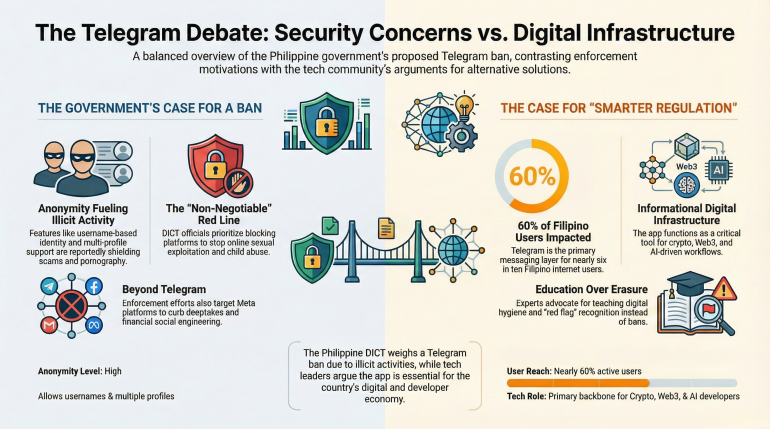
When I read about this news, I closed my eyes and sighed with dismay. Telegram should not be the scapegoat for crimes that are fundamentally about people, incentives, and weak enforcement. When nearly six in ten Filipino internet users are on Telegram, any knee‑jerk move to block it risks punishing the majority of legitimate users while barely slowing down bad actors who can hop to the next encrypted app in a heartbeat.
Telegram’s real role in the PH digital ecosystem
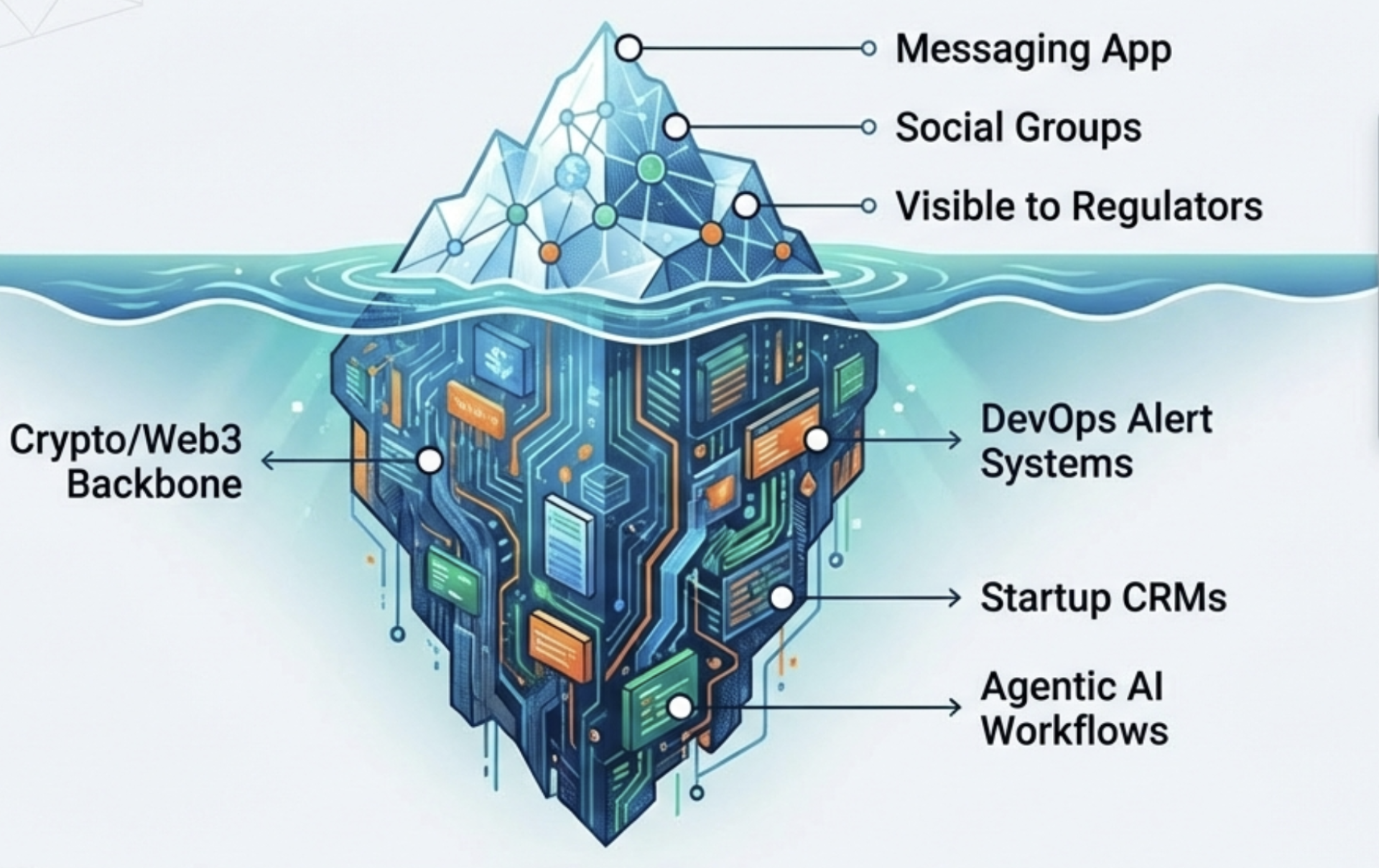
Telegram has quietly become one of the default messaging layers for Filipino internet users, especially younger audiences who have started moving their group chats away from older platforms. It is also the backbone of many local crypto, Web3, dev, and creator communities that rely on its channels, groups, and bots to coordinate everything from launches to support. In a world where agentic workflows are starting to live inside Telegram (whether that is OpenClaw, Claude-based coding assistants, or automation bots that sit on top of APIs) shutting down the app is no longer just “blocking a chat app”; it is cutting access to a growing layer of productivity tooling.
Why bans rarely work against organized abuse
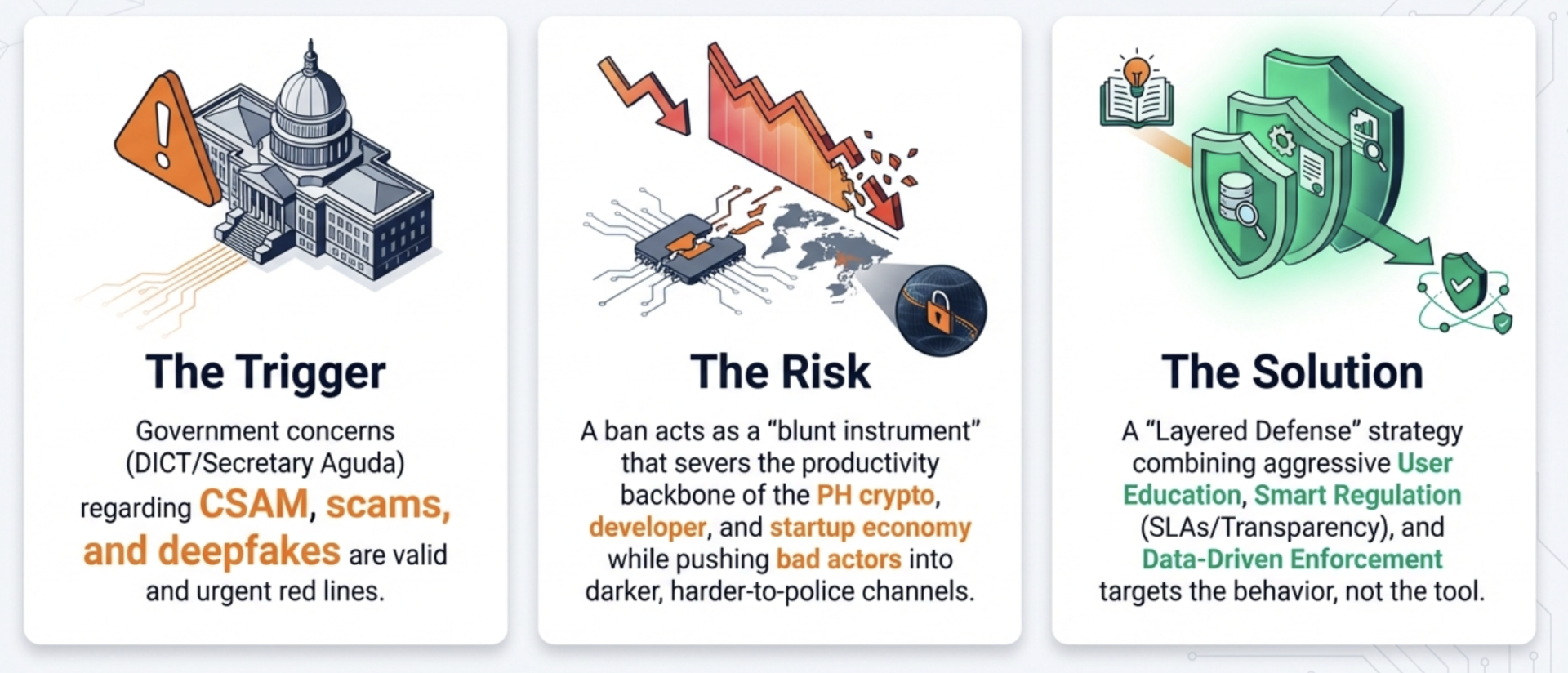
The instinct to “just block the platform” comes from a very understandable place: there are genuine problems here: illegal gambling, pornography, and even online sexual exploitation of children have been linked to Telegram channels. No one serious is defending that content; that is a hard red line. The question is whether a platform‑wide ban is the most effective and proportionate response, especially when even countries that aggressively pursue cybercrime acknowledge that illicit ecosystems quickly reconstitute themselves on new channels, clone services, or parallel apps.
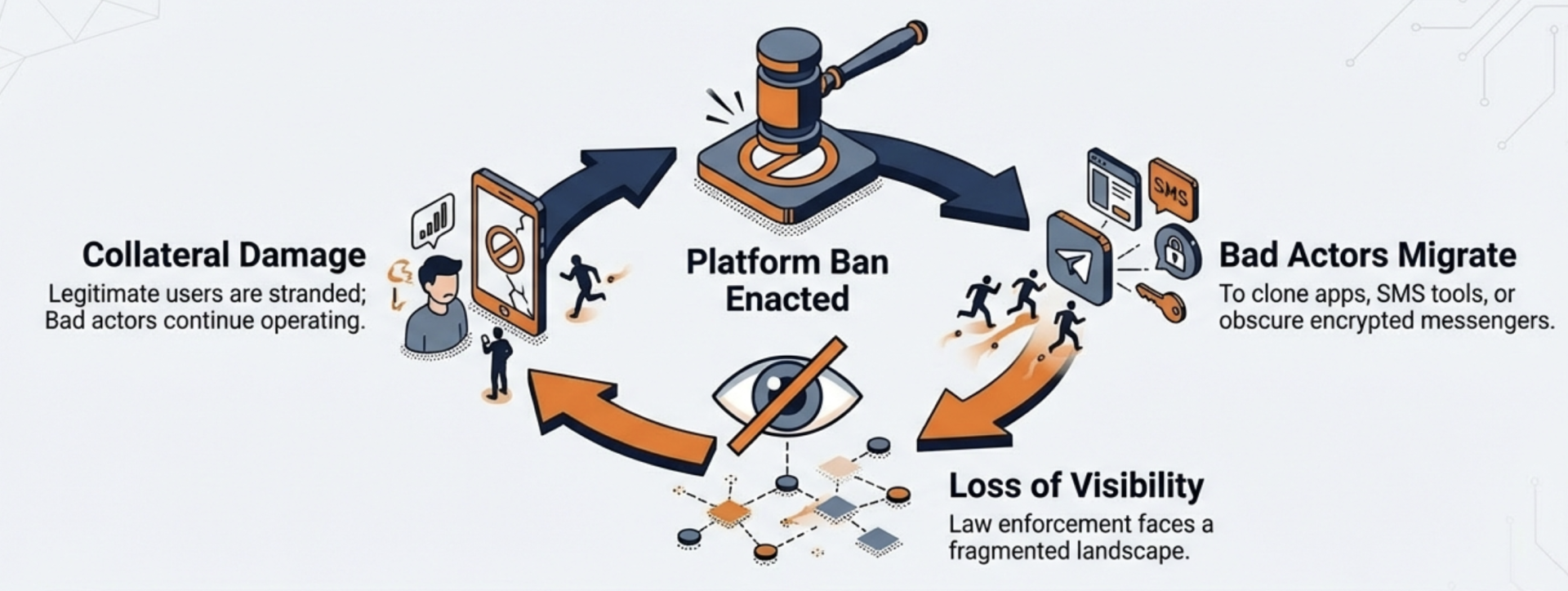
We have already seen how, in gambling and scam operations, enforcement pressure simply pushes actors from websites to encrypted messaging, then to alternative apps or SMS-based tools when one channel is disrupted. Crypto scam infrastructure, for example, does not live or die with a single platform. It relies on a mix of escrow services, payment channels, and communications platforms, and when one is shut down, operations shift to the next least‑regulated mix of tools. A Telegram ban might produce a short-term drop in visibility, but it risks creating a more fragmented, harder‑to-monitor landscape of private channels across multiple apps instead of one primary environment where law enforcement can focus its efforts.
Education as the first line of defense
If we are serious about protecting users, especially in a country that is both highly online and heavily targeted by scams, user education cannot be treated as an afterthought. The 2026 crypto and scam landscape shows how impersonation tactics and AI‑assisted crime are getting more sophisticated, not less; scams now mimic official channels, spoof KYC processes, and leverage automation at scale. You cannot regulate your way out of that reality with bans alone; you need a population that understands red flags, reporting channels, and basic digital hygiene across any app.
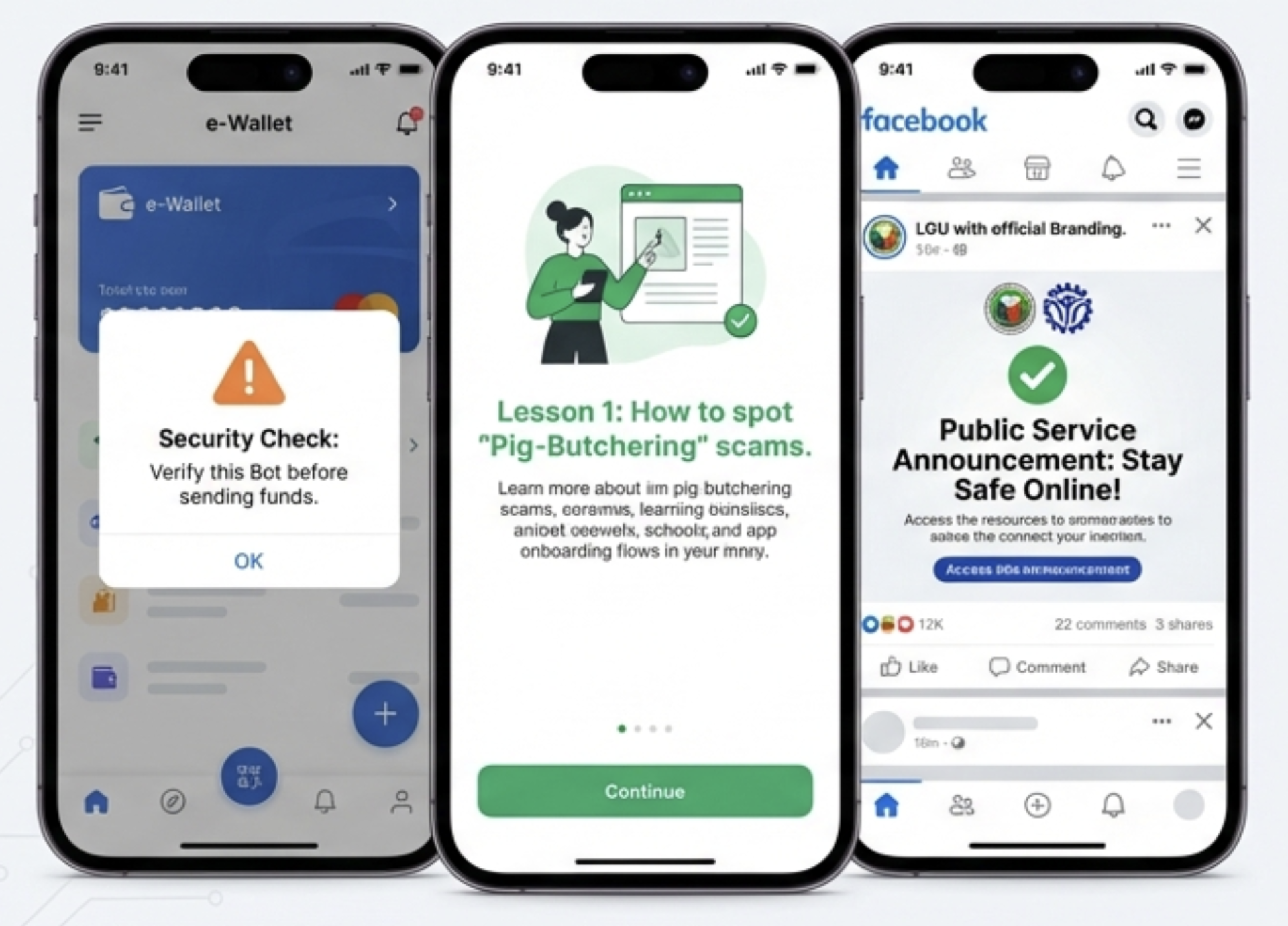
That means teaching people how to verify communities and bots, how to spot telltale signs of pig‑butchering and crypto investment schemes, and how to escalate cases to NBI Cybercrime, PNP ACG, and platform abuse channels in a structured way. It also means embedding digital literacy into schools, TESDA programs, LGU‑run seminars, and even onboarding flows of telcos and e‑wallets that already touch millions of users every day. Telegram is just one venue; the mindset and skill set we want Filipinos to have should apply whether they are on Messenger, WhatsApp, Discord, or the next big app that has not launched yet.
Smarter regulation instead of blanket blocking
There is a legitimate role for stricter rules and tougher implementation—but they should be targeted at behavior and accountability, not the mere existence of a platform. The DICT, PNP, NBI, and even PAGCOR have already been working to dismantle illegal online gambling sites and to tighten KYC, self‑exclusion, and enforcement frameworks in related industries, taking down thousands of illegal operations in recent months. That same playbook—data‑driven enforcement, cross‑agency coordination, and clear compliance expectations—should be extended to messaging platforms through cooperative frameworks rather than bans.
Instead of blocking Telegram outright, government can push for stronger mechanisms on content takedowns, abuse reporting, and law‑enforcement collaboration, backed by clear SLAs for responses to child exploitation, CSAM, and high‑risk scam reports. Regulators can require platforms to publish transparency reports relevant to the Philippines, similar to how they already expect disclosures from iGaming operators and crypto exchanges, while still respecting user privacy and encryption where appropriate. The message should be: “If you operate at scale in our market, you have real responsibilities here,” not “If some users abuse your app, everyone loses it.”
There is also a practical economic angle. The Philippines is positioning itself as a hub for digital services, with a very active retail crypto and fintech user base; disrupting the primary communication channel for these communities sends a confusing signal to both local startups and global partners. When your crypto communities, dev groups, and even grassroots support channels live on Telegram, a ban does not just inconvenience users—it breaks the feedback loops that help early‑stage ecosystems grow, innovate, and self‑police.
A more balanced way forward
The path forward should not be a binary choice between “do nothing” and “ban Telegram.” It should be a layered strategy that combines user education, smarter regulation, stronger enforcement, and targeted collaboration with platforms operating in the country. If the government invests in making Filipinos harder to scam, in giving law enforcement better tools and clearer processes, and in holding platforms to higher standards of cooperation instead of threatening blanket bans, it will not just address today’s illicit Telegram channels but rather future‑proof the public against whatever the next iteration of cyber‑enabled crime looks like.

In other words, we should aim to build a digital environment where Filipinos can keep using powerful tools like Telegram, AI‑driven agents, and modern messaging workflows with confidence, while knowing that the state is actively going after predators, not platforms.

Giancarlo Viterbo is a Filipino Technology Journalist, blogger and Editor of gadgetpilipinas.net, He is also a Geek, Dad and a Husband. He knows a lot about washing the dishes, doing some errands and following instructions from his boss on his day job. Follow him on twitter: @gianviterbo and @gadgetpilipinas.