

A necessary pause… for good
ASUS temporarily stepping away from smartphones, including the ROG Phone line, feels like the end of an era for Android gaming, but it also exposes how cluttered and directionless the “gaming smartphone” label has become. The move says as much about the market’s saturation and changing economics as it does about ASUS’ own strategy and strengths.

When brands like ASUS, Razer, and a handful of others first went all‑in on gaming phones, the category actually meant something distinct. You got features that mainstream flagships did not dare prioritize at the time: extreme cooling, overkill battery capacities, high refresh rate displays well ahead of the curve, aggressive industrial design, and a whole ecosystem of docks, controllers, and secondary screens built purely for gaming. Over the years, though, that uniqueness quietly eroded. Standard flagships began to adopt features that used to be exclusive to gaming devices, such as high refresh rate OLED panels, large batteries, powerful stereo speakers, and increasingly efficient flagship chipsets from Qualcomm and MediaTek. At the same time, mid‑range and upper mid‑range devices became powerful enough to run the most popular mobile titles smoothly, even without any gamer branding. The result is that “gaming smartphone” lost its sense of regality and started to feel like a generic sticker that many brands slapped on any phone with a fast chip and some RGB.
That erosion of meaning feeds directly into saturation and maturation. Today, almost every “gaming phone” is running some variation of the same high‑end Snapdragon or comparable MediaTek chip, paired with similar RAM and storage options. Differentiation has narrowed to subtleties: a few degrees better thermals during long gaming sessions, slightly more aggressive performance modes, shoulder triggers, or a finely tuned software overlay. Those are fun for enthusiasts, but they serve a relatively small and increasingly niche audience. For a company like ASUS, which invested heavily in elaborate cooling design, accessory ecosystems, and bespoke ROG Phone features, it becomes difficult to justify this level of investment when the broader market feels that a standard flagship, or even a good mid‑ranger, already delivers “good enough” gaming performance at a lower price point.
The Incoming Wave of Price Increases
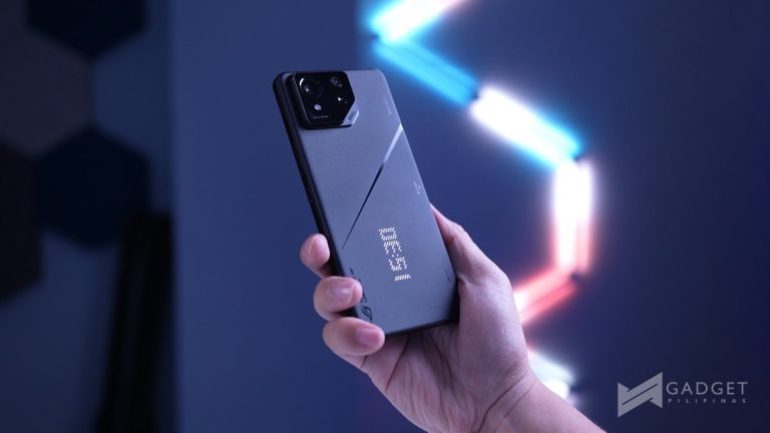
Then there is the issue of cost pressure, especially around memory and storage. High‑end phones, and gaming devices in particular, tend to push extreme configurations: 16 GB or more of RAM, along with 512 GB or 1 TB of storage, are almost expected for a serious ROG Phone‑class device. Component markets, however, do not care about nostalgia. With demand for memory and storage chips rising in areas like AI hardware and servers, the prices of RAM and NAND are under pressure, which threatens to push the bill of materials for premium smartphones even higher. When the very components that define the “overkill” appeal of gaming phones are also the ones getting more expensive, brands either have to raise their prices to maintain margins or dial down specs, which undermines the product’s identity. ASUS has historically managed to price ROG Phones competitively in the Philippines relative to their hardware, but if memory and storage continue trending upward, the next generation would likely end up in a much more uncomfortable price bracket locally, especially for a niche product in a price‑sensitive market.

Against that backdrop, ASUS’ decision to retreat from smartphones and refocus on its core business lines starts to look far more rational than emotional. Recent statements and coverage make it clear that ASUS is prioritizing PCs, commercial systems, AI‑related hardware, and servers, as well as emerging categories such as AI‑driven devices and robotics. Those are areas where the company already enjoys strong brand recognition, established channels, and deep engineering expertise. The smartphone industry, by contrast, is brutally competitive and dominated by a handful of giants with enormous marketing budgets and vertically integrated supply chains. Even with standout products like Zenfone and the ROG Phone series, ASUS never became a mainstream household smartphone brand in many markets, and that limits both scale and profitability. Dominating the conversation in a narrow niche like gaming phones does not automatically translate into a healthy business if the niche itself is structurally constrained and expensive to serve.
The Great Shift to Handheld Gaming Devices
Another important angle is the shifting of gamer attention toward handheld gaming devices. Over the last few years, dedicated handhelds such as the Steam Deck, ROG Ally, and similar Windows‑based or Android‑based portables have proven there is real demand for devices built purely for gaming that sit somewhere between a console and a laptop. These handhelds play directly into ASUS’ strengths in PC components, cooling systems, and performance tuning. From an ecosystem perspective, it makes more sense for ASUS to double down on a world where its gaming laptops, desktops, GPUs, and handhelds reinforce each other, rather than continue to fight for space in an overcrowded smartphone shelf where “gaming” has become a vague and diluted promise. The more the handheld category grows, the more a dedicated gaming device can justify its price and bulk in a way a gaming phone can’t, because a phone is still judged first as a phone, not as a console replacement.

All of this connects directly to a very practical reality for everyday users: you no longer need a specialized gaming smartphone to enjoy most Android games. Many popular titles are designed to run well on a wide range of devices, and modern mid‑range chipsets have reached a point where 60 fps or higher in common competitive games is achievable without maxed‑out specs. Developers are optimizing for a broad hardware base, not just the ultra‑premium tier, which means that the “must buy a gaming phone or suffer” argument has largely evaporated. If someone is playing the usual mix of MOBAs, shooters, gacha RPGs, and casual titles, a sensible mid‑range phone with a decent SoC, 8 GB of RAM, and a reasonably good thermal design will handle it. For that user, an ROG Phone is more of a luxury enthusiast toy than a necessity.

In the Philippine context, this matters even more. Value considerations and price sensitivity shape purchasing decisions, and the psychological threshold for what counts as a “reasonable” phone price is very different compared to North America or Europe. Even if previous ROG Phone generations could be defended as competitively priced given the hardware and features they offered, the next iterations would almost certainly have felt more expensive once higher memory and storage costs and other global factors are baked in. It becomes very hard to argue that a niche, ultra‑spec gaming phone is the best choice when that same budget could go toward a strong all‑rounder flagship, a good mid‑range phone plus a dedicated handheld, or even a PC upgrade.

This is why ASUS’ move, while undeniably sad for fans, is also a wise one. The company genuinely dominated the Android gaming phone narrative for many years, and the ROG Phone line set the bar for what an unapologetically gamer‑centric smartphone could be. But if the category itself has lost its magic, if the economics are turning against high‑RAM, high‑storage devices, and if the competitive landscape is stacked in favor of bigger smartphone players, then walking away is not surrender, it is actually discipline. Redirecting energy toward PCs, AI servers, gaming laptops, and handhelds aligns with ASUS’ deepest strengths and with where the growth and profitability are heading. I wholeheartedly support ASUS on this one.
At the same time, the user experience story has shifted to the point where telling people they “need” an ROG Phone to play mobile games would feel disingenuous. With improved optimization and efficient chipsets, gaming on a smartphone is far more accessible even on less powerful hardware. The ROG Phone remains an object of desire for enthusiasts, but it is no longer a prerequisite for smooth, competitive play. The fact that ASUS managed to offer competitive pricing in markets like the Philippines does not change the trajectory: future models would likely have had to move up the price ladder, and that would have put them at odds with the very audience that championed them in the first place.
The Big Question
So, should ASUS come back to the smartphone industry if the RAM and component pricing situation stabilizes? The honest answer is no. Much as the ROG Phone earned affection and respect, it is time for ASUS to focus on arenas where the company can compete from a position of strength, rather than sentiment.
That does not mean the ROG name should vanish from the smartphone world. A smarter, lighter‑weight approach would be to treat ROG as a performance and tuning partner rather than a full hardware vendor: special co‑branded editions and software‑level gaming collaborations with brands that live and breathe phones. A future “Nothing Phone 4, Gaming Tuned by ROG,” or similar partnerships, would allow ASUS to inject its gaming DNA into smartphones without carrying the full weight and risk of running a smartphone business end to end. In a market where the “gaming smartphone” label has become noisy and fragmented, that kind of strategic cameo might actually give the ROG brand more impact than yet another spec‑monster phone fighting for a shrinking slice of attention.

Giancarlo Viterbo is a Filipino Technology Journalist, blogger and Editor of gadgetpilipinas.net, He is also a Geek, Dad and a Husband. He knows a lot about washing the dishes, doing some errands and following instructions from his boss on his day job. Follow him on twitter: @gianviterbo and @gadgetpilipinas.