

The story of this tattoo is a story about how human memory, Filipino artistry, and modern technology can work together instead of competing with one another. It started as a tribute to my parents and evolved into a collaborative tech‑driven project that still depended on the instincts and decisions of an award‑winning tattoo artist at every critical step.
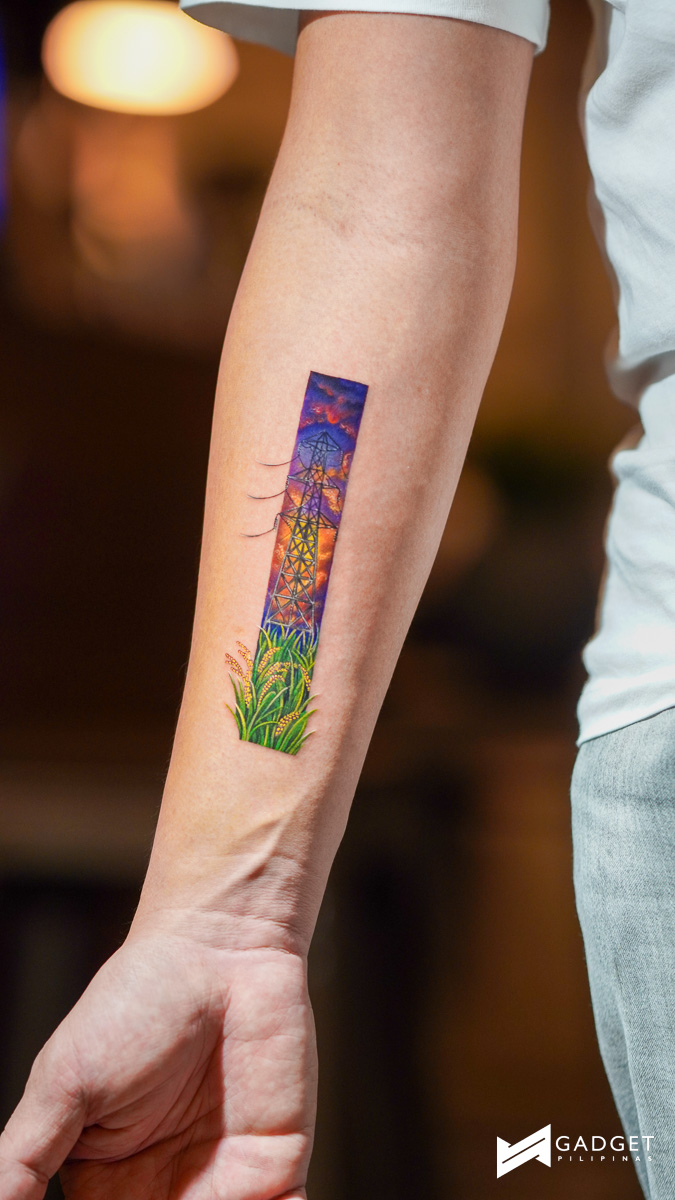
A tattoo rooted in family
Five years ago, my sister and I started talking about getting a tattoo that would carry our parents with us wherever we go. My mom’s years at the National Food Authority became the palay field, while my dad’s career at the National Power Corporation became the power transmission tower. That simple visual pairing—rice and power—would become the backbone of the design and the non‑negotiable narrative the final piece needed to tell. I talked to my wife about my commitment to getting a tattoo, and later got her approval. It was then I knew that it was time to proceed.
Conceptualizing with Gemini
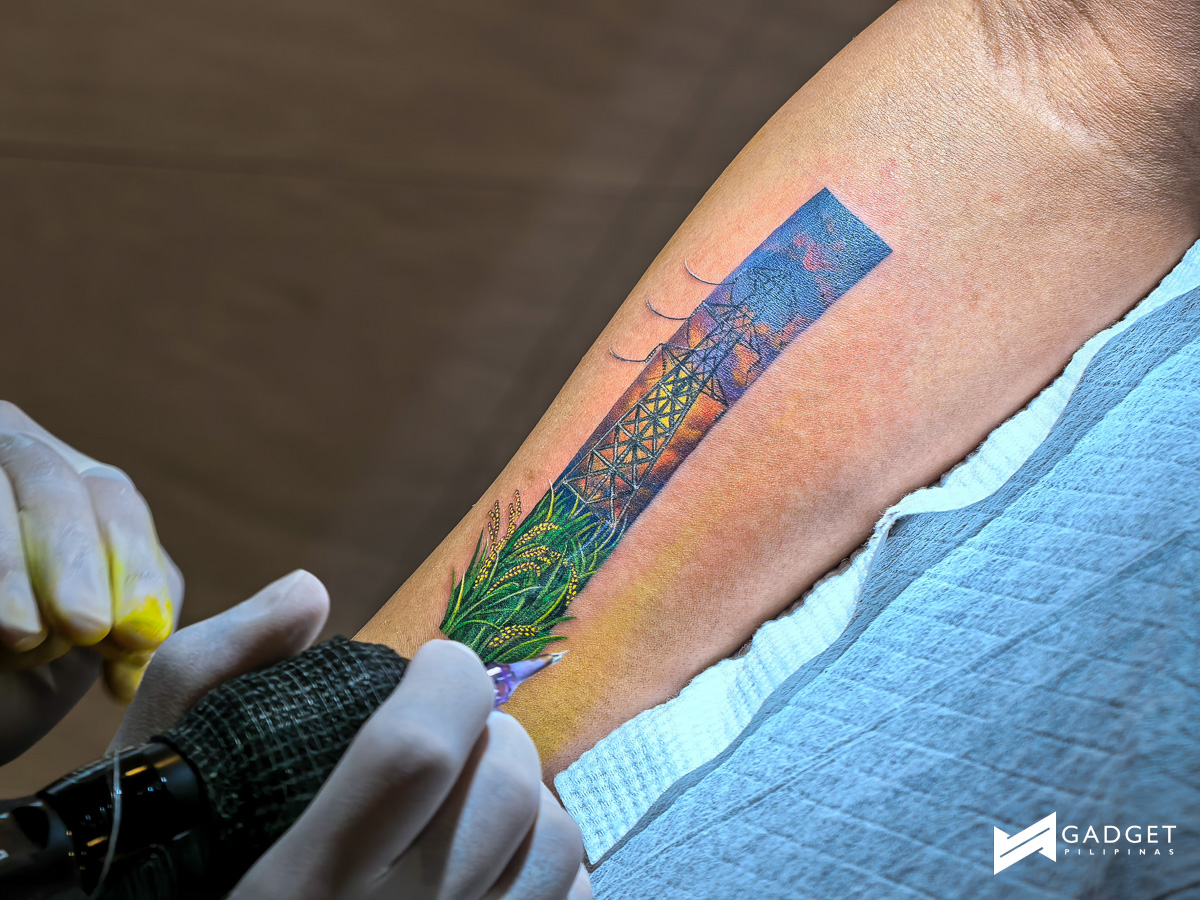
When I finally committed to getting inked, the first tool I reached for was Gemini. Using a rough tattoo reference, I asked it to generate a high‑resolution, vertical piece that clearly showcased two elements: an electric power grid and rice stems, while staying within a palette of reds, blues, grays, and yellows. Gemini went through several iterations until it arrived at a tall, bookmark‑like composition that stacked a palay field at the bottom and a power tower disappearing into a dramatic sky. To test real‑world viability before talking to any artist, I then had Gemini render the design on an arm, which helped visualize scale, placement, and how the colors might read against skin.


Choosing a human artist
AI solved one part of the problem: transforming a vague tribute in my head into something concrete that I could show. But it did not answer key questions about placement, line weight, longevity, and how to adapt the design to my actual forearm. That was where human talent had to come in.

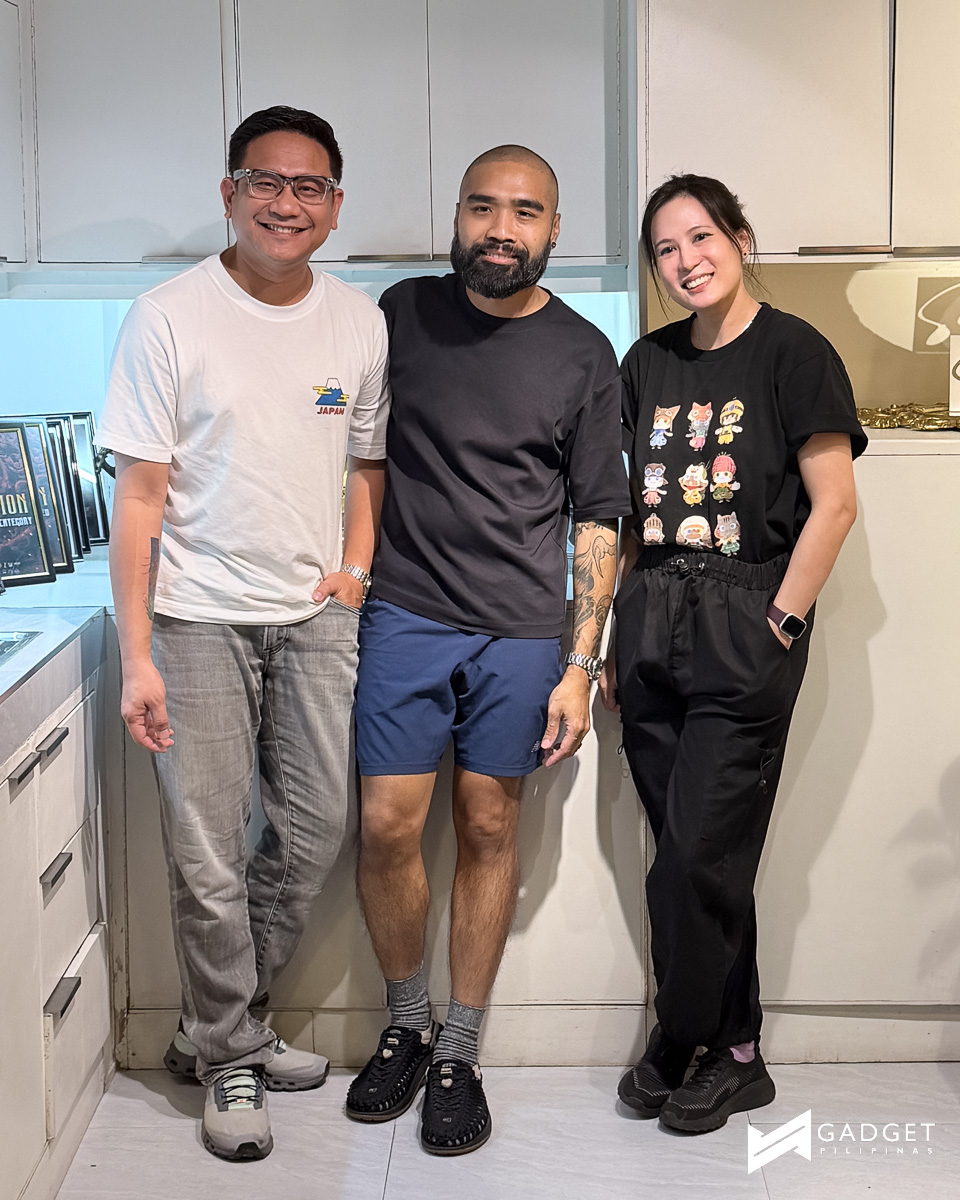
Luie, recommended Joey Viar of Silong Art Collective, an artist whose body of work, visual style, and recognition in the local scene aligned with the emotional weight of what I wanted. Online, Silong Art Collective is known as a professional studio in Laguna led by Joey, who is both owner and resident artist, and whose portfolio reflects an emphasis on composition, color, and storytelling in skin art.
Collaborating at Silong Art Collective
I booked the session via Silong Art Collective’s Instagram account, paid the down payment, and sent Joey the Gemini‑generated images as pegs—very close to what I had in mind, but intentionally not “final.” The goal was not to force AI outputs on him but to give him a solid starting point he could dissect, critique, and improve. When Luie and I arrived at Silong in San Pedro, Laguna, the environment already reinforced the studio’s name: “Silong” is literally under a house along a busy street, a tucked‑away creative space that feels both intimate and grounded in the neighborhood.
Before any ink touched skin, Joey and I spent almost three hours just talking. That conversation covered his background, his process, and my work in tech and content creation, but most importantly, it clarified what I needed this tattoo to mean. The Gemini design became a footstool, not a blueprint—Joey walked me through how it might age, how the tower’s geometry would follow my arm, and why certain adjustments were necessary so the piece would remain readable years from now.
Tech in the design process
Once we aligned on the story, we moved to the “design lab” inside Silong. Joey had a MacBook Pro, an iPad, and a large Hisense TV acting as an extended display. Using these tools, we layered, resized, and refined the Gemini peg, treating it like a digital sketch rather than a finished poster. The big screen made a huge difference: viewing the design at nearly one‑to‑one scale on the TV helped us judge how much detail the rice stalks and tower lattice could realistically carry without turning into noise on the forearm
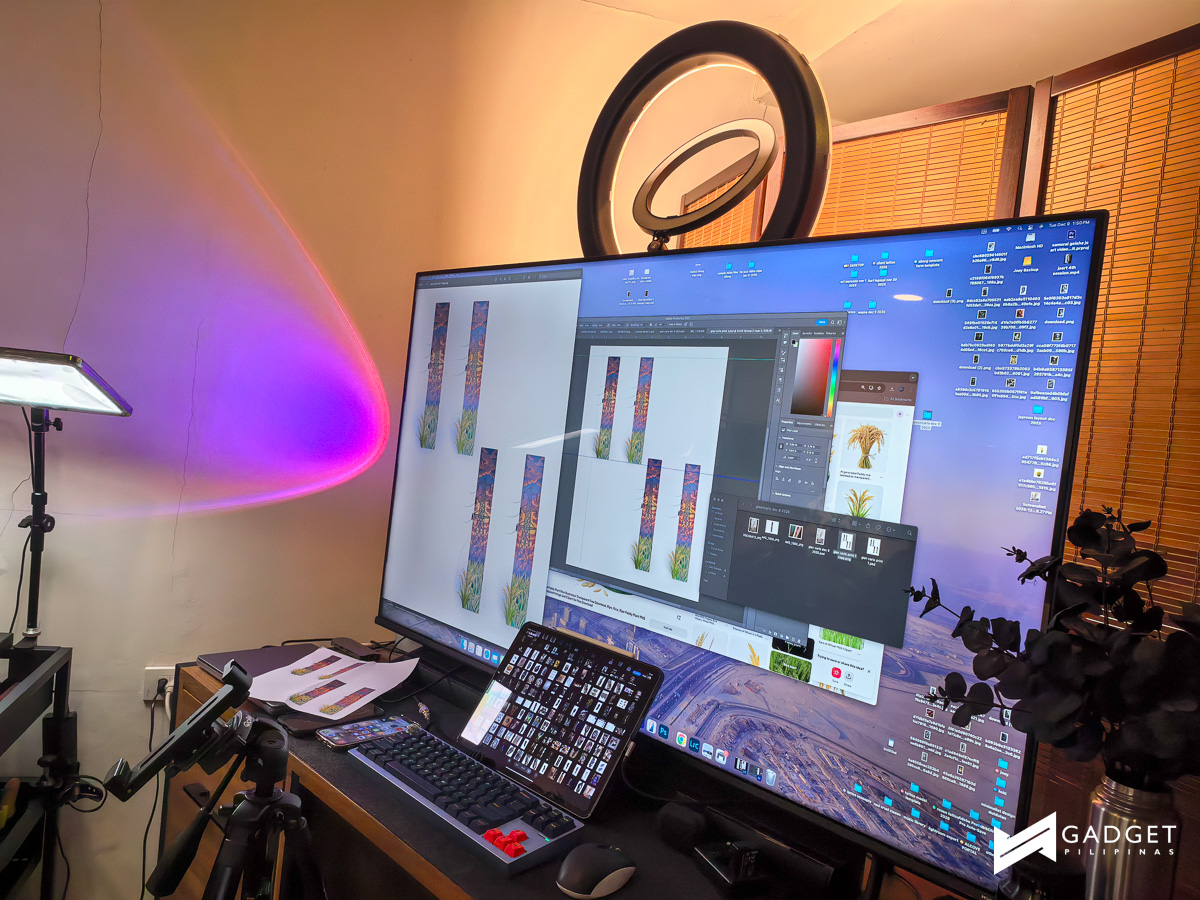
This phase felt like commissioning a digital painting in real time. I could suggest minor tweaks—the overlapping 3 streaks of power lines, the density of the palay, the way the sunset gradient moves from deep orange to blue—and Joey would immediately translate them into visual changes, always with a tattoo artist’s eye on technical feasibility. The final digital design did not simply mimic Gemini’s output; it merged AI’s crisp composition with Joey’s sense of flow and skin‑based constraints.
From screen to stencil
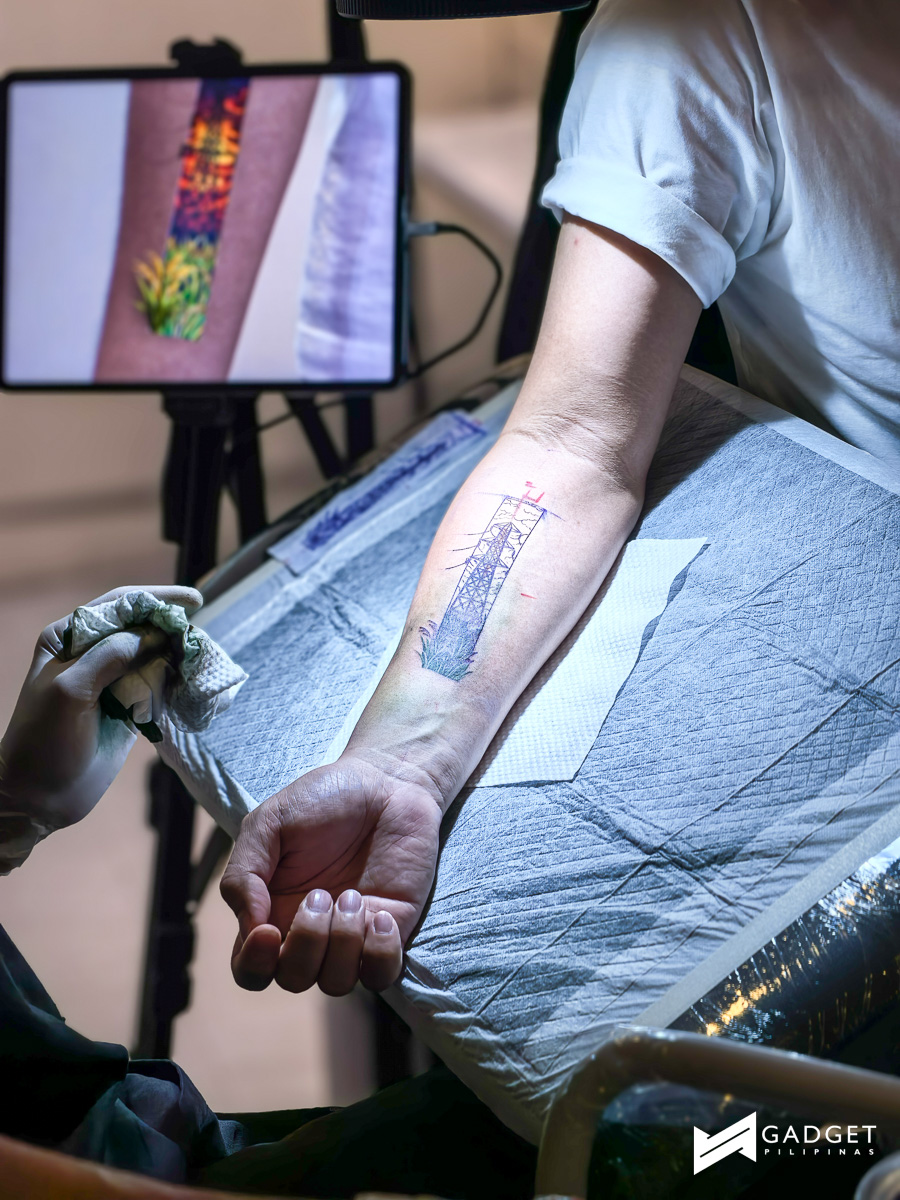
After locking in the final design, Joey printed it and moved to a more analog set of tools. He manually traced the piece to create the stencil rather than relying on a fully automated transfer, adding subtle refinements along the way. This old‑school step is easy to overlook in a tech‑heavy narrative, but it is where an artist’s muscle memory, line confidence, and understanding of anatomy quietly take over.
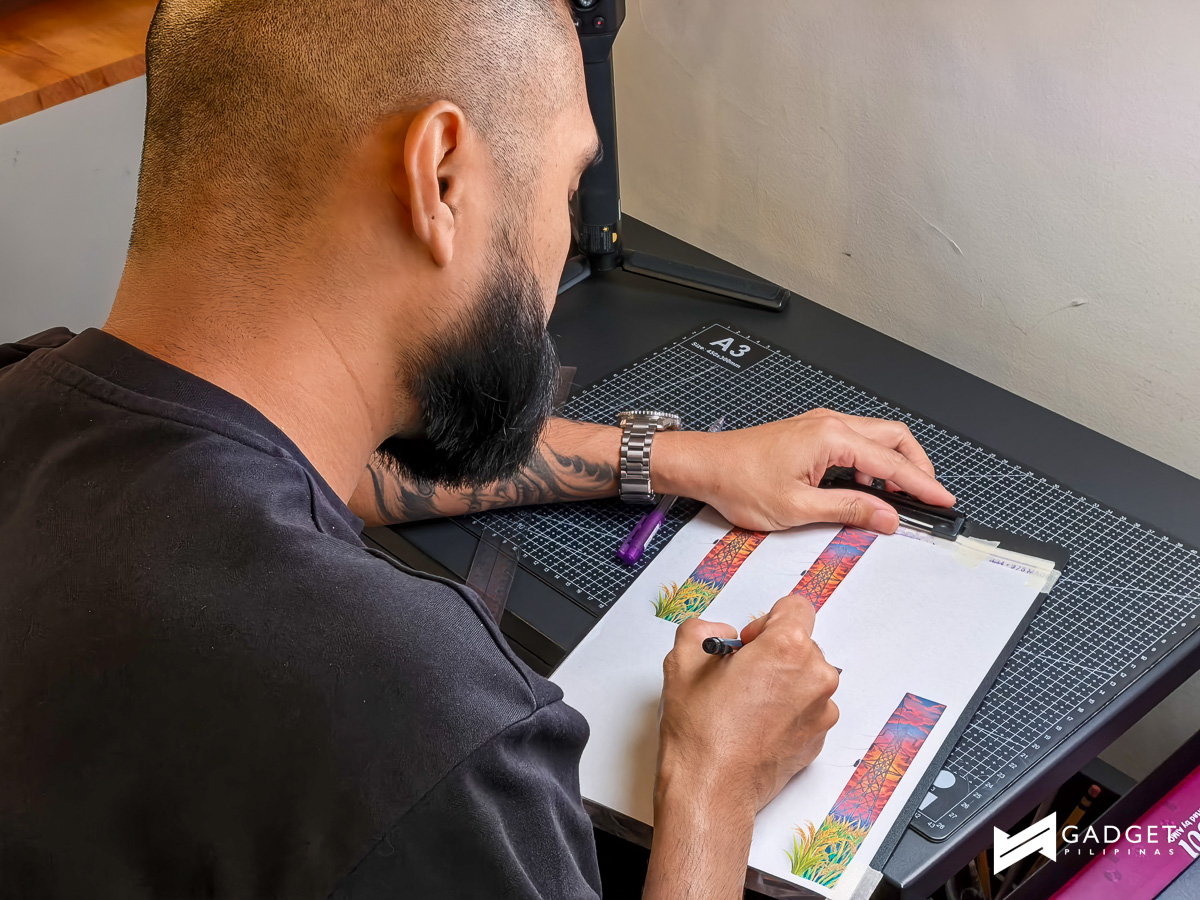
The stencil went onto my forearm, and for a moment, it already felt like the tattoo was there. Seeing the layout in actual scale, and how the palay field and power tower aligned with my arm, confirmed that the AI‑to‑artist pipeline had worked. Only then did Joey transition to the toolset that most people associate with tattooing.
Modern tattoo hardware in action
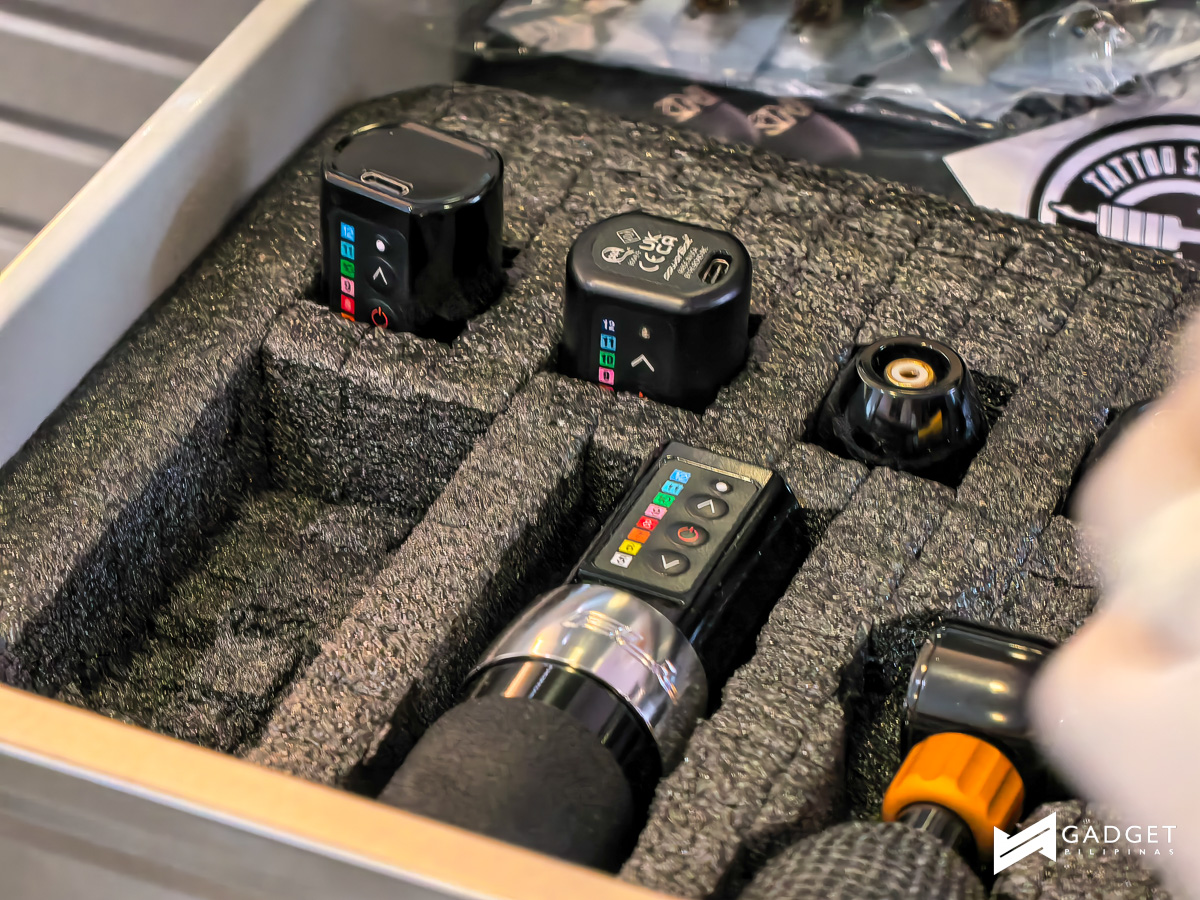
Joey’s setup blended traditional technique with modern hardware. He prepared different tattoo needles, including liners for precise outlines and shaders for smooth gradients and color packing, pairing them with professional inks and 3D‑printed needle stands that kept everything organized and clean. A wireless tattoo machine, an FK Irons EXO, served as the main workhorse, the kind of device that typically offers a battery life of around five to eight hours per charge depending on voltage and style. Joey’s particular unit could charge in under an hour and run for roughly six hours, more than enough headroom for my three‑hour session while minimizing cable clutter and improving his freedom of movement around my arm.

One of the most impressive pieces of tech on his table was the NexSight Polarize Set, a system composed of a rotating polarizing light source paired with polarized glasses. Local suppliers position this as a way to minimize glare from fresh ink and plasma, helping artists see truer colors and subtler gradients while they work or take documentation photos. In practice, that meant Joey could judge whether the warm tones of the sunset and the greens and golds of the palay matched our original digital design, instead of guessing through reflections and shine on fresh skin.

The session and the reveal
With everything ready, Joey placed the stencil, adjusted my positioning, and began the three‑hour session. Throughout the process, the tools, wireless machine, polarizing setup, digital references on screen, played supporting roles, but the key decisions still came from Joey’s hands and eyes. He decided when to push saturation, when to soften the clouds, and how to ensure the tower’s lines stayed clean and stable despite the curvature and movement of my arm.

When the session ended and Joey wiped the tattoo down for the final reveal, the piece on my skin felt familiar yet undeniably transformed. The vertical frame, palay field, and power tower echoed the AI concept, while the color choices, micro‑details, and overall balance were distinctly his. Standing there, looking at my first tattoo honoring my parents, it was clear that the technology only amplified his craft; it never replaced it.
What this experience says about AI and creativity
As someone who lives in the tech world, this experience reframed what “AI in the creative process” should look like. Gemini served as a fast, flexible ideation partner—essentially a hyper‑capable sketch assistant that could translate memories and requirements into visual options in minutes. The MacBook, iPad, TV, wireless tattoo machine, and NexSight Polarize Set each optimized different parts of the workflow, from collaborative design to execution and quality control.

Yet, at every stage, the crucial elements remained human: the original concept rooted in my parents’ lives, my wife’s and sister’s involvement in the decision, Luie’s recommendation, Joey’s reading of my story, his judgment on what would age well, and his manual control over every needle pass. AI did not dictate the final outcome; it accelerated alignment between client and artist and provided visual clarity so that the real craft could shine through.
This is the modern model worth championing. AI and modern tools can streamline the journey from idea to execution, but the emotional resonance, ethical choices, and aesthetic decisions still belong to people. In the case of this tattoo, the collaboration between Gemini and Joey Viar did not prove that AI can replace artists—it proved that great artists can use AI to tell human stories even more powerfully.

Giancarlo Viterbo is a Filipino Technology Journalist, blogger and Editor of gadgetpilipinas.net, He is also a Geek, Dad and a Husband. He knows a lot about washing the dishes, doing some errands and following instructions from his boss on his day job. Follow him on twitter: @gianviterbo and @gadgetpilipinas.